

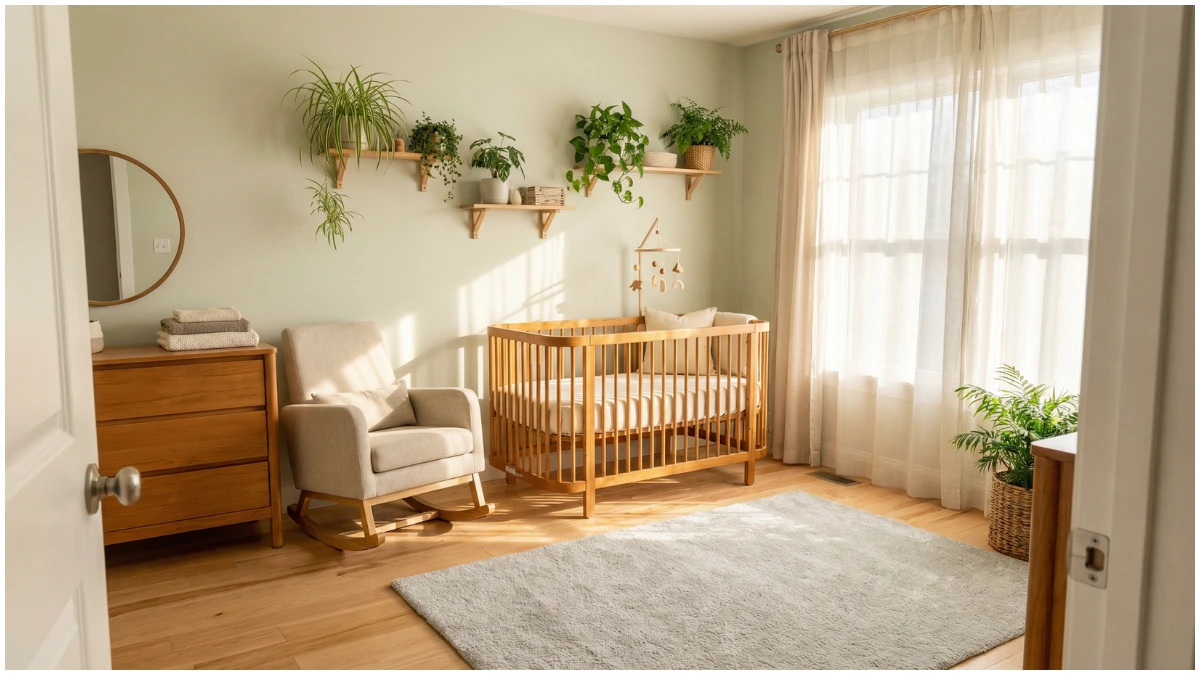

Creating a nursery for your little one is one of the most exciting parts of preparing for a new baby. It’s a space where countless precious moments will unfold—from late-night feedings to first giggles and bedtime stories. But beyond choosing adorable colors and cozy furniture, there’s an opportunity to make thoughtful choices that benefit both your baby’s health and the planet’s future.
Designing an eco-friendly nursery isn’t just about being trendy or checking boxes on a sustainability list. It’s about creating a safe, non-toxic environment where your baby can thrive while simultaneously reducing your family’s environmental footprint. From the materials that touch your baby’s delicate skin to the air they breathe, every decision matters. I’m Katrina, and as someone passionate about sustainable living, I’ve learned that small, intentional choices can create powerful changes. Welcome to this guide where we’ll explore practical, achievable ways to design a nursery that’s healthy for your baby and kind to our planet. Let’s discover how to create a beautiful, functional space that reflects your values and nurtures your growing family.
Choosing Safe, Non-Toxic Furniture and Materials
Start with Solid Wood Construction: The foundation of an eco-friendly nursery begins with furniture made from solid wood rather than engineered wood, MDF, composite board, or particleboard. These alternatives often contain glues, formaldehyde, and chemical adhesives that can off-gas harmful volatile organic compounds (VOCs) into your baby’s breathing space for months or even years. Solid wood furniture—particularly pieces crafted from beechwood, oak, birch, or maple—offers durability without the toxic chemical load.
Seek Out GREENGUARD Gold Certification: This certification represents the gold standard for indoor air quality safety in nursery products. GREENGUARD Gold certified products are tested for over 10,000 chemicals and must meet extremely strict VOC emission limits—specifically designed for spaces where children spend significant time. The formaldehyde levels in certified products must remain within 7.3 parts per billion, dramatically lower than industry standards. When shopping for cribs, dressers, changing tables, and gliders, prioritize this certification to ensure you’re bringing the safest possible items into your nursery.
Choose FSC-Certified Wood: The Forest Stewardship Council (FSC certification) ensures that wood products come from responsibly managed forests that provide environmental, social, and economic benefits. FSC-certified furniture supports sustainable forest management while working to halt and reverse degradation of the world’s forests. Many leading nursery furniture brands now offer FSC-certified collections, making it easier than ever to align your purchasing decisions with environmental values.
Consider Bamboo and Reclaimed Wood: Bamboo stands out as an exceptionally sustainable material due to its rapid growth rate—it can be harvested without replanting and reaches maturity much faster than traditional hardwoods. Bamboo furniture and accessories are naturally antimicrobial, durable, and biodegradable. Reclaimed wood offers another eco-friendly option, salvaged from old barns, factories, and warehouses. By giving this wood new life, you prevent it from ending up in landfills, reduce the demand for new lumber, and lower the carbon footprint associated with manufacturing. Each piece of reclaimed wood carries unique character and history, adding warmth and authenticity to your nursery design.
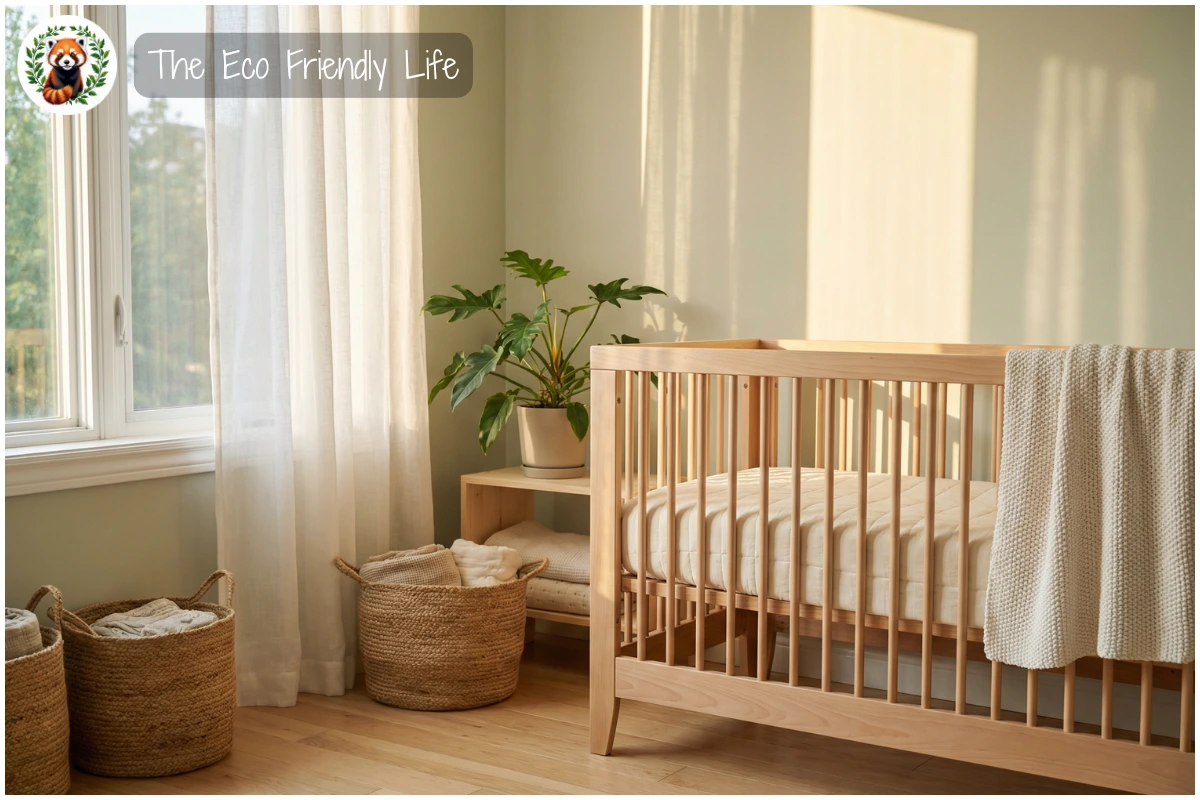
Once you’ve selected safe, sustainable furniture, the next crucial step is addressing what goes on the walls and how you illuminate this special space.
Selecting Low-VOC Paints and Energy-Efficient Lighting
Understand the VOC Threat: Traditional paints release volatile organic compounds as they dry—that distinct “new paint smell” you might recognize. These VOCs can cause eye, nose, and throat irritation in adults, and their effects on babies’ developing lungs and sensitive systems can be even more significant. Alarmingly, research involving 400 children found that even low-VOC paints can cause allergies or asthma, with certain compounds like propylene glycol and glycol ethers being particularly problematic. The solution? Choose paints labeled as zero-VOC or no-VOC, which are formulated without these harmful emissions.
Look for Third-Party Certifications: Beyond the VOC content, seek paints with independent certifications from organizations like Green Seal, GREENGUARD Gold, or Scientific Certification Systems (SCS). These certifications confirm that products have been independently tested and meet strict standards for low chemical emissions. GREENGUARD Gold certification is particularly valuable for nurseries, as it’s specifically designed for spaces used by sensitive individuals like children. When selecting colors, remember that darker pigments can add VOCs to paint, so inquire about zero-VOC colorants to maintain the safest air quality.
Practice Safe Painting Protocols: Even with the safest paint, proper application matters. Paint your nursery at least two to three months before your baby’s arrival, ensuring ample time for any minimal off-gassing to dissipate. Open windows wide and use fans to create cross-ventilation during painting and for several days afterward. This simple practice dramatically reduces indoor air pollutant concentrations and accelerates the drying and curing process.
Prioritize Natural Light: Natural light offers benefits that extend far beyond aesthetics. Exposure to daylight helps infants consolidate their sleep cycles and regulate their circadian rhythms—the internal biological clock that governs sleep-wake patterns. Design your nursery to maximize natural light during the day by choosing window treatments that open completely. Mirrors and light-colored paint can help bounce sunlight around the room, making even dim spaces feel brighter and more welcoming.
Install LED Lighting: For artificial lighting, LED bulbs are the clear eco-friendly choice. LEDs use significantly less energy than traditional incandescent bulbs, last dramatically longer (up to 40,000 hours), and generate minimal heat—making them safer for a nursery environment. Choose dimmable LED fixtures that allow you to adjust brightness for different activities throughout the day and night. The ideal nursery lighting changes intensity and color with time of day—bright and energizing during daytime hours, then warm and dim for nighttime feedings and diaper changes. Look for warm color temperatures (around 3000K) that create a cozy atmosphere without the blue light that can alert both baby and caregiver during nighttime care.
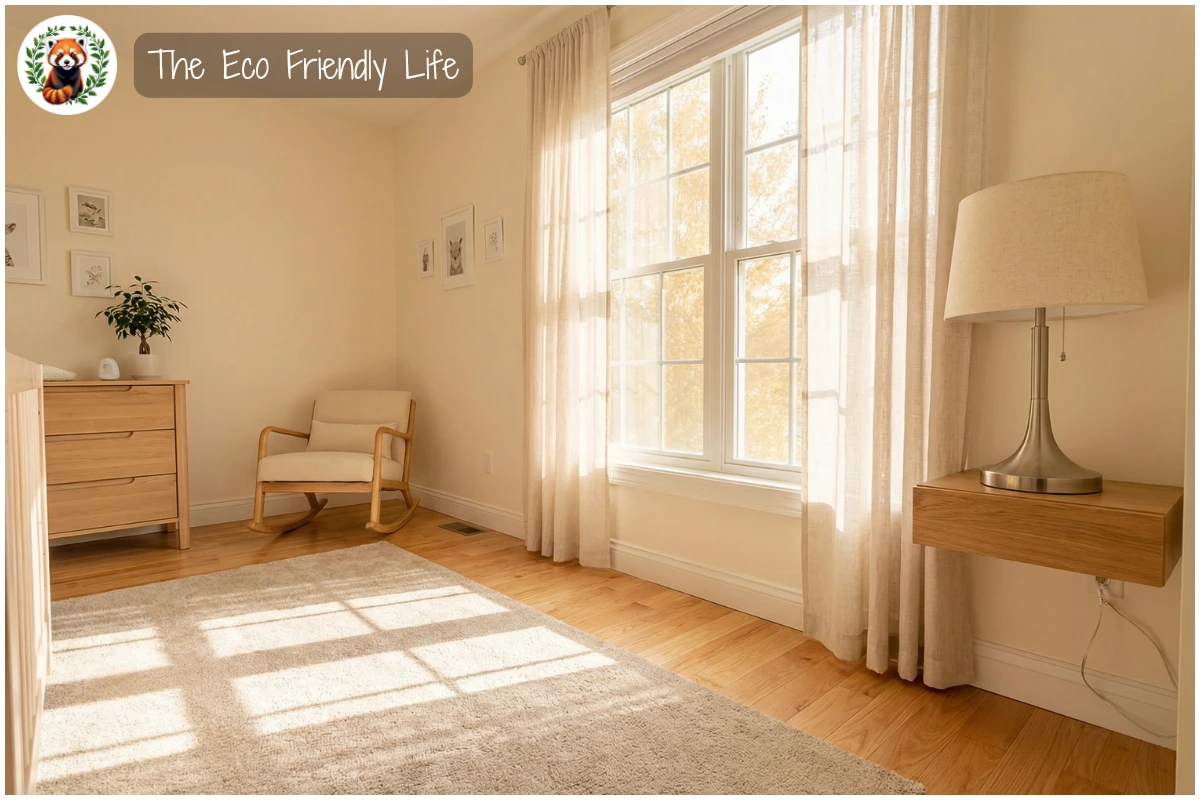
With your nursery’s structure and lighting established, it’s time to focus on what touches your baby’s skin most frequently—bedding and textiles.
Investing in Organic Bedding and Natural Textiles
Choose Organic Cotton: Babies spend up to 16 hours per day sleeping during their first months of life, making their crib mattress and bedding one of the most important purchases you’ll make. Organic cotton is cultivated without synthetic pesticides, harmful chemicals, or toxic fertilizers, making it exponentially safer for your baby’s delicate skin and developing respiratory system. Look for bedding with Global Organic Textile Standard (GOTS) certification, which ensures that materials contain a minimum of 70% organic fibers and restricts the use of chemicals and dyes throughout the manufacturing process.
Select an Organic Crib Mattress: Conventional crib mattresses often contain a concerning mix of chemicals including polyurethane foam, synthetic fire retardants, formaldehyde, and other volatile compounds that can off-gas into your baby’s breathing space. In contrast, organic crib mattresses are made with natural materials like organic cotton, wool, and natural latex—all free from harmful chemicals. Organic wool serves as a natural fire retardant, eliminating the need for chemical flame retardants while providing temperature regulation. Natural latex offers firm, supportive cushioning without the synthetic compounds found in memory foam. Brands like Naturepedic offer mattresses that are GREENGUARD Gold certified, GOTS certified, and feature breathable, waterproof surfaces made from non-GMO sugarcane—proving that eco-friendly options don’t require compromising on functionality.
Opt for Bamboo and Hemp Textiles: Beyond organic cotton, bamboo and hemp offer exceptional sustainable alternatives for nursery textiles. Bamboo fabric is naturally hypoallergenic, more absorbent than cotton, and possesses temperature-regulating properties that keep babies comfortable in both warm and cool weather. Hemp grows quickly, requires no pesticides, and produces durable, breathable fabrics perfect for blankets and clothing. Both materials are biodegradable, making them truly circular choices that won’t burden landfills at the end of their useful life.
Avoid Synthetic Materials: Steer clear of polyester, acrylic, and other synthetic materials that can contain harmful chemicals and don’t breathe as well as natural fibers. Synthetic materials may also shed microplastics during washing, contributing to environmental pollution. Natural fibers provide superior breathability, reducing the risk of overheating—an important safety consideration for infant sleep.
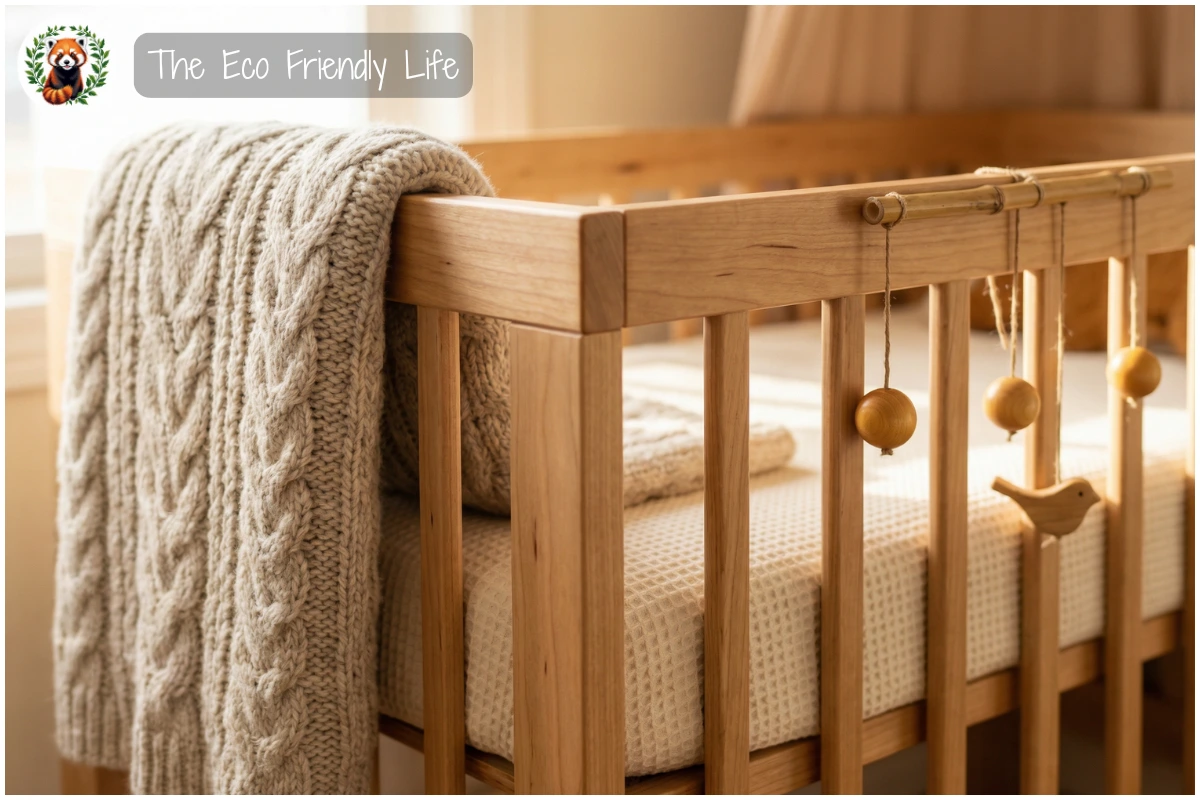
Now that your nursery has safe surfaces and textiles, let’s explore trusted retailers who specialize in the exact products needed for an eco-friendly nursery.
Brands and Tools That Support the Planet — Our Recommendations
Finding retailers committed to sustainability who sell nursery-specific products makes eco-friendly nursery shopping significantly easier. Here are carefully selected businesses offering organic crib mattresses, sustainable bedding, and non-toxic nursery essentials.
Our Retailer Recommendations for Adults
Naturepedic
Since 2003, Naturepedic has specialized in certified organic crib mattresses and bedding, with products made in their GOTS-certified factory in Ohio. Their organic crib mattresses feature GREENGUARD Gold certification, organic cotton and wool, and waterproof surfaces made from non-GMO sugarcane. Ships to US and Canada with some products shipped internationally. All Naturepedic mattresses are specifically designed for baby nurseries, free from flame retardants and polyurethane foam.
Avocado Green Mattress
Handcrafted in Los Angeles, Avocado creates 100% organic certified crib mattresses featuring GOLS-certified organic latex, GOTS-certified organic wool and cotton. As a certified B Corp and Climate Neutral company, they vertically integrate their supply chain from their own latex farms to their factory. Their dual-sided organic crib mattress serves infants and toddlers with firm support and natural materials. Ships to US and Canada.
Finn + Emma
Finn + Emma creates eco-friendly organic baby clothing, bedding, toys, and nursery accessories, all manufactured in fair trade settings. Their GOTS-certified organic cotton products and natural wooden toys are free from toxins and produced ethically. They specialize in organic baby essentials including crib sheets, swaddles, and sleep sacks. Ships worldwide with international shipping available.
Our Retailer Recommendations for Kids/Families
Little Green Radicals
This UK-based company creates organic, Fairtrade cotton clothing for babies and children, all GOTS-certified and ethically made. Their product range includes organic baby sleepwear, rompers, and layettes perfect for nurseries. Free delivery to UK over £50, USA over $100, and EU over €60, with international shipping to most countries worldwide. They also operate a take-back program for pre-loved items.
Kate Quinn Organics
Founded in 2005, Kate Quinn Organics specializes in organic baby clothing, sleepwear, and nursery essentials made from GOTS-certified organic cotton. Their products are designed for comfort and sustainability, with a focus on soft, breathable fabrics for babies. Ships internationally to most countries via USPS or DHL, making their organic baby essentials accessible globally.
Pure Earth Collection
Pure Earth Collection offers natural, non-toxic, and plastic-free products for children including feeding supplies, wooden toys, and nursery accessories. Everything is designed to reduce plastic waste while supporting healthy child development. The company is committed to protecting kids and ecosystems from excessive plastic and toxins, offering products known for safety, functionality, and innovation.
With these trusted retailers as your resource for organic mattresses, sustainable bedding, and non-toxic nursery essentials, let’s explore additional strategies to minimize waste throughout your nursery design.
Reducing Waste Through Thoughtful Choices
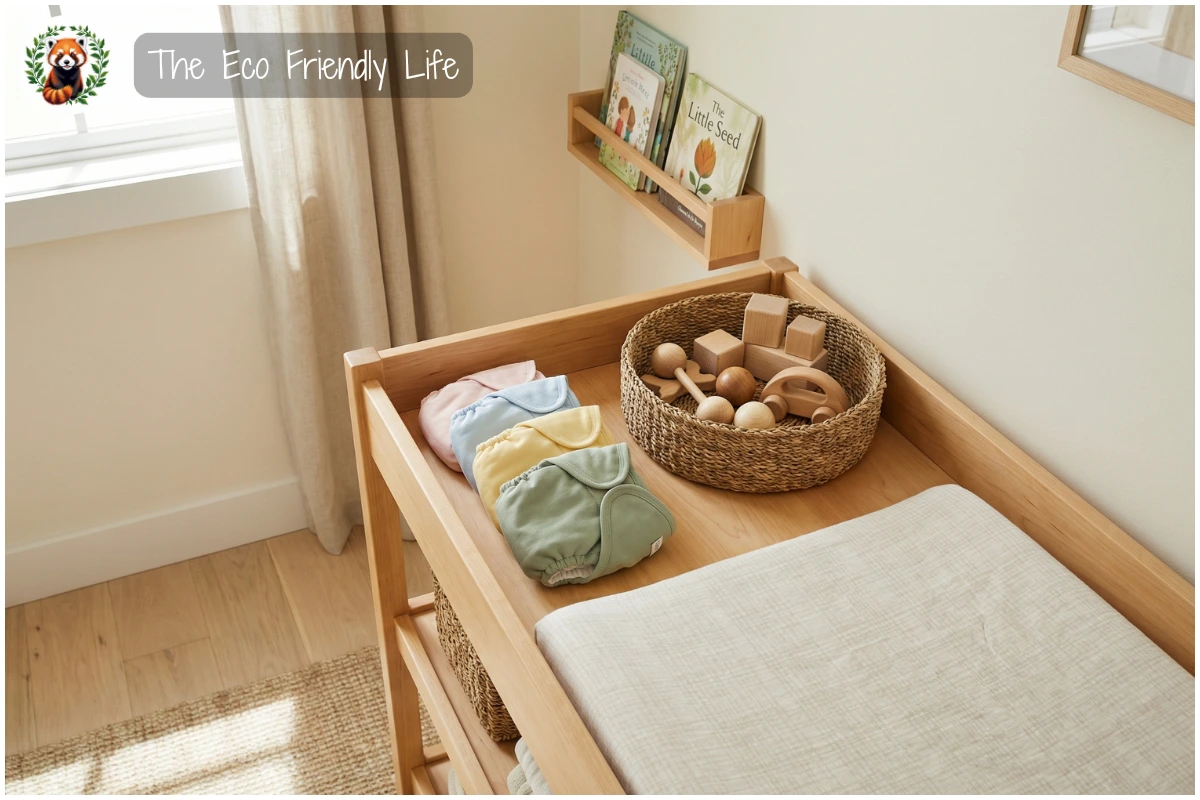
Embrace Cloth Diapers: Disposable diapers represent one of the largest contributors to household waste, with approximately 20 billion diapers ending up in landfills annually in the United States alone. Each baby uses roughly 6,000 disposable diapers in their first two years, and these diapers can take 500 years to decompose. Switching to cloth diapers can reduce your household’s diaper waste by up to 95%. Modern cloth diapers are far more convenient than previous generations might remember, featuring easy-to-use designs, adjustable sizing, and effective absorbency. Beyond environmental benefits, cloth diapers save families significant money over time, especially when used for multiple children. They’re also gentler on baby’s skin, free from the synthetic chemicals and plastics found in many disposable diapers.
Shop Second-Hand Thoughtfully: Purchasing gently used furniture, clothing, and equipment dramatically reduces waste while saving money. Many baby items are used for relatively short periods and remain in excellent condition, making them perfect candidates for second-hand purchase. Online marketplaces, consignment shops, and buy-nothing groups offer treasure troves of quality baby gear at a fraction of retail prices. However, exercise caution with certain items—always purchase new crib mattresses and car seats to ensure they meet current safety standards and haven’t been compromised in accidents. Check that second-hand furniture is sturdy, has all parts, works correctly, and shows no signs of damage or recalls.
Choose Natural Wooden Toys: Wooden toys offer numerous advantages over plastic alternatives for both child development and environmental sustainability. Crafted from natural materials, wooden toys contain none of the PVC, phthalates, or other harmful chemicals often found in plastic toys. They’re significantly more durable, lasting for generations rather than breaking after months of use. Studies suggest that touching natural wood has a calming effect on babies, helping them feel more connected to nature. Wooden toys inspire creative play, encourage problem-solving skills, and help develop fine motor skills and hand-eye coordination. Look for toys made from sustainably sourced wood, finished with non-toxic, water-based paints or left natural.
Minimize Overall Consumption: Perhaps the most impactful eco-friendly choice is simply buying less. Before purchasing new items, consider whether you truly need them or can borrow, rent, or receive them as hand-me-downs from friends and family. Create a registry focused on quality over quantity, selecting versatile pieces that grow with your child rather than single-use items with short lifespans. Many nursery staples can be repurposed from items you already own—a comfortable armchair instead of a new glider, existing bookshelves instead of specialized nursery storage.
These waste-reduction strategies work hand-in-hand with simple daily habits that turn sustainable living into second nature—let’s explore actionable tips you can start implementing today.
Practical Daily Tips You Can Action Today
| Tip | How to Implement | How It Helps |
|---|---|---|
| Use cloth wipes | Purchase or make reusable wipes from soft organic cotton flannel; store in a container with water and a drop of gentle soap. | Eliminates thousands of disposable wipes from landfills annually while reducing exposure to chemicals found in commercial wipes. |
| Adjust thermostat | Lower heating by 2°C in winter and raise cooling by 2°C in summer; dress baby in appropriate layers instead. | Reduces energy consumption and carbon emissions while teaching temperature regulation through clothing choices. |
| Air dry when possible | Hang cloth diapers and baby clothes on a drying rack or outdoor line instead of using the dryer. | Saves significant electricity, extends fabric life, and utilizes free solar energy for natural sanitization. |
| Make homemade cleaning products | Mix vinegar, water, and essential oils for safe, effective nursery cleaning; use baking soda for scrubbing. | Eliminates toxic chemical exposure for baby while reducing plastic packaging waste from commercial cleaners. |
| Install window coverings | Add blackout curtains or cellular shades to nursery windows to improve insulation. | Decreases heating and cooling costs by preventing temperature transfer through windows while improving sleep quality. |
| Batch laundry loads | Wash full loads of baby laundry in cold water using eco-friendly detergent; skip the pre-wash cycle. | Conserves water and energy while maintaining cleanliness; cold water washing reduces energy use by up to 90%. |
| Grow nursery plants | Add non-toxic houseplants like spider plants or bamboo palms to naturally filter indoor air. | Improves air quality by absorbing VOCs and producing oxygen; connects baby to nature from earliest days. |
| Repurpose before discarding | Transform outgrown clothing into cleaning rags, quilt squares, or donate to families in need. | Extends product lifecycle, reduces textile waste, and supports circular economy principles. |
| Choose rechargeable batteries | Replace disposable batteries in monitors, swings, and toys with rechargeable alternatives. | Prevents hundreds of toxic batteries from landfills over baby’s first years while saving money long-term. |
| Start a swap network | Organize regular swaps with other parents for outgrown clothes, toys, and equipment. | Builds community while giving items multiple lives; reduces consumption and keeps usable goods circulating. |
As you implement these practical tips, you may have questions about specific aspects of eco-friendly nursery design—here are answers to some of the most common concerns.
FAQs
Q: Is eco-friendly nursery furniture more expensive than conventional options?
A: While initial costs may be higher, eco-friendly furniture often proves more economical long-term due to superior durability, the ability to convert as children grow, and potential resale value. Many families find the investment worthwhile for health and environmental benefits.
Q: How long should I wait after painting before bringing baby into the nursery?
A: Even with zero-VOC paint, allow at least two to three months between painting and baby’s arrival, maintaining good ventilation throughout this period. This precaution ensures any minimal off-gassing has completely dissipated before your newborn occupies the space.
Q: Can I make my existing nursery more eco-friendly without starting from scratch?
A: Absolutely! Start with high-impact swaps like organic bedding, low-VOC paint touch-ups, LED bulbs, and cloth diapers. Add houseplants, replace toxic cleaning products with natural alternatives, and gradually transition to sustainable items as you replace worn-out pieces.
Q: Are all bamboo products truly sustainable?
A: Not all bamboo products are created equal. Look for bamboo that’s certified sustainably sourced and processed using eco-friendly methods. Some bamboo fabric production involves chemical-intensive processes, so seek certifications and transparent manufacturing information from reputable brands.
Organizations to Support – Our Recommendations
- Children & Nature Network works globally to support a movement of leaders turning the trend of indoor childhood back toward the benefits of nature. Their research library contains the world’s largest collection of peer-reviewed literature about nature’s benefits for children. You can help ensure all children live, learn and grow with nature in their daily lives by becoming a supporting member through their monthly or annual giving programs.
- Ecology Center operates the Healthy Stuff Lab, which tests nursery and household products for toxic chemicals and harmful substances, providing parents with transparent data about what’s actually in baby furniture and bedding. Their crib mattress study and testing reports reveal chemical compositions of popular mattresses, helping families make informed purchasing decisions about products that directly contact their babies during sleep.
- Environmental Working Group (EWG) is a trusted nonprofit focused on reducing toxic chemical exposure in everyday household products, including nursery furniture, bedding, and paint. Their EWG Verified program and family health guides help parents identify safer baby products by screening out harmful substances and providing transparent ingredient information to protect children’s health.
Supporting these organizations amplifies your individual actions into collective impact, creating systemic change that benefits all children.
Resources and Further Reading
- An Exploration of Biophilic Design Features within Preschool Interiors published in Sustainability journal examines how nature-based design elements in early childhood spaces support child development and well-being. This peer-reviewed research on biophilic design provides evidence-based guidelines for incorporating natural elements, materials, and light into nurseries to create healthier environments for babies.
- Is Your Baby’s Crib Mattress Off-Gassing Toxins? by Naturepedic details the latest scientific research on volatile organic compounds and harmful chemicals released from conventional crib mattresses, including findings from a 2025 CNN study on phthalates and flame retardants in children’s bedrooms. This comprehensive guide to mattress off-gassing explains which certifications to look for and how to identify safer organic and low-toxin mattress options for your baby’s sleep space.
- Should I Get an Organic Mattress for My Child? by ParentData examines the scientific evidence behind organic crib mattress claims, discussing chemical exposure from conventional mattresses and what research actually shows about health impacts. Their data-driven analysis of organic vs. conventional mattresses helps parents make informed decisions based on current evidence rather than marketing hype.
These resources provide deeper knowledge to support your ongoing sustainable parenting journey.
Our Related Articles
Choosing Eco-Friendly Diapers: Cloth Vs. Biodegradable Options
For new parents facing the complex world of baby products, few decisions carry as much daily impact as choosing how to diaper their little ones….
Read More
Eco-Friendly Parenting Explained
Bringing a child into the world changes not just your daily routines but your entire perspective on the future. As parents and caregivers, we naturally…
Read MoreConclusion
Designing an eco-friendly nursery is an act of love—love for your baby and love for the planet they’ll inherit. Every choice you make, from solid wood furniture to organic bedding, from low-VOC paint to energy-efficient lighting, creates a healthier environment for your little one while reducing your family’s environmental footprint. Remember that sustainability isn’t about perfection; it’s about progress. Even implementing a handful of the suggestions in this article makes a meaningful difference.
As you prepare this special space, know that you’re joining a growing community of parents who recognize that the most precious gift we can give our children is a thriving planet to call home. The sustainable choices you make today create lasting effects, influencing manufacturers to develop safer products, inspiring other families to make conscious decisions, and ultimately helping build a healthier world for all children.
What eco-friendly nursery changes are you most excited to implement? Have you discovered sustainable products or practices that have worked wonderfully for your family? Share your experiences, questions, and tips in the comments below—your insights could help and inspire other parents on their sustainable parenting journey!