

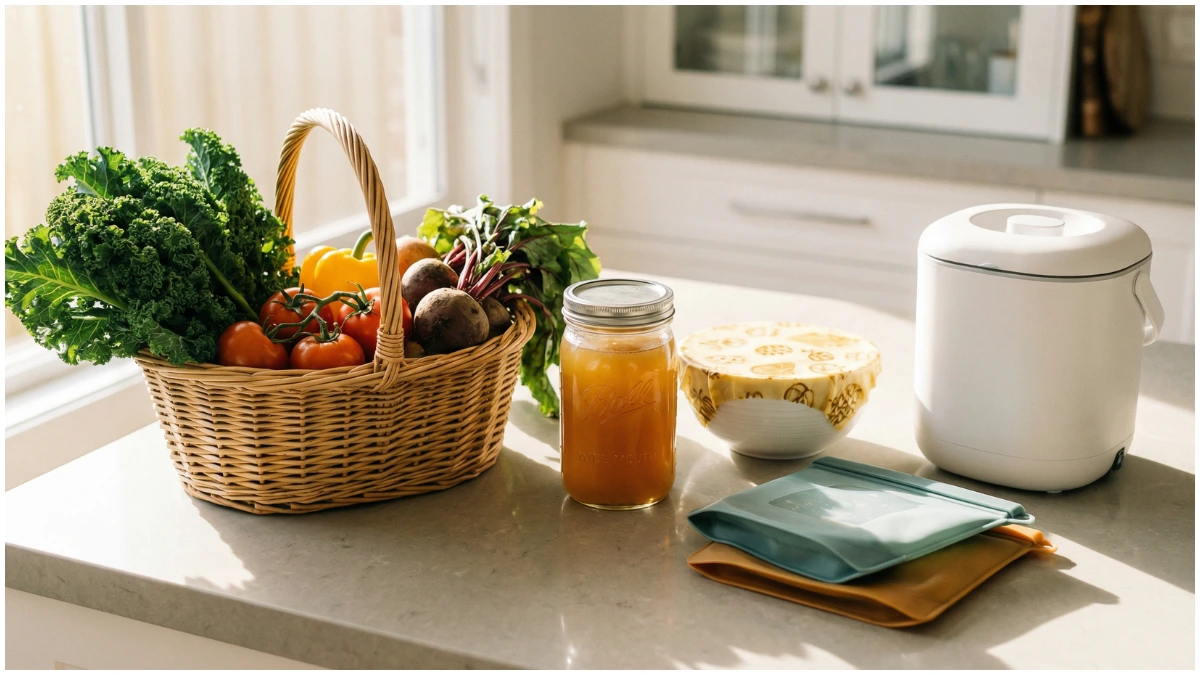

Food waste is one of the most pressing and yet most solvable environmental issues of our time. Every day, perfectly good food is thrown away in kitchens around the world — food that took land, water, energy, and labour to grow, process, and transport. The consequences reach far beyond the bin, contributing to climate change, squandering natural resources, and deepening the injustice of global hunger.
Hi, I’m Katrina — and honestly, I’m just someone who got tired of finding soft cucumbers at the back of the fridge and throwing out half a loaf of bread that I’d somehow let go stale again. I’m not a chef or a scientist; I just care about living more gently on the planet and have spent the last few years figuring out how to make that work in a real, everyday kitchen. I’ve learned that reducing food waste doesn’t require perfection or a complete lifestyle overhaul — just a handful of small, smart habits that genuinely make a difference. If you’ve been meaning to waste less and don’t know where to begin, I’m so glad you found this. Let’s dig in together.
Why Food Waste Is a Bigger Problem Than You Think
The numbers are staggering: In 2022, 1.05 billion tonnes of food were wasted globally, representing roughly 19% of all food available to consumers at the retail, food service, and household levels. That figure coexists alongside the reality that over 783 million people faced hunger that same year — a contradiction that makes reducing food waste one of the most morally compelling actions any individual can take.
Households are the single largest driver: Of all the food wasted globally, households generate 60% — around 631 million tonnes per year. That means the decisions made in home kitchens are not peripheral to the problem; they sit at its very centre. On average, each person wastes around 79 kilograms of food annually, which translates to at least one billion meals discarded in homes every single day.
The environmental cost is enormous: Food waste is responsible for 8–10% of annual global greenhouse gas emissions. When food decomposes in landfill, it releases methane — a greenhouse gas 80 times more potent than CO₂ over a 20-year period — contributing up to 14% of all global methane emissions. The resources squandered in producing uneaten food are equally significant: wasted food consumes around 28% of the world’s arable land and a quarter of all water used in agriculture.
Income level is no longer an excuse: One of the most important findings from recent global research is that food waste is not simply a wealthy-nation problem. According to UNEP research, average per capita household food waste differs by just 7 kg per person per year between high-income, upper-middle income, and lower-middle income countries — meaning waste is occurring at significant levels across virtually all economies.
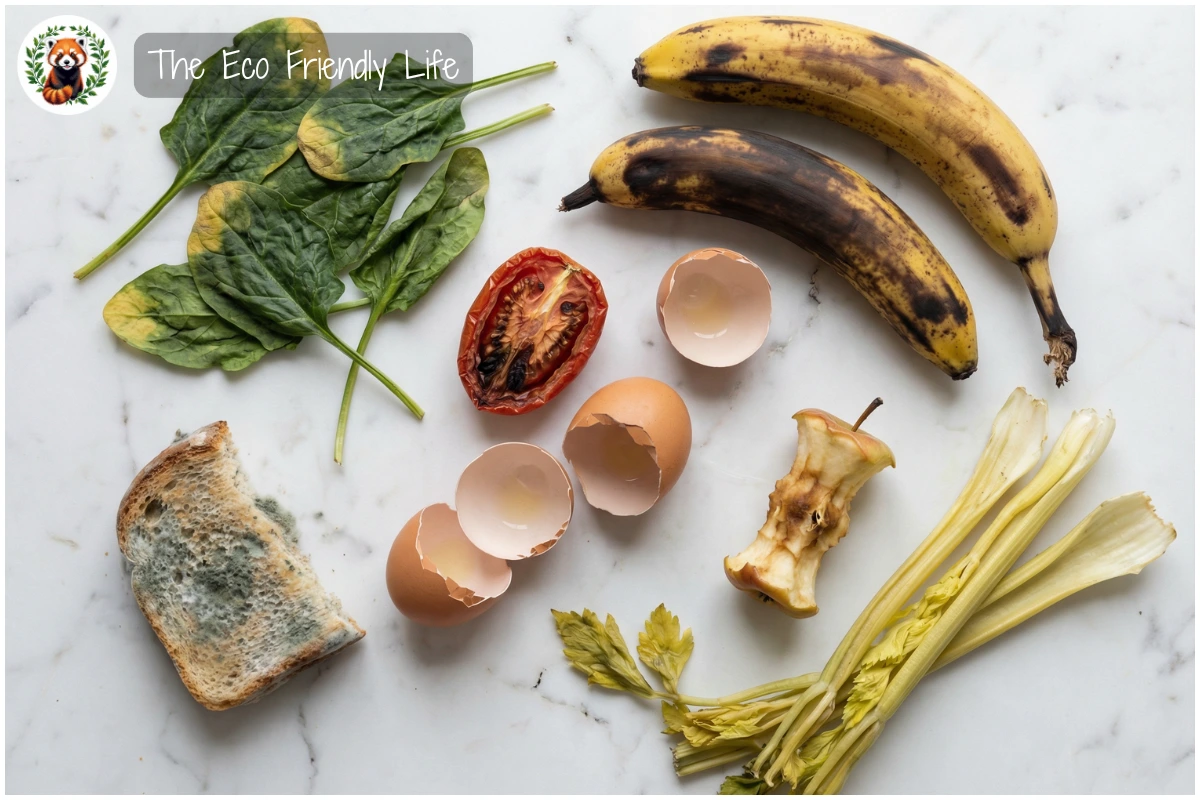
Understanding the scale of the problem is a powerful motivator — but motivation alone doesn’t change habits. The most effective place to start is before you even set foot in a supermarket, which is exactly where the next section begins.
Plan Smarter, Buy Less, Waste Nothing
Meal planning is the single most impactful habit: Deciding in advance which meals you’ll cook each week and building a shopping list around those exact recipes is one of the most effective food waste strategies available to households. By knowing precisely which ingredients you need — and in what quantities — you eliminate the most common source of waste: overbuying perishables that never get used. Even planning just four or five meals per week creates meaningful structure.
Take stock before you shop: Before writing any shopping list, spend two or three minutes checking what’s already in your fridge, pantry, and freezer. Foods nearing their use-by date should automatically become the foundation of your meal plan for that week. This practice — sometimes called the “first in, first out” method — ensures older items are used before newer ones and prevents the steady accumulation of forgotten, spoiled food.
Understand date labels correctly: A significant proportion of household food waste happens because people misinterpret date markings on packaging. According to a Harvard and NRDC report, consumer uncertainty about date labels contributes to around 20% of food waste in the home. “Best before” or “best if used by” dates indicate when a food’s quality may begin to diminish — they are not safety deadlines, and most foods past this date remain perfectly safe and enjoyable to eat. “Use by” dates, however, are genuine safety markers that should be respected, particularly for chilled meat, fish, and dairy products.
Shop more frequently for fresh produce: Rather than one large weekly shop for all your fresh food, consider splitting purchases into two smaller trips. Buying smaller quantities of fruit, vegetables, and bread more often means you’re always working with food at peak freshness — and significantly reduces spoilage before you get to them.
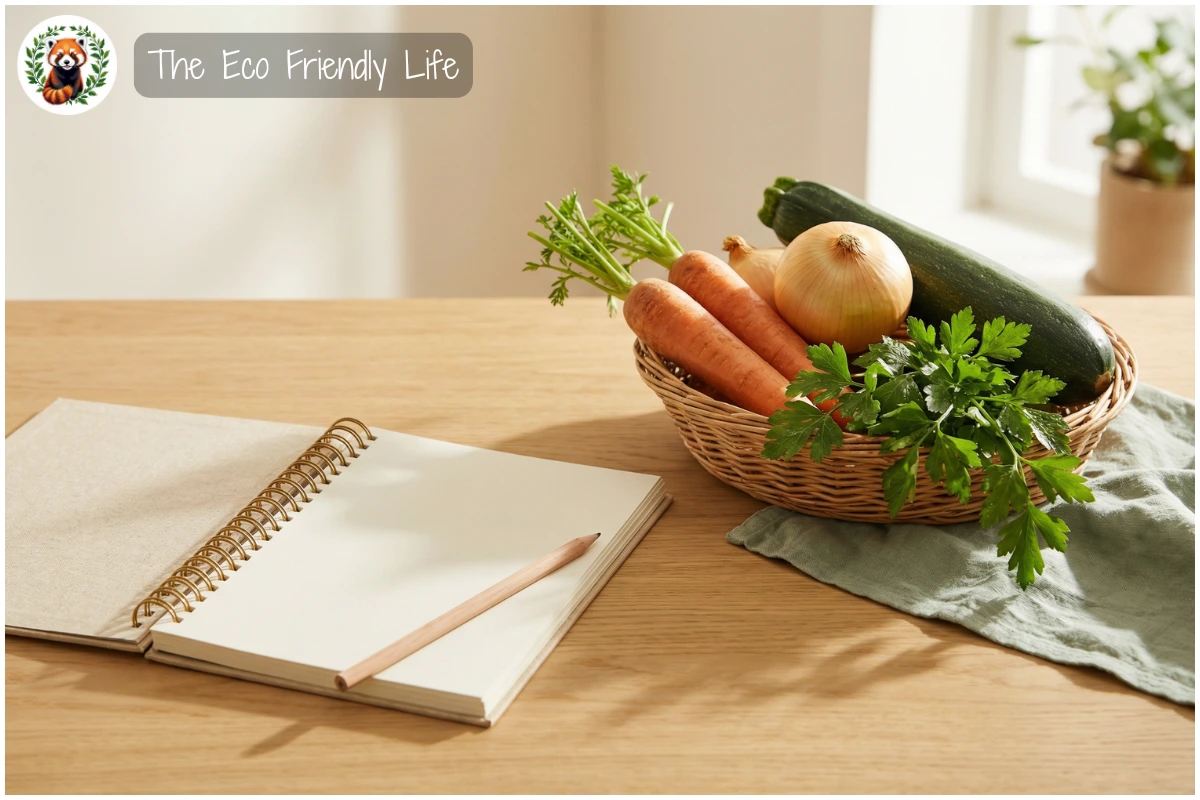
Good planning is the foundation, but even the most carefully chosen groceries can go to waste without one other critical skill: knowing how to store them correctly once they’re home. The next section covers everything you need to know.
The Art of Smart Food Storage
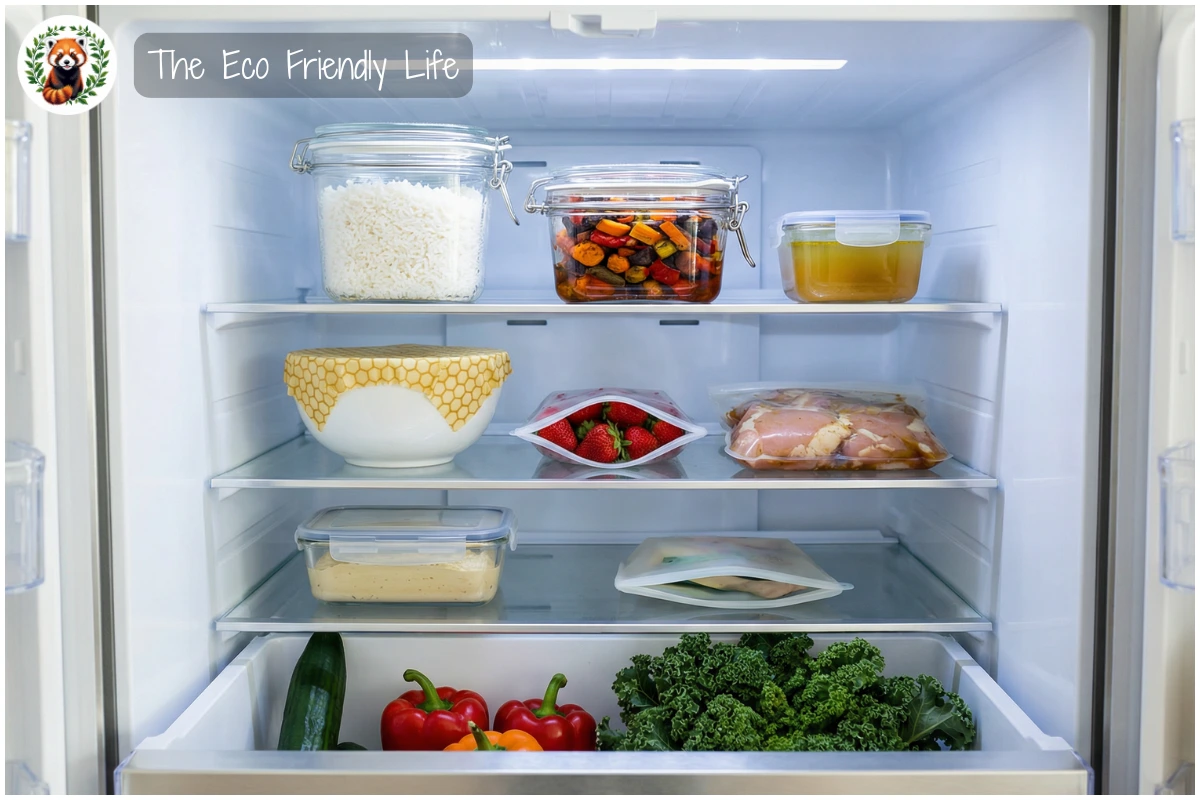
Your fridge has zones — and they matter: Different areas of a refrigerator maintain different temperature ranges, and storing food in the right zone can extend its life by several days. Raw meat belongs on the lowest shelf to prevent cross-contamination from drips; dairy and eggs are best kept in the coldest part of the fridge, not in the door where temperatures fluctuate with every opening. Leafy greens thrive in high-humidity crisper drawers, while most whole fruits do better in low-humidity settings or outside the fridge entirely.
Airtight storage is non-negotiable: Exposure to air accelerates both oxidation and moisture loss, two of the primary drivers of food spoilage. Transferring leftovers, cut produce, and dry pantry goods into airtight containers immediately after preparation makes a noticeable difference. Vacuum-sealed storage extends freshness even further, making it particularly valuable for batch-cooked meals, marinated proteins, and bulk purchases.
Reusable wraps outperform plastic every time: Beeswax wraps — made from cotton infused with beeswax, tree resin, and jojoba oil — mould around food with the warmth of your hands, creating a breathable, naturally antimicrobial seal. They keep cheese, bread, half-cut vegetables, and bowl leftovers fresher than plastic cling wrap while eliminating single-use plastic from the kitchen entirely. Reusable silicone bags offer another flexible, washable option, suitable for everything from snacks to soups.
The freezer is the most underused kitchen tool: Most people use their freezer for ice cream and forgotten peas — but it’s actually one of the most powerful food waste reduction tools in the kitchen. Bread, cooked grains, soups, sauces, overripe bananas, fresh herbs, and even raw eggs (beaten) can all be frozen before they spoil. A practical tip: freeze fresh herbs in small portions submerged in olive oil in an ice cube tray. Each cube becomes a ready-to-use flavour boost for sauces, soups, and stir-fries with no waste at all.
Now that your planning and storage habits are working together, it helps to have the right tools to back them up. The next section highlights some of our favourite products and services that directly support everything we’ve covered so far — including the creative cooking and composting strategies still to come.
Brands and Tools That Support the Planet — Our Recommendations
The right tools genuinely make reducing food waste easier, more sustainable, and more enjoyable. Below are some of our favourite retailers offering products that directly support the key habits covered throughout this article — from structured meal planning and smarter storage right through to composting and growing your own food at home.
Our Retailer Recommendations for Adults
Cook Smarts
Cook Smarts is a weekly meal planning service that generates precise, waste-reducing grocery lists tailored to your household size, dietary needs, and the number of nights you want to cook. By knowing exactly what you’ll cook and how much you need, you eliminate the overbuying that leads to spoiled, wasted food. Cook Smarts has been helping real households streamline their kitchens since 2013, and the reduction in packaged food and unnecessary purchases is a meaningful side benefit.
FoodSaver
FoodSaver specialises in vacuum sealing systems that remove air from bags and containers before storing, significantly extending the freshness of both raw and cooked food. Their range of countertop sealers, handheld sealers, and compatible vacuum seal bags and vacuum containers make it easy to preserve leftovers, batch-cooked meals, bulk purchases, and fresh produce before they have a chance to spoil — putting the smart storage principles in this article directly into practice.
Stasher
Stasher makes reusable platinum silicone food storage bags in a full range of sizes — from small snack pouches to large stand-up bags and sous vide-safe options. As a zero-waste alternative to single-use plastic bags and wraps, they’re the ideal everyday tool for storing cut produce, freezing herbs, packing leftovers, and marinating proteins. Stasher bags are dishwasher, microwave, oven, and freezer safe, and their durable design means they last for years, keeping hundreds of single-use bags out of the waste stream.
Reencle
Reencle produces a smart countertop composter that uses live microorganisms to break down food scraps — including meat, fish, dairy, and cooked food — into finished, nutrient-rich compost in as little as 24 hours. Quiet, odour-controlled, and compact enough to sit on a kitchen bench, it’s the ideal tool for closing the loop on unavoidable kitchen waste. Rather than sending organic scraps to landfill where they release methane, Reencle converts them into compost that can feed a garden or be disposed of easily — making it a natural companion to all the creative cooking and composting habits discussed in this article.
Our Retailer Recommendations for Kids/Families
Click & Grow
Click & Grow’s Smart Garden 9 lets families grow fresh basil, parsley, chives, lettuce, and more on a kitchen counter all year round. Growing their own herbs and salad greens teaches children exactly where fresh food comes from and builds a natural respect for ingredients — a mindset that directly reduces waste. It also eliminates the packaging and spoilage associated with store-bought fresh herbs, which are among the most commonly wasted items in a home kitchen.
Raddish Kids
Raddish Kids is a monthly subscription club for children aged 4–14+ with three themed clubs — Cooking, Baking, and Global Eats — each delivering illustrated recipe guides, a quality kitchen tool, culinary skill lessons, and creative activities designed to build real confidence in the kitchen. By teaching children to cook from scratch with whole, fresh ingredients, Raddish helps kids develop a genuine appreciation for food and a natural instinct to use it fully. Early kitchen confidence is one of the strongest foundations for a lifetime of less waste — and Raddish makes that learning hands-on, engaging, and genuinely fun.
Whether you’re starting with a meal planner, upgrading your storage, or getting the whole family involved in growing and cooking, small investments in the right tools make a real difference. One of the most satisfying shifts in any food-aware kitchen is learning how to cook more creatively with what you already have — and that’s exactly what the next section is about.
From Scraps to Something Brilliant — Creative Cooking and Composting
Scraps are ingredients in disguise: The parts of food we habitually throw away are often the most flavourful and nutritious. Potato and carrot peels roasted with olive oil and seasoning become crispy, delicious snacks. Parmesan rinds simmered in soups add extraordinary depth. Broccoli stalks, often discarded, are denser and sweeter than the florets and work beautifully when sliced thin and stir-fried or shaved raw into salads. Stale bread is the backbone of croutons, breadcrumbs, panzanella, French toast, and ribollita. Approaching scraps with curiosity rather than resignation opens up a new chapter in everyday cooking.
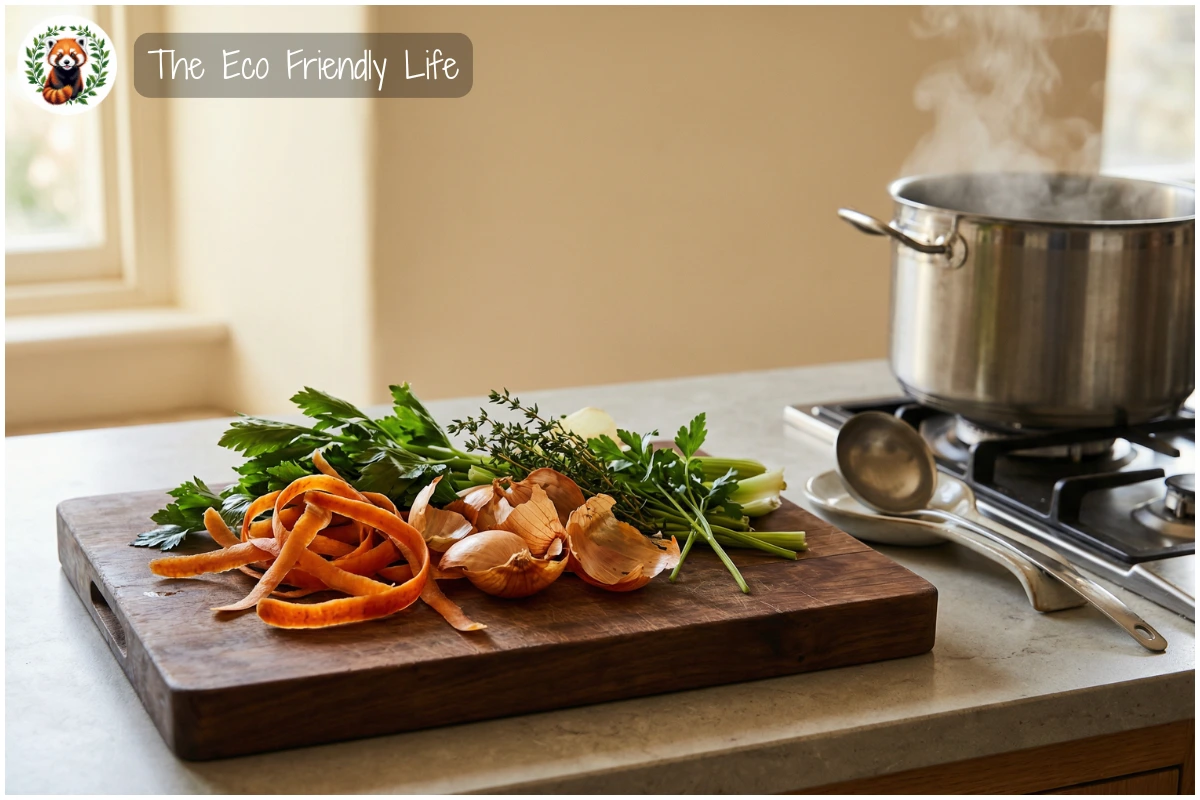
Make stock a weekly habit: One of the most impactful and satisfying ways to eliminate kitchen scraps is making vegetable stock. Collect trimmings throughout the week — onion skins, celery tops, leek ends, carrot tops, herb stems — in a container in the freezer. When it’s full, simmer everything with water and aromatics for an hour, strain, and you have rich, flavourful stock that replaces something you’d otherwise buy in plastic packaging. The same principle applies to chicken or meat bones from roasted dinners.
Batch cook and repurpose leftovers intentionally: Cooking larger quantities of base dishes — roasted vegetables, cooked grains, braised proteins — reduces both energy use and waste, and creates the building blocks for multiple meals throughout the week. A Sunday roast chicken can become Monday’s chicken tacos, Tuesday’s broth, and Wednesday’s fried rice. Leftovers stop being a chore when they’re treated as an intentional starting point rather than an afterthought.
Composting completes the circle: Even the most creative kitchen will produce some unavoidable organic scraps — coffee grounds, eggshells, fruit pits — and composting is the ideal destination for all of them. According to the FAO, composting diverts organic material from landfill, sequesters carbon in the soil, and produces a nutrient-rich soil amendment that improves plant growth and reduces the need for chemical fertilisers.
Start composting smaller than you think you need to: Getting started with composting does not require technical knowledge or a large outdoor setup. A small countertop collection bin for daily scraps is all you need to begin — scraps can then be dropped at a local community garden, farmers’ market, or municipal food-scrap collection point. Many cities worldwide now offer curbside organics collection as part of standard waste services. Even redirecting a portion of your scraps away from general waste makes a tangible environmental difference over time.
Now that we’ve covered the big-picture strategies — planning, storage, creative cooking, and composting — let’s bring everything together into a quick-reference guide of daily habits you can begin putting into practice right away.
Practical Daily Tips You Can Action Today
Small changes, practised consistently, are the engine of real progress. Here are ten practical habits you can begin implementing immediately in any kitchen, anywhere in the world.
| Tip | How to Implement It | Why It Helps |
|---|---|---|
| Do a weekly fridge check | Before shopping, scan your fridge and build meals around what’s already there. | Prevents duplicate purchases and ensures older food is used first. |
| Write a weekly meal plan | Map out 4–5 meals before making your grocery list. | Reduces overbuying and gives every perishable a clear purpose. |
| Use airtight containers | Transfer leftovers and cut produce into sealed containers straight away. | Limits oxygen exposure and extends freshness significantly. |
| Learn your date labels | Know that “best before” is about quality and “use by” is about safety. | Prevents throwing away food that is still perfectly safe and good to eat. |
| Create a “use it first” shelf | Dedicate one visible fridge shelf to items nearing their use-by date. | Keeps at-risk food front of mind so nothing is forgotten at the back. |
| Freeze before it spoils | Freeze bread, cooked meals, herbs, and produce before they go off. | Extends food life by weeks or months with almost no effort. |
| Make stock from scraps | Collect vegetable trimmings in the freezer and simmer weekly. | Transforms what would be waste into a valuable cooking ingredient. |
| Shop little and often for fresh food | Make two smaller fresh food shops per week instead of one large one. | Ensures produce is always at peak freshness and nothing overstays its welcome. |
| Plan a weekly “use it up” meal | Cook one meal each week built entirely from fridge and pantry leftovers. | Eliminates lingering scraps before the next shop and sparks creativity. |
| Start composting | Set up a countertop bin and use a local collection or backyard system. | Diverts organic waste from landfill and reduces household methane contribution. |
These habits become second nature faster than you’d expect — and once they do, reducing food waste genuinely starts to feel like the natural way to cook. If you still have a few questions before you get started, here are some of the most common ones we hear.
Frequently Asked Questions
Q: How much money can I save by reducing food waste at home?
The savings vary by household size, but many families find they reduce their grocery spending by 20–30% simply by planning meals and storing food more effectively. Every item that gets used rather than discarded represents money already spent being put to good use.
Q: Is frozen food nutritionally inferior to fresh?
Not meaningfully. Most nutrients are well preserved during freezing, and in many cases frozen produce is nutritionally comparable to fresh — particularly when the “fresh” alternative has spent several days in transit or on a shelf before reaching your kitchen.
Q: Can I compost if I live in an apartment with no outdoor space?
Absolutely. Countertop electric composters, bokashi fermentation kits, and community composting drop-off points all provide practical, odour-free options for apartment dwellers. Many cities also offer food-scrap collection as part of standard waste services.
Q: Is “imperfect” or “ugly” produce as nutritious as cosmetically perfect food?
Yes — misshapen or blemished produce is nutritionally identical to perfect-looking food and often comes from the same farms. Choosing imperfect produce reduces the enormous volume of perfectly edible food discarded before it ever reaches a store.
Organizations to Support — Our Recommendations
If you’d like your efforts to reach beyond your own kitchen, these organisations are doing exceptional work on food waste and food security globally.
- OzHarvest is a food rescue charity and official partner of the UN’s SAVE FOOD initiative, operating across Australia, New Zealand, and beyond. They collect surplus food from businesses and deliver it directly to people in need, while simultaneously running community education on food waste reduction. You can donate to OzHarvest and help ensure that good food reaches people who need it rather than going to landfill.
- Feeding America is the United States’ largest hunger-relief network, operating over 200 food banks that rescue millions of kilograms of surplus food each year from farms, retailers, and manufacturers — diverting it from landfill to people facing food insecurity. Every dollar donated through their giving page helps provide at least ten meals through their nationwide network of food banks.
- World Food Programme (WFP) is the world’s largest humanitarian organisation addressing food security and nutrition across more than 80 countries. The WFP directly tackles the hunger crisis that makes food waste so unconscionable — and by giving to the WFP, you help ensure that people most affected by food insecurity have access to the nutrition they need.
Supporting these organisations extends the impact of the choices you’re already making at home.
Resources and Further Reading
For anyone wanting to go deeper into the evidence and strategies behind food waste reduction, these expert sources are outstanding places to continue.
- The UNEP Food Waste Index Report 2024 is the most comprehensive global dataset on household, food service, and retail food waste, produced by the United Nations Environment Programme. It covers country-level data, trends, and the policy landscape shaping food waste reduction worldwide. You can download and read the full 2024 report directly from the UNEP website.
- ReFED’s Insights Engine is a detailed, research-driven platform developed by the US food waste solutions nonprofit ReFED, analysing the causes, costs, and most effective interventions for reducing food waste across the entire food system — from production through to households. Browse the full Insights Engine to access their Food Waste Monitor, Solutions Database, and Impact Calculator.
- The US EPA’s Composting at Home Guide is a thorough and practical resource for anyone beginning their composting journey, covering bin setup, what can and cannot be composted, and how to use finished compost. Read the complete composting guide on the EPA’s website for step-by-step guidance applicable to households in any country.
These resources will deepen your understanding and equip you with the knowledge to keep building on the habits you’ve started.
Our Related Articles

Minimalism 101: Why Less Is More
The modern world bombards us with messages to buy more, own more, and do more. But what if the path to greater happiness, financial security,…
Read More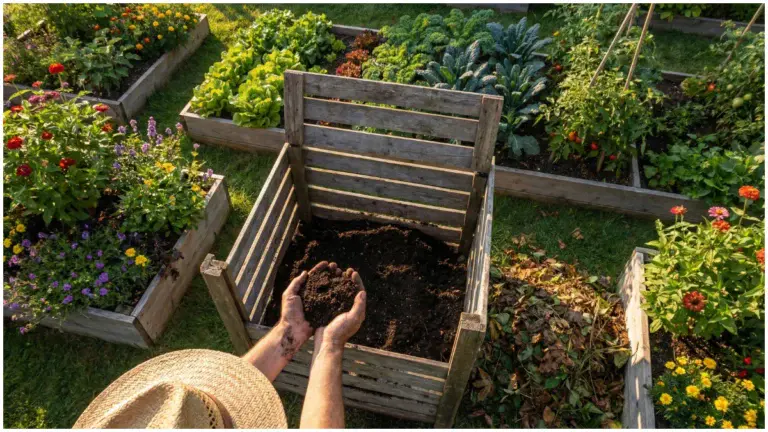
Choosing The Right Compost Bin For Your Space
Composting transforms kitchen scraps and yard waste into nutrient-rich soil, reducing landfill contributions while creating “black gold” for your garden. Whether you’re working with a…
Read More
The Benefits Of Choosing Organic Food
The way we choose our food has never been more important. As awareness grows about the connection between what we eat and our overall well-being,…
Read MoreConclusion
Minimising food waste in your kitchen is one of the most direct, impactful things any individual can do for the planet — and the good news is that it starts with small, everyday decisions that build into lasting habits. From planning your meals and shopping with intention, to storing food correctly, cooking creatively with what you have, and composting what remains, each step forward matters. The tools, techniques, and resources to make it happen are accessible to anyone, anywhere in the world, regardless of the size of your kitchen or your budget.
Start with just one change this week. Write that meal plan, clear out the fridge before your next shop, or finally set up a composting bin. Then add another habit the week after. Over time, what begins as effort becomes instinct — and your kitchen transforms from a place where food is wasted into one where it is deeply valued.
Have you already started making changes to reduce food waste at home? What single habit has made the biggest difference in your kitchen? Share your experience in the comments below — we’d love to hear what’s working for you!