



The word sustainability gets thrown around constantly — in news headlines, on product packaging, in government policy, and at school pickup. Yet for most people, its real meaning, and what it actually looks like in daily life, remains genuinely unclear. Sustainability is not a trend, a brand identity, or a single action like recycling. It is a framework for understanding the relationship between human choices and the long-term health of the planet, and learning how to act within that framework is one of the most practical skills any person can develop today.
My name is Al, and I’m going to be honest with you — I’m not a scientist or a policy expert. I’m just someone who started paying closer attention to how my everyday decisions connect to larger systems, and that curiosity completely changed how I shop, eat, travel, and talk to my kids about the world. Sustainability education doesn’t require a university degree or years of research. It starts with understanding a handful of ideas clearly, and from there, the practical steps follow naturally. I’m so glad you’re here, and I hope this article gives you the clarity, confidence, and tools to take the kind of action that genuinely makes a difference — keep reading, because there’s a lot here that might surprise you.
⭐ Our Top Pick — Best Online Sustainability Course
Coursera — Introduction to Sustainability (University of Illinois Urbana-Champaign)
I chose this course over the many sustainability programs available on Coursera because it's taught by Dr. Jonathan Tomkin, Associate Director of the School of Earth, Society, and Environment at one of the world's leading research universities — and its eight-module curriculum maps almost exactly onto the concepts this article covers, making it the ideal companion for anyone who wants to go deeper after reading.
It gives you a structured, university-backed path through core sustainability concepts — from climate systems and energy to food, water, biodiversity, and environmental ethics — all at your own pace, from anywhere in the world.
- ✅ Taught by the University of Illinois Urbana-Champaign
- ✅ Self-paced | Auditable for free, certificate available
- ✅ Globally accessible | Digital delivery
| Mid-range (audit free / certificate ~$49)
👉 Enroll in Introduction to Sustainability on Coursera
The Core Concepts Every Sustainability Learner Should Know
What sustainability actually means: The most widely accepted definition of sustainability comes from the 1987 Brundtland Commission, which described it as “meeting the needs of the present without compromising the ability of future generations to meet their own needs.” This simple sentence carries enormous weight. It means every choice we make today — what we buy, what we eat, how we travel, how we produce energy — either contributes to or draws down from a shared resource account that future generations will inherit. Understanding this definition is not just academic; it changes the way you evaluate almost every everyday decision.
The three pillars — and why all three matter: Sustainability is commonly organized into three interconnected domains: environmental, social, and economic. Environmental sustainability focuses on protecting ecosystems, maintaining biodiversity, and managing the natural systems that regulate our climate and water supply. Social sustainability addresses justice, equity, and the well-being of communities — particularly those most vulnerable to environmental degradation. Economic sustainability asks whether our systems of production and consumption can continue long-term without destroying the ecological foundations they depend on. UNESCO’s ESD for 2030 framework specifically integrates all three domains into its learning outcomes, recognizing that treating them in isolation produces incomplete and often counterproductive solutions.
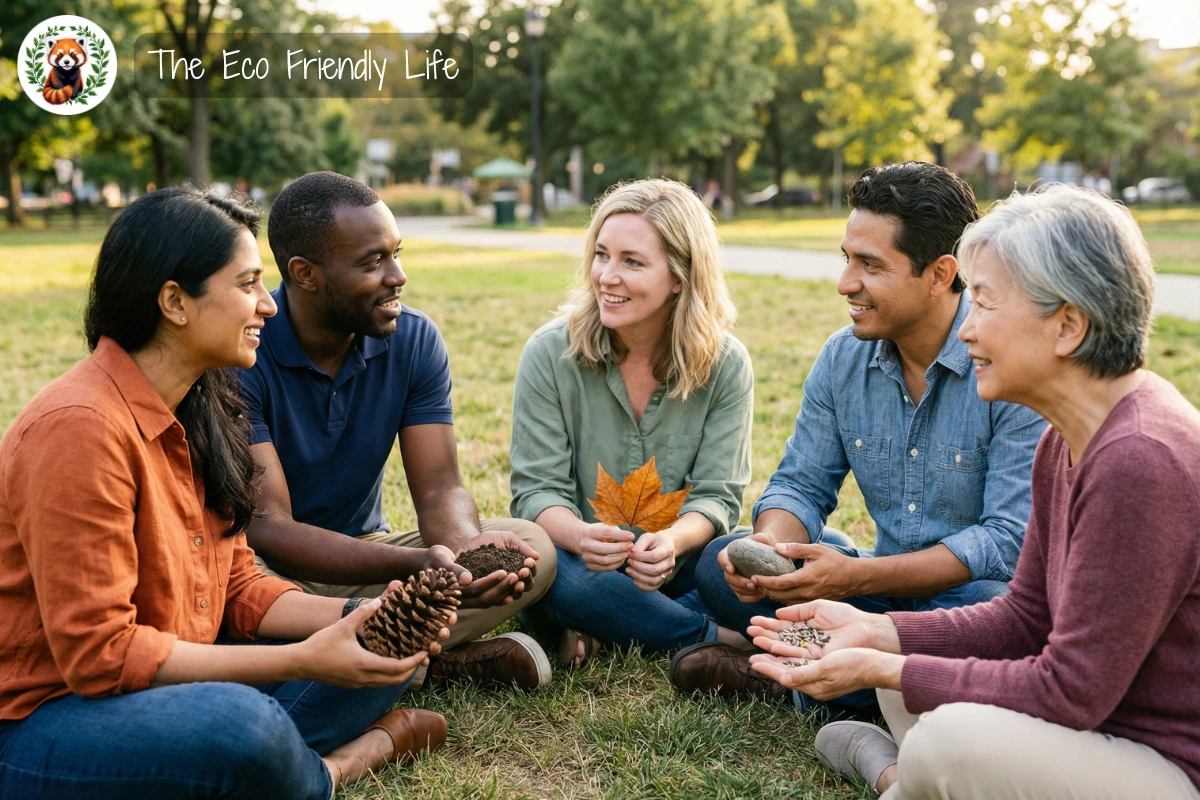
The 17 Sustainable Development Goals: In 2015, all United Nations member states adopted the 17 Sustainable Development Goals — a globally agreed blueprint for a sustainable future to be achieved by 2030. The SDGs address everything from zero hunger and clean energy to quality education and climate action. For everyday learners, the SDGs are enormously useful because they connect personal choices to global outcomes in concrete terms. Your food choices relate to SDG 2 (Zero Hunger) and SDG 13 (Climate Action) simultaneously. Understanding which goals your habits support — or undermine — gives sustainability education a practical anchor that makes abstract ideas feel genuinely actionable.
Why education is the lever: UNESCO identifies education as the key enabler of progress across all global development goals, teaching people of all ages to develop the critical awareness and skills needed to act with intention — cognitively, emotionally, and behaviorally. It is not simply about memorizing facts about climate change; it is about developing the values, skills, and habits needed to contribute to a just and livable world. That is a worthy undertaking at any age, and it genuinely starts with learning the basics — which is exactly what a course like the University of Illinois’s Introduction to Sustainability on Coursera is designed to deliver.
⚙️ Recommended: Coursera — Introduction to Sustainability
If this section has sparked your curiosity and you want to explore these core concepts in a structured way, this is exactly the course I’d point you toward first. It covers all eight knowledge areas of sustainability theory — population, ecosystems, energy, agriculture, water, policy, ethics, and cultural history — in a self-paced format you can fit around your regular life.
- ✅ University of Illinois Urbana-Champaign | 8 modules
- ✅ Certificate available | Financial aid offered
- ✅ Self-paced, globally accessible
Understanding what sustainability means at its foundation makes the next step far more meaningful: learning how to see the connections between issues rather than treating each one in isolation. That kind of joined-up thinking has a name, and it may be the single most valuable mental shift you can make as a sustainability learner. The next section explores it in full.
Systems Thinking: The Lens That Changes Everything
What a system actually is: A system is a set of interconnected elements that function together as a whole. Your body is a system. A forest is a system. A city’s food supply chain is a system. Systems thinking is the practice of understanding how the parts of a system relate to each other — and how changes in one part affect the whole. For sustainability learners, developing this habit of thought is genuinely powerful because most environmental problems are not isolated issues; they are symptoms of deeper systemic imbalances that cannot be solved by addressing a single variable in isolation.
Why linear thinking falls short: Most people are trained to think in straight lines: problem → cause → solution. But environmental challenges rarely work that way. Reducing plastic bag use in one country can inadvertently shift demand toward heavier alternatives with a higher carbon footprint. Generating electricity with solar panels reduces emissions, but storing that energy in batteries requires mining lithium and cobalt, which carries its own environmental and human cost. Systems thinking helps you see these feedback loops and trade-offs before acting, leading to more durable and genuinely effective choices. Developing this mindset means seeking solutions that strengthen the whole system rather than simply patching a single symptom — and that distinction separates short-term fixes from lasting change.
Systems thinking in sustainability education: Leading sustainability educators and institutions around the world recognize systems thinking as one of the most fundamental competencies a sustainability learner can develop, as reflected in UNESCO’s sustainability competencies. The ability to identify the elements of a system, recognize interconnections among them, and analyze how a system behaves across different scales is what separates people who genuinely understand sustainability from those who recycle simply because they feel they should. When learners engage with real-world systems through hands-on experience, collaborative problem-solving, and direct environmental exposure, their understanding deepens in ways that classroom theory alone rarely achieves.
How to practice it in everyday life: You don’t need a course to begin applying systems thinking. Start by asking “what happens next?” with any decision. If you buy a new phone, trace where the materials came from, how it was manufactured, how it will be powered, and where it will go when you’re done with it. When you eat a meal, consider the land, water, labor, and transportation involved in getting each ingredient to your plate. As RMIT’s Learning Lab explains, systems thinking means “considering the effects on all parts of a system rather than just one” — and that shift in perspective, practiced consistently, fundamentally changes the quality of the choices you make day to day.
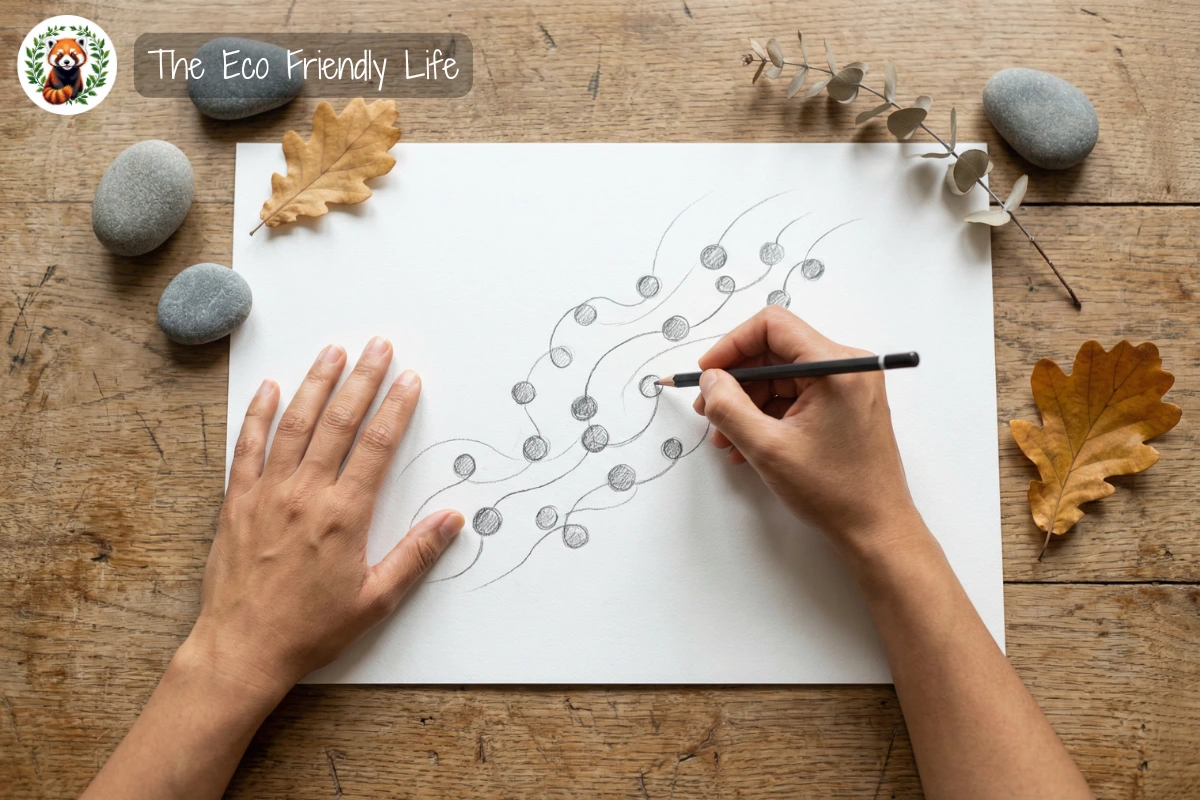
Systems thinking gives you the mental architecture to understand complexity. The next concept — the circular economy — takes that understanding and translates it directly into everyday consumer choices and household habits you can begin changing right now. It is one of the most immediately actionable ideas in all of sustainability education, and it applies to decisions you are already making every single day.
Living the Circular Economy Every Day
From linear to circular: For most of modern industrial history, economies have operated on a “take, make, dispose” model — extract raw materials, manufacture products, use them, and throw them away when finished. The circular economy replaces this straight line with a loop. Products are designed to be reused, repaired, refurbished, or recycled so that materials stay in circulation for as long as possible, and waste is designed out of the system entirely. The European Parliament defines it as a model that involves “sharing, leasing, reusing, repairing, refurbishing and recycling existing materials and products as long as possible” — a fundamental rethinking of what we mean by the end of a product’s life.
What this means at the consumer level: For everyday people, the circular economy shows up in the choices already available right now. Buying secondhand rather than new. Repairing a broken appliance rather than replacing it. Choosing products with take-back or recycling programs. Supporting brands that use recycled or regenerative materials. RMIT’s Learning Lab describes circular economies as systems where “products are reused or recycled, or even better designed with the next purpose in mind.” Every purchasing decision is, in effect, a vote for either the linear or circular model — and those votes accumulate across billions of people every single day, shaping the incentives that drive manufacturers and retailers worldwide.
Circular thinking and food waste: One of the most powerful places to apply circular economy principles is at home, particularly around food. According to FAO figures, roughly one-third of all food produced globally is lost or wasted across the supply chain — and when food ends up in landfill, it releases methane, a greenhouse gas far more potent than carbon dioxide over short time frames. Composting food scraps closes the loop by returning nutrients to soil rather than sending organic matter to decompose anaerobically underground. Planning meals, buying only what you need, and using leftovers creatively are all circular economy practices that cost nothing and reduce your household’s environmental footprint in a meaningful, measurable way every single week.
The connection between systems thinking and circular design: The circular economy is not a standalone idea — it is systems thinking made physical. When you design a product with its second life in mind, you are applying systems thinking to material flows. When you choose to repair rather than replace, you are recognizing that the value embedded in a product — the energy, the labor, the raw materials — does not have to be discarded just because it stopped working. These two concepts reinforce each other powerfully, and together they form the practical core of educated, sustainable living in the modern world.
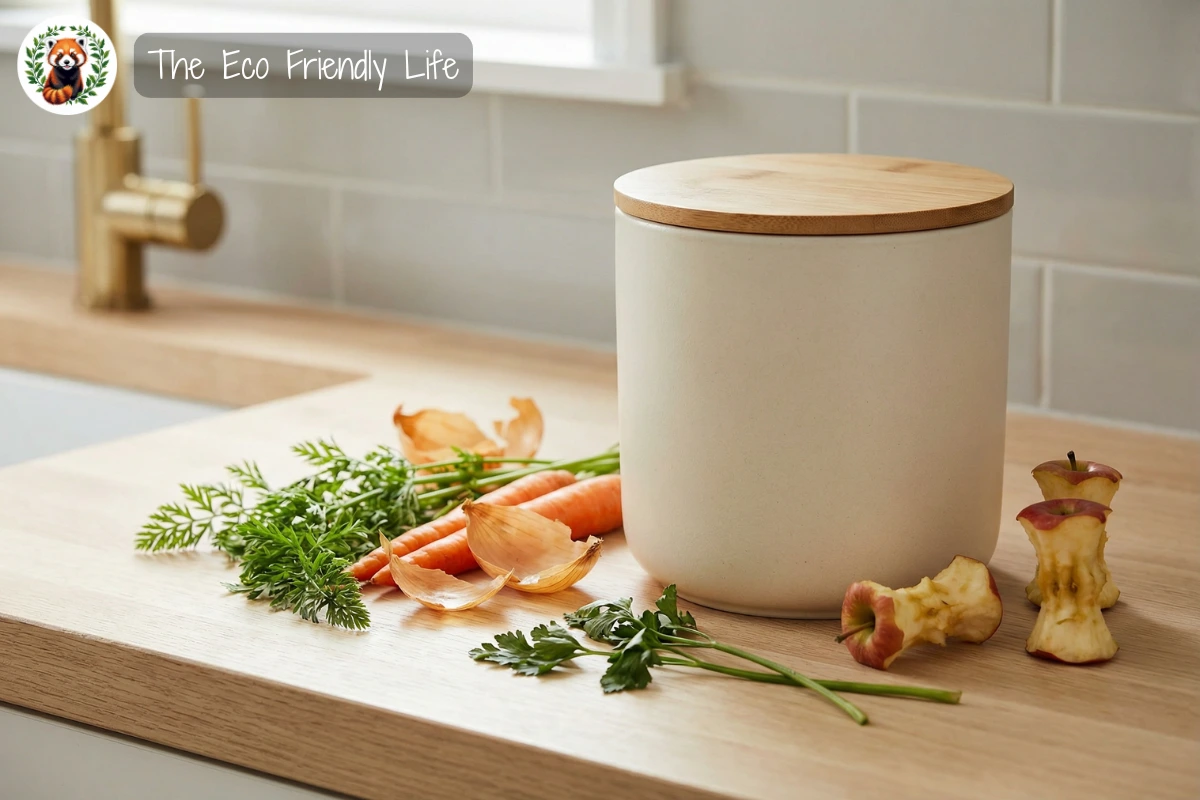
Understanding the circular economy is one thing — having the right resources to act on it is another. The retailers and platforms below have each been handpicked specifically because they connect directly to the concepts covered in this article, whether that means deepening your sustainability education, building your knowledge library, earning a hands-on certification, or making genuinely circular choices in your everyday shopping.
Brands and Tools That Support the Planet — Our Recommendations
Every retailer below was chosen because it sells or delivers something that directly supports the topic blocks in this article — sustainability education, systems thinking, circular economy practice, and raising environmentally aware children. These are not general eco-friendly picks; each one is here because of what it specifically offers a reader of this article.
For Adults: Learning Resources and Education Platforms
Coursera
For readers who want to go beyond this article and build a genuine foundation in sustainability theory, Coursera’s Introduction to Sustainability — taught by Dr. Jonathan Tomkin of the University of Illinois Urbana-Champaign — covers population dynamics, ecosystem science, climate systems, energy, food, water, and environmental policy across eight structured modules. I specifically chose this course over others because its curriculum mirrors almost exactly what this article covers, making it a natural, structured next step rather than a separate tangent. A free trial is available globally, financial aid can be requested if needed, and a verified certificate is available for a modest fee — or unlock this course alongside 10,000+ others with a Coursera Plus subscription.
Chelsea Green Publishing
Chelsea Green has been a world-leading publisher of books on sustainable living, permaculture, and regenerative economics since 1984 — their catalog is essentially a deep library of everything covered in this article, written by the practitioners who built the modern sustainability movement. For readers who want long-form, authoritative education on circular systems, regenerative food, and ecological thinking, there is simply no better single publisher to start with. Standout titles include The Resilient Farm and Homestead, a permaculture and whole-systems design manual grounded in 20 years of hands-on practice; The Lean Micro Farm, which shows how small-scale, hyperlocal farming can be both ecologically and economically superior to industrial agriculture; and The Biochar Handbook, a comprehensive guide to biochar’s world-changing applications for soil restoration and regenerative growing. All three are relevant for anyone — regardless of whether you have a backyard plot or a working farm. Most titles ship globally and are also available as e-books.
Ecoversity
For readers ready to commit to applied sustainability education, Ecoversity offers a live online Permaculture Design Certification taught over six months by internationally recognized practitioners, covering regenerative design, systems thinking, food systems, and ecological restoration in a genuinely immersive, community-based format. I recommend Ecoversity specifically because their programs address the very concepts this article introduces — systems thinking and circular design — in a hands-on, practical way that self-paced video courses rarely achieve. Open to students globally.
EarthHero
For readers ready to apply circular economy principles to their everyday purchases, EarthHero is a certified B Corp marketplace carrying 250+ rigorously vetted sustainable brands. Categories span home & kitchen, personal care, and sports & outdoors — with options suited for men and women alike — and every brand is screened for genuine environmental credentials. EarthHero’s transparent vetting process removes the guesswork of identifying greenwashing, making it one of the most trustworthy starting points for putting the circular economy principles in this article into action, one purchase at a time. Ships to the US and internationally.
For Families: Sustainability Education for Kids
KiwiCo
KiwiCo delivers monthly STEAM subscription boxes for children from babies through teens, with hands-on projects designed to build scientific thinking and genuine curiosity about the natural world — making abstract concepts like ecosystems and energy cycles tangible and engaging for kids. Younger children (ages 5–8) will love the Kiwi Crate, which blends science and art projects that naturally spark wonder about how the world works, while older kids (ages 9–12) can dig into real engineering and invention with the Tinker Crate. For kids who are curious about cultures, geography, and our shared planet, the Atlas Crate (ages 6–12) is a wonderful fit — and for creative kids who love art and design, the Doodle Crate channels that energy beautifully. All crates are designed to be inclusive and engaging for all kids regardless of gender. I love KiwiCo for this article because it takes the “raising the next generation of environmental thinkers” section off the page and turns it into something families can do together every single month. Ships globally, including to Australia, the UK, Canada, and Europe.
Green Kid Crafts
Developed by a mother and environmental scientist, Green Kid Crafts produces award-winning eco STEAM subscription boxes for children aged 3–10+, with two plans to choose from — the Junior subscription (ages 3–5) and the Discovery subscription (ages 5–10+) — each containing 4–6 nature-based activities built around specific environmental themes, from soil science to water cycles, using only sustainable, non-toxic materials. All boxes are designed for both boys and girls, and for a one-off gift, the Creativity Art Box is a wonderful standalone option filled with eco-friendly art supplies and hands-on creative projects. Through a partnership with One Tree Planted, one tree is planted for every order placed. I’ve recommended Green Kid Crafts before on this site and stand by it entirely — the educational mission behind each box is rare and it genuinely shows in every activity. Ships to the US and over 35 countries internationally, including Canada, the UK, Ireland, Australia, New Zealand, Japan, and across much of Europe and Asia.
Now that you have a solid set of resources to support your own learning and your family’s, let’s move into one of the most impactful areas for long-term sustainability change — raising children who don’t just understand these concepts intellectually, but genuinely live them from an early age.
Raising the Next Generation of Environmental Thinkers
Why early environmental education matters so much: The habits, values, and ways of thinking that children develop in their first decade shape their adult behavior in ways that formal education later struggles to replicate. Children who grow up engaging with nature, learning about food systems and waste, and experiencing environmental stewardship as a normal part of home life carry those values forward into adulthood. UNESCO’s Education for Sustainable Development framework explicitly recognizes lifelong learning as central to its approach — meaning sustainability education is not just for schools, but for kitchens, backyards, and living rooms. Every family conversation about where food comes from, or what happens to a bottle after recycling, is an act of sustainability education.
Practical approaches for home learning: Some of the most effective environmental education for children involves no curriculum at all. Growing something edible — even a single herb in a windowsill pot — teaches children about soil, water, food systems, and patience simultaneously. Sorting recyclables, composting food scraps, and choosing products together at a store while talking about why certain options are better all embed sustainability thinking into daily routines rather than isolating it as a separate lesson. Approaches that weave ecological concepts across everyday experiences — rather than treating them as isolated lessons — consistently produce stronger and more durable environmental understanding in children than any single dedicated class.
Asking the right questions: Environmental educator frameworks consistently show that curiosity-led conversations are more effective with children than lectures or warnings. Asking “Where do you think this water comes from before it gets to our tap?” or “What do you think happens to this bottle after we put it in the recycling bin?” prompts genuine thinking rather than passive reception of information. Assigning children real, age-appropriate environmental responsibilities — composting food scraps, tending a plant, sorting recycling — gives them a tangible sense of agency and accountability that is far more motivating than being told what they should care about.
Community and school partnerships: Environmental education becomes especially powerful when it extends beyond the home into the broader community. Local nature reserves, community gardens, repair cafés, and neighborhood sustainability organizations in cities across North America, Europe, Australia, Asia, Africa, and South America often welcome families and offer free or low-cost ways for children to participate in meaningful, hands-on environmental work. These experiences — getting soil under their fingernails, seeing where food comes from, watching a broken object get fixed rather than thrown away — are frequently more memorable for children than anything they will encounter on a screen.
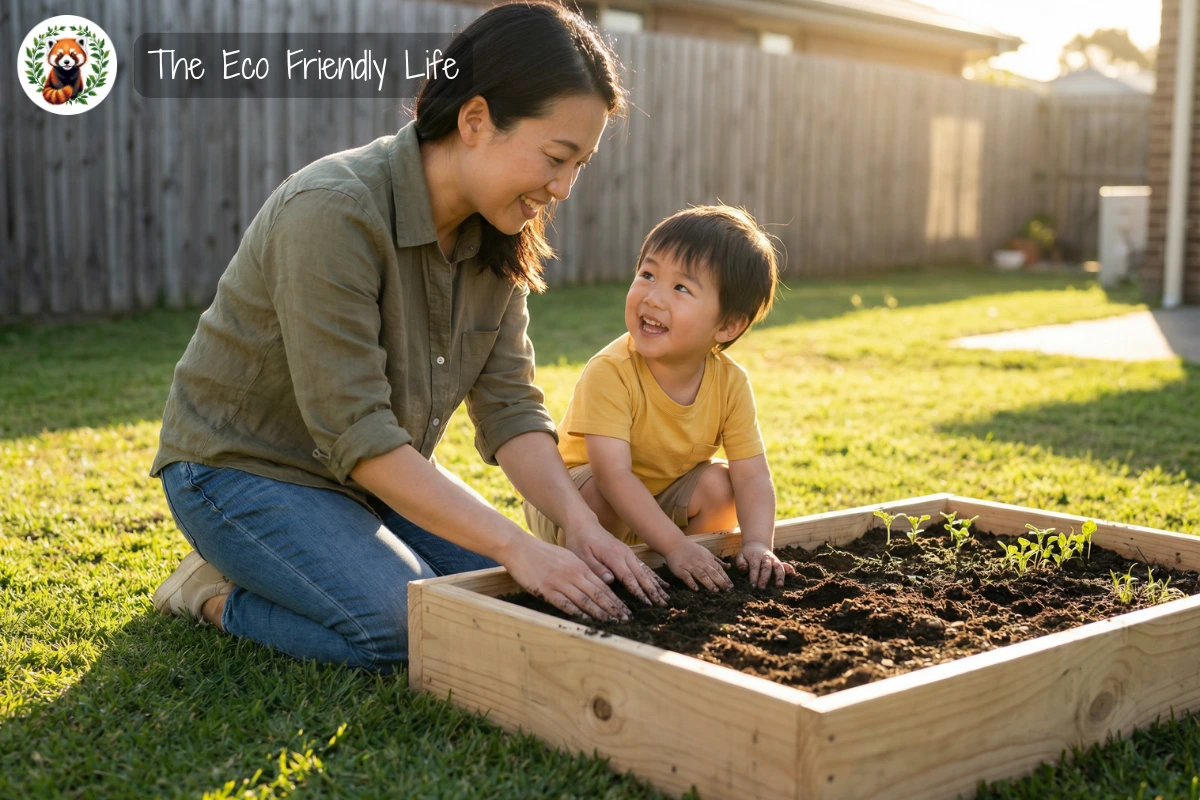
With the big ideas covered and the family strategies in place, it’s time to bring everything together into concrete, immediate actions. Every tip below is drawn directly from the concepts explored throughout this article — and every single one can be started today, wherever you live in the world.
Practical Daily Tips You Can Action Today
Small, consistent actions build powerful habits. Here is a concise guide to applying sustainability education in your daily life, starting from wherever you are right now:
| Tip | How to Implement It | Why It Helps |
|---|---|---|
| Learn one new concept per week | Audit a free lesson on Coursera, read a short article from a trusted sustainability organization, or watch a documentary. Build knowledge gradually to avoid overwhelm. | Understanding the “why” behind sustainable choices makes them stick long-term and leads to better, more consistent decisions. |
| Audit your household food waste | Keep a small tray in your fridge for leftover ingredients and plan one “use it up” meal per week before you shop again. It takes only five minutes of planning. | Food waste in landfill produces methane, one of the most potent short-term greenhouse gases — reducing it at home is one of the highest-impact individual actions available. |
| Switch to a reusable water bottle and coffee cup | Keep both in your bag every day. Most cafes globally now accept personal cups, and many offer a small discount for bringing your own. | Single-use plastics are among the most persistent pollutants in ocean and freshwater ecosystems worldwide, and this single swap eliminates hundreds per person per year. |
| Research the circular credentials of your next purchase | Before buying anything new, spend two minutes checking whether a secondhand version exists or whether the brand offers a repair or take-back program. | Every product not manufactured new saves raw materials, water, energy, and transportation emissions — and supports demand for genuinely circular business models. |
| Start a household compost system | A small sealed countertop bin collects food scraps cleanly indoors. Many local councils globally offer subsidized outdoor compost bins, and Bokashi systems work well in apartments with no outdoor space. | Composting diverts organic waste from landfill and returns nutrients to soil, supporting healthy food systems and reducing greenhouse gas emissions. |
| Teach a child one sustainability concept this week | Frame it as a question: “Where do you think this water comes from?” or “What happens to this bottle after we recycle it?” Curiosity-led conversations are more effective than lectures. | Children who learn sustainability through engaged conversation and lived experience retain those values and behaviors well into adulthood. |
| Choose repair over replacement once this month | Search for a local repair café, cobbler, or appliance repair service for something broken in your home. Repair cafés exist in hundreds of cities globally and often fix items free or at very low cost. | Repairing items instead of replacing them reduces manufacturing demand, saves materials, and significantly lowers your household’s landfill contribution. |
| Read product labels with new eyes | Look for certified B Corp, Fair Trade, and certified organic logos — these are independently verified, not self-declared, and reflect genuine social and environmental standards. | Label literacy helps you make genuinely considered choices and redirects purchasing power toward businesses operating to verifiable sustainability standards. |
| Reduce meat consumption by one meal per week | Swap one weekly meat-based dinner for a plant-based alternative. You don’t need to eliminate meat — even a modest reduction in frequency meaningfully lowers your dietary carbon and land-use footprint. | Livestock agriculture accounts for a significant share of global greenhouse gas emissions, land use, and freshwater consumption. |
| Share what you learn | Mention a sustainability concept in conversation, post about it on social media, or bring it up at a community group. Shared knowledge multiplies impact far beyond individual action alone. | Social norms shift when more people openly discuss and model sustainable behavior — your conversation could be the nudge that permanently changes someone else’s habits. |
These tips are most powerful when layered gradually rather than attempted all at once — start with one or two that feel natural, build the habit over a few weeks, and then add the next. The most common questions I receive about getting started are answered directly below.
FAQs
Q: Do I need to be an expert to start learning about sustainability?
Absolutely not — sustainability education is designed for everyone, and the most important step is simply deciding to start. Even understanding one concept clearly, like the circular economy or systems thinking, will change how you see everyday choices.
Q: How is sustainability education different from environmentalism?
Environmentalism typically focuses on advocacy and the protection of the natural world, while sustainability education is broader — it integrates environmental, social, and economic thinking and focuses specifically on building the knowledge, skills, and habits needed to act responsibly at every level of daily life.
Q: Is online sustainability education actually worth the time?
Yes — especially for adults who can’t access formal programs. Platforms like Coursera offer university-level sustainability courses with free audit options, taught by accredited professors at leading institutions. The flexibility and quality make online learning one of the most practical pathways for adult sustainability education available anywhere in the world.
Q: How do I talk to my kids about environmental challenges without causing anxiety?
Focus on agency rather than fear. Frame conversations around what people are already doing, what your family can contribute, and what has already improved through collective action. Children respond far better to empowerment than alarm, and connecting them with hands-on activities in nature helps build genuine love for the environment — which is a far more durable foundation for sustainable behavior than fear.
Organizations to Support
The following three organizations are among the most credible and globally active bodies working directly at the intersection of sustainability education, environmental empowerment, and community action — and each offers a clear way for individuals around the world to contribute:
- UNESCO‘s Education for Sustainable Development Program is the world’s leading intergovernmental initiative, working across 194 member states to embed sustainability into education systems from early childhood through adult learning. Their ESD for 2030 framework sets the global standard for how people learn about environmental and social responsibility. You can engage with their work and contribute to the global greening education movement through the UNESCO Greening Education Partnership, where individuals, educators, and organizations can pledge action and connect with the broader program.
- The North American Association for Environmental Education (NAAEE) has spent over 55 years advancing environmental education excellence across North America and beyond, developing the evidence-based frameworks that educators and community organizations around the world rely on for high-quality sustainability learning. Their work spans research, professional development, early childhood programs, and global advocacy. You can directly support that mission by making a tax-deductible donation through NAAEE’s giving page, which funds programs, conferences, and resources that benefit educators and learners worldwide.
- Earth Charter International (ECI) is a global civil society network that promotes a values-based approach to sustainable development, grounded in ethics, justice, and ecological care. Their education programs build sustainability leadership capacity in universities and communities across dozens of countries. You can financially support their ongoing work — including the Earth Charter Scholars Bridge, which sponsors educators into ESD courses — by donating directly through Earth Charter’s donation page.
Each of these organizations offers a meaningful way to connect your personal learning journey to a much larger global movement.
Resources and Further Reading
For readers who want to go deeper, these are among the best globally recognized expert sources on sustainability education — all freely accessible, wherever you are in the world:
- UNESCO’s Greening Education Partnership provides comprehensive, freely accessible guidance on embedding sustainability into learning environments globally — serving as a collaborative platform for governments, civil society, youth, and educators to deliver coordinated action that prepares every learner with the knowledge, skills, and values to tackle climate change and promote sustainable development. It is one of the most practically useful planning resources available for educators and policymakers at any level. Access the full resource through UNESCO’s Greening Education Hub.
- The NAAEE Guidelines for Excellence provide a comprehensive, expert-reviewed framework for what high-quality environmental education looks like in practice — covering everything from early childhood through non-formal adult learning. These guidelines represent decades of evidence-based research on what actually works in sustainability learning and are used by educators across North America and beyond. The full series is freely available for educators, parents, and community leaders at NAAEE’s Guidelines for Excellence.
- The Ellen MacArthur Foundation’s Circular Economy Learning Hub is the world’s most authoritative freely accessible resource on circular economy thinking, explaining the three core principles — eliminate waste and pollution, circulate products and materials at their highest value, and regenerate nature — with case studies, videos, and learning resources suited to general audiences and specialists alike. It is the natural next step for anyone who found the circular economy section of this article useful and wants to go further. Access the full learning hub at Ellen MacArthur Foundation.
Our Related Articles
History And Evolution Of Environmental Education
Environmental education didn’t appear overnight—it evolved through decades of growing awareness, global collaboration, and shifting priorities about our relationship with the natural world. From early…
Read More
How We Can Help The Environment
The planet we live on is under enormous pressure — from rising temperatures and shrinking forests to oceans overwhelmed with plastic. The challenges can feel…
Read More
Your Guide To Key Environmental Terms
Understanding the language of environmental science is the first step toward becoming an informed planetary citizen. Whether you’re hearing about climate policies on the news,…
Read MoreConclusion
Sustainability education is not a single lesson or a one-time commitment — it is a lifelong practice of learning, questioning, and choosing more thoughtfully. At its core, it comes down to understanding a handful of powerful ideas: that our choices connect to systems far larger than we can immediately see, that resources are finite and shared across generations, that circular thinking can replace waste with lasting value, and that the young people growing up in our homes will inherit the world shaped by the decisions we make today. None of this requires perfection. It requires curiosity, a willingness to keep learning, and the courage to act on what you know — even in small ways. Start with one concept from this article. Learn it well. Apply it to one decision this week. Then share what you’ve learned with someone you care about.
I’d love to hear where you are in your sustainability education journey — whether you’re just starting out, deepening your understanding, or already bringing these ideas into your home with I’d love to hear where you are in your sustainability education journey — whether you’re just starting out, deepening your understanding, or already bringing these ideas into your home with your kids. What’s one sustainability concept that has most changed the way you think or live? Share your answer in the comments below — your experience might be exactly what another reader needs to hear.