


Most advice on how we can help the environment reads like a checklist where every item weighs the same — swap the bulbs, carry a tote bag, remember your reusable cup, feel vaguely better. It rarely tells you which of those things actually matters and which ones are closer to theatre. That gap is what this article is for.
I’m Al, and I spent about two years making changes at home without once checking whether any of them worked. When I finally sat down and looked at the actual numbers, I was surprised twice over — by how small some of my proudest swaps turned out to be, and by how large one thing I’d barely considered actually was. If you’re tired of being told everything matters equally, keep reading — this is the priority order I wish someone had handed me at the start.
🌎🌱🤝 Our Top Pick — Best Everyday Reusable Water Bottle
Klean Kanteen 20oz Rise Classic with Arch Loop Cap
I picked this one over half a dozen bottles I’ve tried because it’s the one that survives being thrown in a bag every single morning without complaint. It keeps drinks cold for more than 65 hours and hot for over 20, so it works for coffee in January and iced tea in July without you owning two bottles.
- ✅ 90% recycled steel
- ✅ Lifetime warranty
- ✅ Ships to 40+ countries
| ~ $36.95 | Mid-range
👉 Shop Klean Kanteen Bottle (opens in a new tab)Start With the Changes That Actually Move the Needle
Not every swap is worth the same effort: Most of what I got wrong came down to treating every change as equally important, when the research says they clearly are not. Some sit an order of magnitude above others, and knowing which is which changes where you should actually spend your effort first.
Households are not a rounding error: Roughly two-thirds of global greenhouse gas emissions trace back, directly or indirectly, to what households consume, at a global average of about 6 tCO2eq per person, according to a widely cited peer-reviewed analysis by Ivanova et al. (opens in a new tab) That single number is the reason this article exists. It also means the “individual action doesn’t matter” argument is weaker than it sounds — the household is where most of the emissions actually live.
Not every green action belongs in the same category: The measured hierarchy matters more than the vibe of an action. Living car-free, switching to a battery-electric vehicle, and taking one fewer long-haul return flight each carry a median mitigation potential above 1.7 tCO2eq per person per year. Shifting to renewable electric vehicles (opens in a new tab) and renewable electricity sits close behind at 1.6 tCO2eq, with dietary change lower still. Taken together, the ten highest-impact consumer actions average 9.2 tCO2eq per person. None of that is a guess — it’s the same research base cited above.
Small swaps still count, just not as much: A reusable bottle and a bag of LED bulbs are genuinely worth doing, and I’ll get to both. But they are not in the same weight class as how you get to work or how your home is powered, and pretending otherwise is exactly the kind of undifferentiated advice that makes people give up on all of it. Knowing the difference is the whole point of ranking rather than listing.
The cheap win that actually pays you back: LEDs use up to 90 percent less energy and last up to 25 times longer than traditional incandescent bulbs, and lighting makes up around 15 percent of a typical home’s electricity use, according to SafeElectricity.org (opens in a new tab). Switching saves the average household roughly $225 a year. Few energy-efficient home (opens in a new tab) upgrades pay for themselves this fast.
The honest limitation is money and geography: The biggest levers on that list are also the ones most constrained by both. Not everyone can buy an EV, choose a different electricity supplier, or drop a car entirely — plenty of people don’t have that option where they live or what they earn. The useful response isn’t to pretend the rankings don’t exist because they’re inconvenient. It’s to rank what you personally can change, and start there instead of at the bottom of the list.

Waste and plastic are where almost everyone starts, for understandable reasons — the bin is right there, and sorting it feels like doing something. It deserves an honest look at what that sorting actually accomplishes, and what would accomplish more.
Cutting Waste and Plastic Without Overhauling Your Life
The scale is bigger than a bin can fix: Every single day, the equivalent of 2,000 garbage trucks of plastic gets dumped into the world’s oceans, rivers and lakes — somewhere between 19 and 23 million tonnes a year leaking into aquatic ecosystems, according to UNEP (opens in a new tab).
🌿✨ Recommended: Klean Kanteen 20oz Rise Classic with Arch Loop Cap
I chose this as the one bottle to feature because it’s the single most repeatable swap in this whole article — it directly replaces the bottled drinks that keep showing up in that plastic figure above, and it does it at any budget, in any country.
- ✅ Insulated 20oz capacity
- ✅ 90% recycled steel
- ✅ B Corp certified
The number that should actually change your behavior: Only 9 percent of the world’s plastic waste is successfully recycled, and the world now produces roughly twice as much plastic waste as it did two decades ago, per the OECD Global Plastics Outlook (opens in a new tab). I’ll be blunt about this one — most of what goes into a recycling bin does not come back as anything.
This means the fight is at the shelf, not the bin: If recycling is a weaker backstop than most of us assume, the leverage point moves upstream — to what you buy in the first place, not what you do with it afterward. Rather than attempting a whole-house overhaul that collapses in a fortnight, identify the two or three single-use items you personally get through most often and replace just those. A zero waste lifestyle (opens in a new tab) built this way tends to actually stick.
Four categories cover almost everyone’s waste: Drinks bottles, food storage and cling film, cleaning-product bottles, and paper goods. I think of these as the four things I kept buying without noticing, not as a shopping list — the retailers further down this article map onto exactly these categories, once you’re ready to look.
Here’s the honest ceiling on a single household: Household plastic is a small share of total global plastic production, and no household is going to meaningfully dent 23 million tonnes on its own. The real leverage a consumer has here is demand signal, not volume — buying less of something and buying it differently tells manufacturers something, even if it doesn’t move the tonnage.
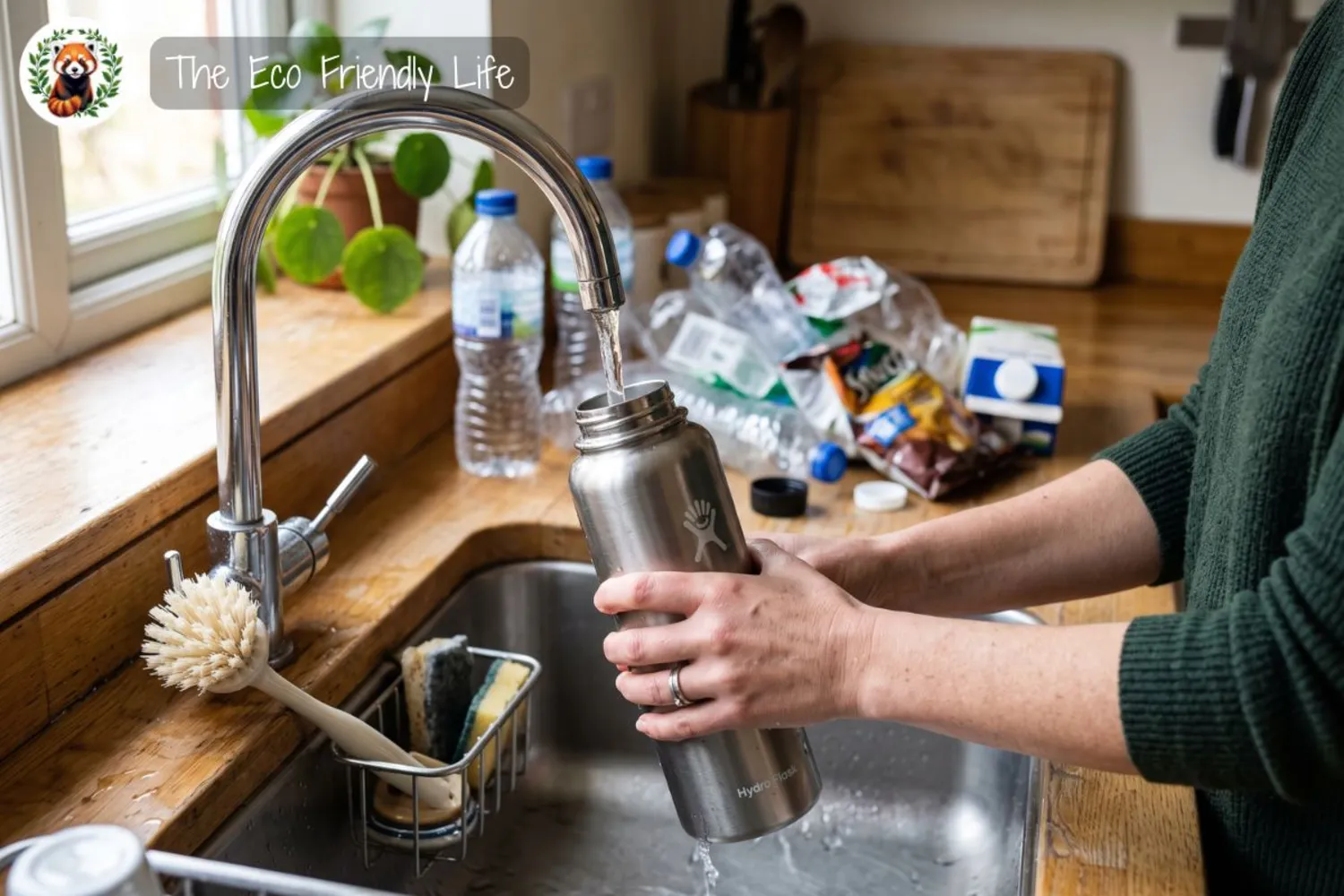
Waste is where most people start. Food is where most people stop paying attention — and it’s the lever I had almost entirely backwards for years.
Food Is the Household Lever Most People Underestimate
Food is not a side issue — it’s a quarter of the problem: Food production accounts for about 26 percent of global greenhouse gas emissions, uses roughly half the world’s habitable land, and takes 70 percent of global freshwater withdrawals, according to Our World in Data (opens in a new tab), based on the widely cited Poore and Nemecek research.
The waste figure that reframes what’s in your fridge: The world wasted 1.05 billion tonnes of food in 2022, and 60 percent of that happened inside households — over a billion meals a day, according to the UN Food Waste Report (opens in a new tab). Food loss and waste alone generates 8 to 10 percent of global emissions, roughly five times the footprint of the entire aviation sector.
“Eat local” is mostly a red herring: Transport is only about 5 percent of food-system emissions. What you eat matters far more than how far it traveled — a kilogram of beef emits around 60 kg of CO2eq, while a kilogram of peas emits around 1 kg. That’s the part I had backwards for years, and it’s genuinely the most useful thing in this whole article.
So only two food actions actually matter: Waste less of what you already buy — meal-planning before you shop is boring and it works — and shift some meals away specifically from beef and lamb, rather than attempting a full diet overhaul that most people abandon within weeks. That’s the whole sustainable food (opens in a new tab) strategy that survives real life.
Real families need a target that survives contact with dinner: I have two boys, and dietary change runs straight into culture, budget, health and what a nine-year-old will actually eat without a fight. “Three plant-forward dinners a week” is a target that survives contact with a real family. “Go vegan” is a target that, for most households I know, does not.
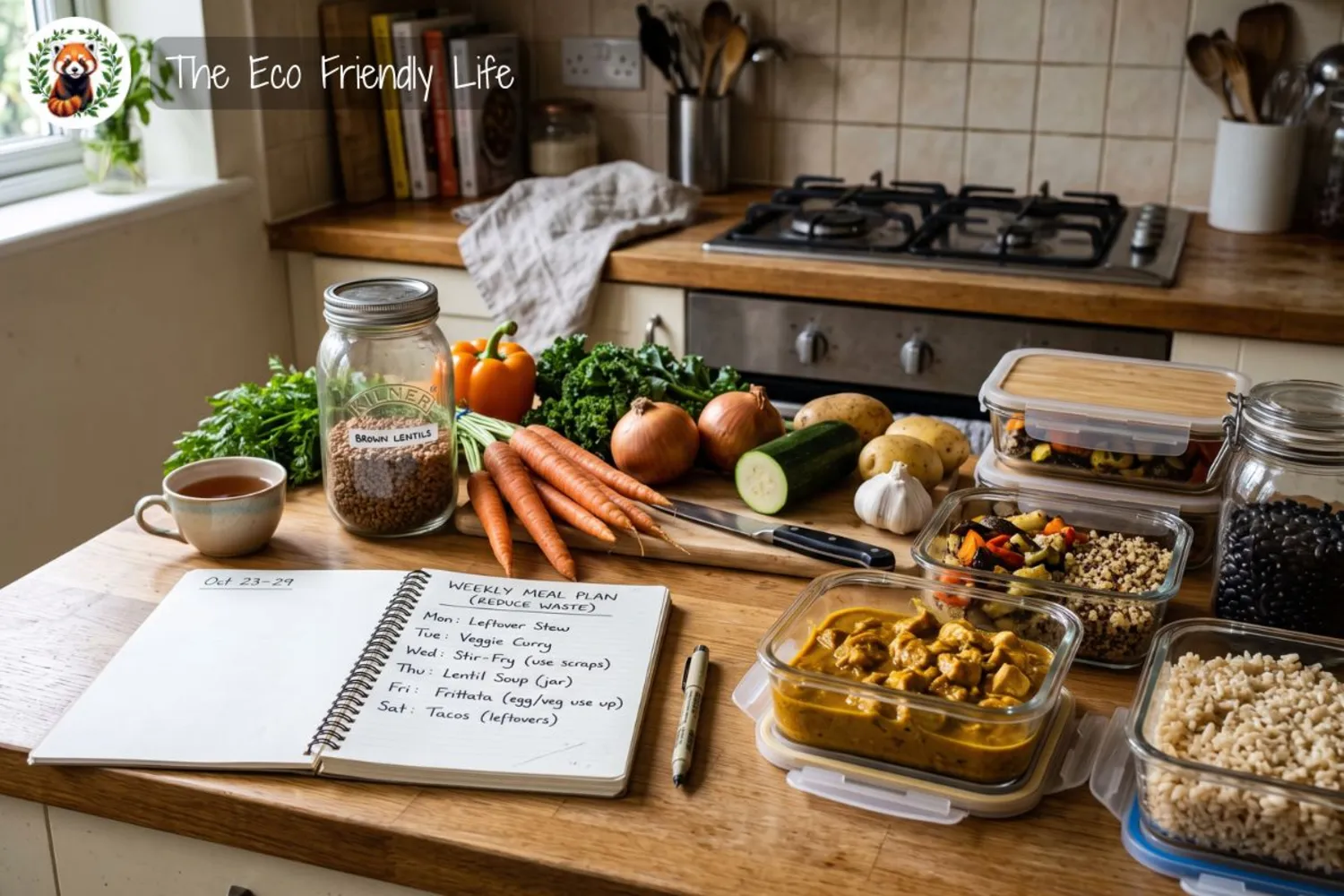
Everything above is worth doing on its own. Here’s where to actually find the things I’ve been describing, from the bottle to the bags to the paper towels.
Brands and Tools That Support the Planet — Our Recommendations
None of the advice above requires buying anything new. But if you’re replacing something you already use regularly, these are the specific products I’d point you toward — chosen for direct relevance to what’s covered above, not because they paid for the placement.
Our Retailer Recommendations for Adults
Klean Kanteen
About
Klean Kanteen makes insulated stainless steel bottles built to replace single-use drinks packaging for good, and is a Certified B Corp with a long-standing environmental giving program. It’s the most directly relevant retailer in this article because a reusable bottle is the single most repeatable swap covered above.
Our Recommendation
The 20oz Rise Classic (opens in a new tab) is the bottle I’d actually recommend carrying daily — it’s the same one featured as our Top Pick, and the size hits the sweet spot between “fits in a bag” and “doesn’t need refilling three times a day.”
Who Gives A Crap
About
Who Gives A Crap sells 100% recycled and bamboo toilet paper and paper goods, with half of profits funding sanitation projects. It’s relevant here because paper goods are one of the four recurring single-use categories named above, and toilet paper is a purchase everyone makes without thinking twice.
Our Recommendation
The 100% Recycled Toilet Paper (opens in a new tab) in 48 mega rolls is the one purchase on this list that requires zero behavior change — you just buy a different roll next time. Ships within the US.
Blueland
About
Blueland makes refillable cleaning products designed to eliminate the plastic spray bottle entirely — you keep one bottle and refill it with a dissolvable tablet. The cleaning aisle is almost entirely single-use plastic and it’s a category most people never reconsider.
Our Recommendation
The Clean Essentials Kit (opens in a new tab) comes with four Forever Bottles and a set of tablet refills, and it’s genuinely covered our house’s most-used cleaners in one order. Ships within the US.
Stasher
About
Stasher makes platinum food-grade silicone bags built to replace cling film and zip-lock bags — the single most repeated disposable in most kitchens. They’re the clear category leader on reusable food storage.
Our Recommendation
The Reusable Silicone Sandwich Bag (opens in a new tab) is a solid everyday choice, though the opening runs tight for a full sandwich — it works better for snacks and produce than its name suggests. Ships within the US and Canada.
Our Retailer Recommendations for Kids/Families
Klean Kanteen (Kids)
About
The same recycled-steel construction and B Corp credentials as the adult bottle above, scaled down for smaller hands. This is the swap that gets single-use bottles out of a school bag for good.
Our Recommendation
The 12oz Kid’s Classic (opens in a new tab) with its flip-seal sport cap and stainless straw held up well through a full school year in our house — it dents and scratches, but it survives. Not intended for children under three.
ECOlunchbox
About
ECOlunchbox makes plastic-free stainless steel lunch containers, certified B Corp and women-owned. It attacks packaging waste in a lunchbox every single school day, which does more than teaching recycling in the abstract.
Our Recommendation
The Three-in-One Classic (opens in a new tab) nesting bento is sized for a child’s lunch, not an adult’s — it’s not leak-proof, so skip it for soups or dressings, but for a sandwich and sides it’s held up for years by most accounts.
The list above covers the recurring purchases. What’s next is the part almost nobody gets to: water, nature, and the honest limit of what any one household can do alone.
Water, Nature, and Why Doing This Together Beats Doing It Alone
Water use is bigger than most people estimate: The average American family uses more than 300 gallons of water a day at home, with roughly 70 percent of that used indoors and about 30 percent outdoors, according to the US EPA WaterSense (opens in a new tab). Less than 1 percent of the planet’s water is actually available for human use — it’s a smaller share than the scale of daily use would suggest.
The nature number that needs a careful read: Monitored wildlife populations have declined by an average of 73 percent since 1970, per the WWF Living Planet Report (opens in a new tab). I want to be precise about what that means, because it gets misquoted constantly — it’s an average decline across monitored populations, not a claim that 73 percent of individual animals are gone. It’s still a serious number. It’s just a different number than the one people repeat.
What a garden or a balcony can genuinely do: Native planting supports local pollinators in a way ornamental planting simply doesn’t. It won’t reverse habitat loss on its own — that’s driven by agriculture and development at a scale no garden can touch — but it’s measurable at the local level, and it’s one of the few pieces of habitat a household actually owns outright. If you want to go further, organic gardening (opens in a new tab) is a natural next step once the basics are in place.
The honest ceiling, and the way through it: Individual action alone will not solve this. I want to say that plainly rather than dodge it, because pretending otherwise is exactly the kind of overclaiming that makes people distrust this kind of advice. But that’s an argument for doing it alongside other people, not an argument for doing nothing — a litter pick, a community composting scheme, a school garden, a workplace policy, a vote. These are the actions where one person’s effort recruits somebody else’s, which is the only real mechanism by which a household-scale change becomes a system-scale one. If you’re looking for the honest answer to “isn’t this all pointless without governments and corporations,” community action (opens in a new tab) is where that answer actually lives.

You don’t need to do all of this at once. Here’s a shorter list of exactly where to start.
Practical Daily Tips You Can Action Today
A ranked list is only useful if you can act on it today. Here are ten specific things you can actually do, starting with the one that matters most: knowing your own numbers before you spend a cent.
| Tip | How to implement | How it helps |
| Rank your own levers before you buy anything | Spend ten minutes listing your car use, flights, home heating and diet. Start at the top, not the bottom. | Stops effort being spent on low-impact swaps while the big ones go untouched. |
| Swap the bulbs you actually leave on | Replace incandescents in your highest-use fixtures first — kitchen, hallway, living room. | LEDs use up to 90 percent less energy and pay for themselves in months. |
| Combine or drop one car trip a week | Batch errands, walk the short ones, or take transit for a regular commute day. | Transport is one of the highest-impact categories a household controls. |
| Meal-plan before you shop | Ten minutes and a rough five-dinner outline. Shop to the list. | Household food waste is 60 percent of all food waste — this attacks it directly. |
| Move two or three meals a week off beef and lamb | Swap to lentils, beans, chicken or fish in meals you already cook. | Beef is roughly 60 times the emissions of peas per kilogram — the swap does the work. |
| Stop buying the single-use item you buy most often | Identify your top recurring disposable and replace just that one. | Reduction beats recycling: only 9 percent of plastic is actually recycled. |
| Fix leaks the week you notice them | Check taps, cisterns and outside hoses; repair drips immediately. | Household water use is larger than most people estimate and leaks run 24 hours a day. |
| Run appliances only when full | Wait for full loads in the dishwasher and washing machine; use the eco cycle. | Cuts water and energy per item with zero cost or lifestyle change. |
| Put one native plant in your outdoor space | Pick a species native to your region and plant it where it will actually thrive. | Native plants support local pollinators far more effectively than ornamentals. |
| Do one environmental thing with other people | Join a litter pick, a community compost scheme, or a local group — once. | Collective action is the mechanism that turns household changes into system change. |
Small, repeatable actions beat a single ambitious overhaul that burns out in a month. Pick two or three from this list to start, not all ten.
FAQs
A few questions worth answering directly before you go.
Is individual action actually worth it, or is this all on governments and corporations?
Both, and they’re connected. Around two-thirds of global emissions are linked to household consumption, so the household is not a rounding error. But the honest answer is that individual action works best as a demand signal and social proof — it changes what gets made and what becomes normal. Dismissing it isn’t supported by the evidence; treating it as sufficient on its own isn’t either.
What is the single highest-impact change most people can make?
For most households it sits in transport or home energy — cutting car use, switching to an EV, taking fewer long flights, or moving to renewable electricity. Food comes next. Reusable bottles and LED bulbs are worth doing and cost almost nothing, but they’re not in the same weight class, and it’s more useful to know that than to be told everything matters equally.
Does buying “eco” products actually help, or is it just greenwashing?
Some of both. Third-party certifications — B Corp, Cradle to Cradle, EPA Safer Choice, ENERGY STAR — are far more reliable than a brand’s own green claims. But the most environmentally sound version of almost any product is the one you already own. Buying less beats buying greener.
Is “eat local” the best way to cut the footprint of my food?
Usually not. Transport is only about 5 percent of food-system emissions. What you eat matters far more than how far it traveled — locally raised beef still has a much larger footprint than beans shipped across an ocean. Cutting food waste and shifting some meals away from beef and lamb does far more than sourcing locally.
How do I know whether my recycling is actually being recycled?
Often it isn’t — globally only 9 percent of plastic waste is successfully recycled. Check your local authority’s accepted-materials list, never “wish-cycle” (contaminating a load can send the whole batch to landfill), and treat recycling as the last line of defense rather than the first.
Organizations to Support — Our Recommendations
If you want to put money behind this instead of — or alongside — changing what you buy, these three organizations are the ones I’d point you toward.
- Ocean Conservancy works directly on the plastic-in-waterways problem described above, running the International Coastal Cleanup and ongoing plastics policy work. Its give and support (opens in a new tab) page states that every $2 donated can remove roughly one pound of trash from the ocean.
- The Nature Conservancy maps onto the water and biodiversity themes covered here. It operates in more than 80 countries and has protected over 125 million acres, with local giving pages for readers outside the US. You can donate to their mission (opens in a new tab) directly.
- Rainforest Alliance bridges the food and land-use themes from earlier in this article — sustainable agriculture, forest protection and supply-chain accountability. Their get involved (opens in a new tab) page is published in six languages with both one-time and monthly donation options.
All three accept direct donations and operate at a genuinely global scale, so wherever you’re reading this from, your donation isn’t going into a single-country effort.
Resources and Further Reading
If you want to go deeper than this article, these three are worth your time.
- Project Drawdown’s Drawdown Explorer ranks over 100 climate solutions from Highly Recommended down to Not Recommended, with the emissions each could realistically avoid. It’s the best companion to the ranking argument this whole article is built on — you can explore the rankings (opens in a new tab) yourself and see, for instance, that improving diets scores dramatically higher than plastics recycling.
- The US EPA’s Household Carbon Footprint Calculator turns the abstract into a number for your specific household — home energy, transport and waste — and estimates what each change would actually save you. Use the footprint calculator (opens in a new tab) to find your own priority order. It’s built around US assumptions, so treat the specific numbers as a starting point if you live elsewhere.
- UNEP’s Eight Ways to Overcome the Waste Pollution Crisis is the systemic counterpart to the household focus of this article, covering food waste, textiles, e-waste, plastics, hazardous waste and city design, plus the policy levers behind each. Read the waste pollution guide (opens in a new tab) if you’ve done the household changes and want to know what happens above your pay grade.
Our Related Articles

How To Transition To A Zero Waste Lifestyle
Every day, the average person generates waste that adds up to a staggering problem for our planet. With 353 million tonnes of plastic waste created…
Read More (opens in a new tab)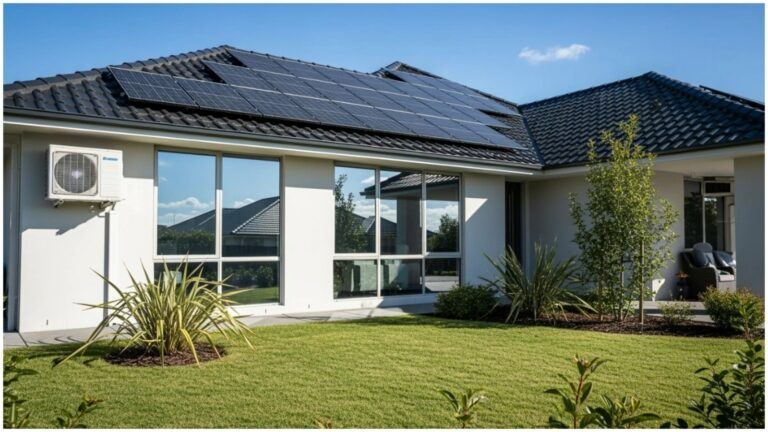
How To Make Your Home Energy-Efficient
Rising energy costs and growing environmental concerns are driving more people than ever to rethink how they power their homes. The good news? Making your…
Read More (opens in a new tab)
The Key Principles And Benefits Of Sustainable Food
Our planet faces a critical moment. While nearly 783 million people experience hunger globally, we waste approximately one-third of all food produced. The way we…
Read More (opens in a new tab)Conclusion
If there’s one thing worth taking from this, it’s that not all of these changes are equal, and pretending they are is what makes this advice feel exhausting instead of useful. Start with transport and home energy if you can touch either one. Then food — waste less, and shift a couple of meals a week away from beef and lamb. The bottle, the bulbs, and the bar of soap matter too, just not as much as you’ve probably been told. And none of it has to happen alone; the things you do with other people are the ones with a ceiling worth raising.
Which of these changes have you actually stuck with — and which one quietly fell apart after a month?
