



Every appliance in your home is quietly drawing power, and over time those kilowatts add up to a significant chunk of your household energy bill — and a measurable footprint on the planet. The encouraging reality is that energy-efficient appliances have never been better. Modern designs deliver the same or superior performance using a fraction of the electricity, and in many cases they also save water, run more quietly, and simply last longer. Choosing wisely, room by room, is one of the most practical and impactful steps any household can take toward a genuinely greener lifestyle.
I’m Al, and honestly, my journey into sustainable living started with nothing more glamorous than a jaw-dropping electricity bill. I’m not an engineer or an environmental scientist — just someone who became quietly obsessed with understanding where household energy goes and what we can realistically do about it. That curiosity grew into a genuine passion for sustainable living, and I love sharing what I’ve learned with anyone who’s ready to make a change. Welcome — I’m really glad you’re here. If you’ve ever wondered which appliance upgrades are actually worth it, room by room, you’re in exactly the right place. Keep reading, because there’s a lot of practical goodness ahead.
The Kitchen — Where the Biggest Energy Savings Begin
The refrigerator runs around the clock: Of all the appliances in a typical kitchen, the refrigerator is the single biggest energy consumer because it never switches off. Older models — particularly anything more than 10 to 15 years old — can use two to three times more electricity than a modern, energy-certified equivalent. When shopping for a replacement, look for products carrying ENERGY STAR certification (used widely across North America and internationally recognised), the EU Energy Label A-rated products in Europe, or national energy rating labels used across Asia and other regions. Models with inverter compressors are especially worth seeking out — they adjust motor speed continuously rather than switching fully on and off, which dramatically reduces energy draw over time.
Dishwashers are more efficient than most people realise: A well-chosen, energy-efficient dishwasher uses far less water than hand-washing a full load, which means it saves both water and the energy required to heat it. The key is selecting a model with a soil sensor that adjusts the wash cycle based on how dirty the dishes actually are, rather than running at full intensity regardless. Running a fully loaded dishwasher on an eco cycle — which uses lower water temperatures over a longer period — consistently outperforms a short, hot cycle for both energy and water use.
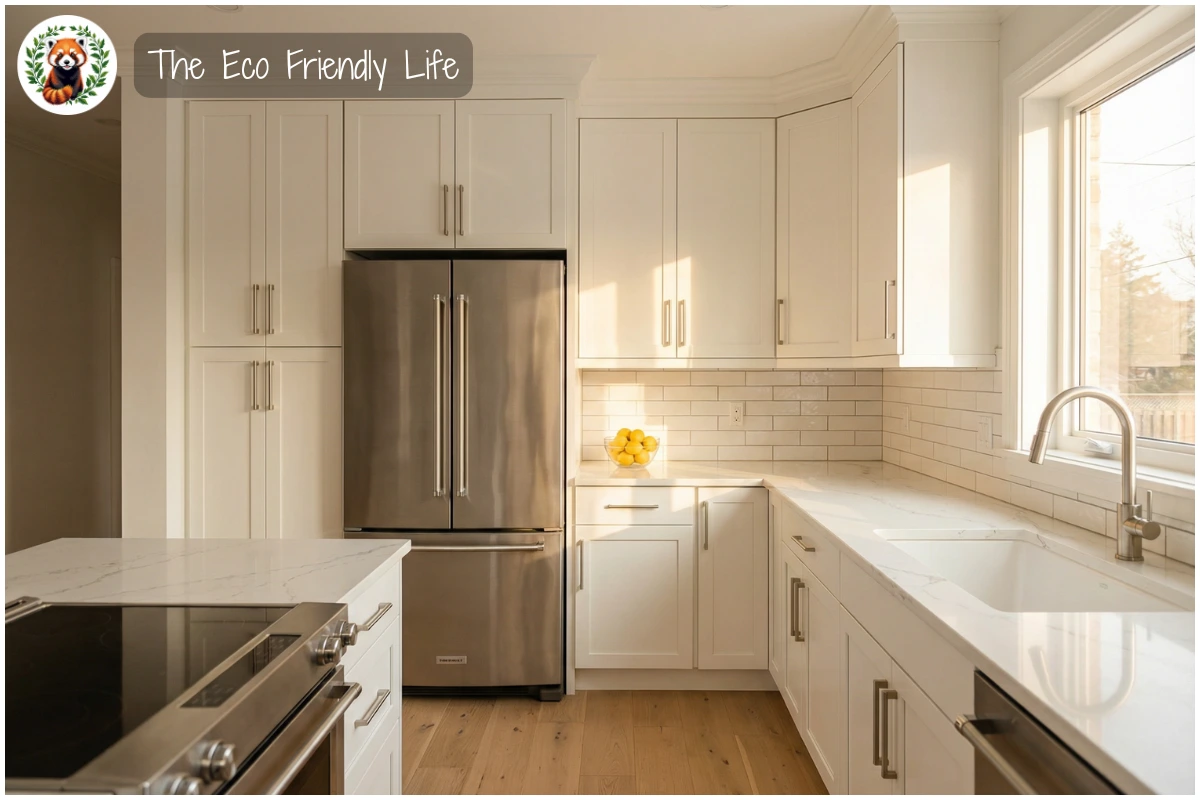
Induction cooktops change the equation: When it comes to cooking, the method matters as much as the appliance. Induction cooktops are considerably more efficient than gas or traditional electric resistance cooktops because they transfer heat directly to the cookware using electromagnetic energy — as the U.S. Department of Energy explains — with very little heat escaping into the surrounding air. A microwave or countertop convection oven uses far less energy than heating a full-sized conventional oven — especially for smaller meals. For larger cooking tasks, look for ovens with strong insulation, accurate thermostat controls, and a built-in convection fan, which circulates hot air and cooks food faster at lower temperatures.
Small appliances add up quickly: The kettle, toaster, coffee machine, and blender are each modest energy consumers on their own, but together they contribute meaningfully to your daily usage. Energy-efficient models in these categories often include features like variable temperature settings — so you’re not heating water to a full boil when you only need 80°C for green tea — as well as improved insulation and automatic shut-off functions. Look for appliances that carry ENERGY STAR certification or independent testing ratings from recognised consumer bodies like Consumer Reports.
The kitchen is the most energy-intensive room in most homes, but it’s also where well-chosen upgrades deliver the most visible results on your energy bill. From the fridge to the stovetop, every decision counts — and the same thoughtful approach applies as we move into the rooms where you relax and recharge.
Living Room and Bedroom Appliances That Work Smarter
Televisions have transformed dramatically: The flat screens of today bear little resemblance to the plasma TVs of 15 years ago in terms of energy consumption. Modern OLED and QLED televisions are far more efficient, and many now come with automatic brightness sensors that adjust screen output based on ambient room light — one of the most effective built-in energy-saving features available. When purchasing a new TV, check the annual energy consumption figure listed in the product specifications rather than simply the wattage, as this gives a far more accurate picture of real-world running costs across a full year.
Lighting is the easiest and fastest win in any home: Switching from incandescent or halogen bulbs to LED lighting is one of the simplest and most cost-effective changes any household can make. According to the U.S. Department of Energy, residential LED bulbs use at least 75% less energy than incandescent equivalents and last up to 25 times longer. Smart LED systems take this further by allowing you to schedule lighting, dim automatically based on time of day, and control different zones from a single app — effectively eliminating the common habit of leaving lights blazing in empty rooms.
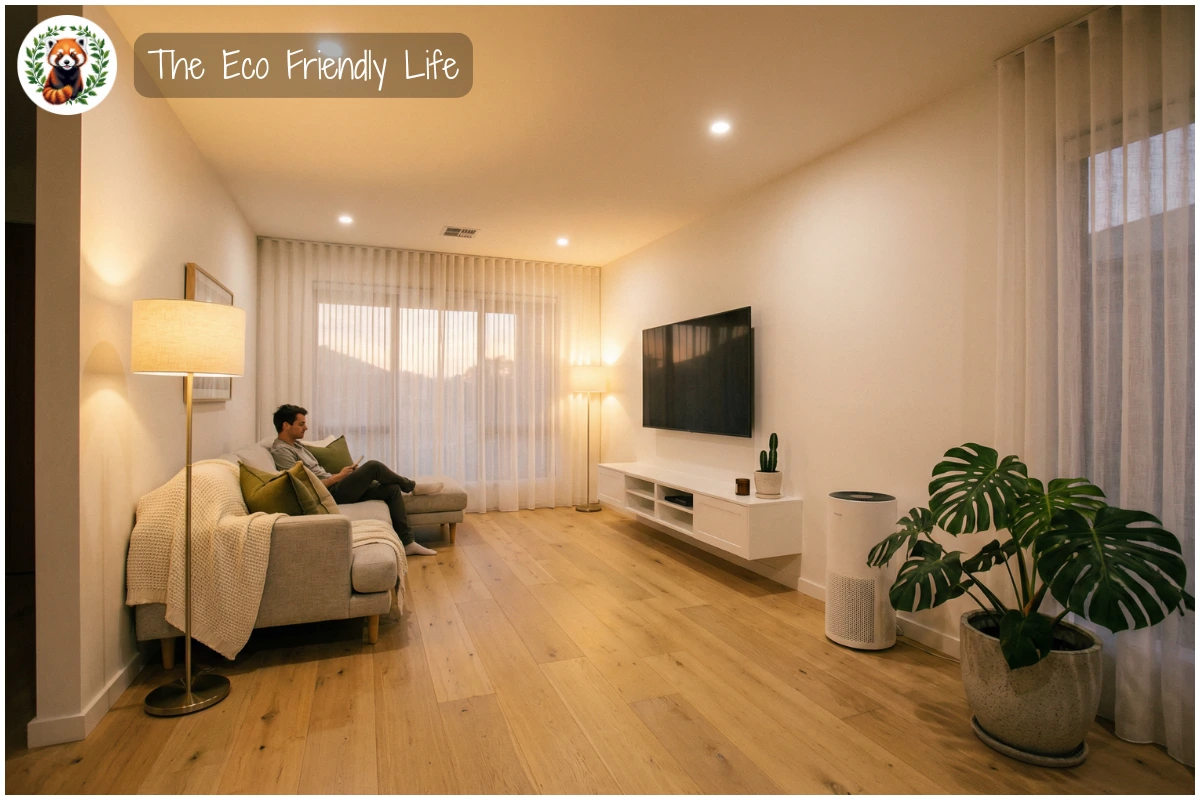
Heating and cooling choices matter enormously: Heating and cooling account for a large proportion of household energy use in most climates, and the bedroom and living room are often where inefficiency hides in plain sight. Ceiling fans fitted with DC motors use a fraction of the electricity required by an air conditioner and are substantially more efficient than older AC motor models. The U.S. Department of Energy confirms that using a ceiling fan raises the thermostat by about 4°F (~2°C) without reducing comfort. In warmer climates, a well-chosen energy-rated reverse-cycle air conditioner — also called a heat pump — is considerably more efficient than a portable electric heater or a lower-rated unit. Look specifically for inverter technology, which modulates output to maintain a set temperature rather than cycling on and off at full power.
Air purifiers require careful selection: The air purifier market has grown substantially, but energy consumption varies widely between models. An efficient air purifier should carry an energy certification and ideally feature an auto mode that adjusts fan speed based on real-time air quality readings — so it’s not running at full speed when the air is already clean. Combining air purification with fan functionality in a single device, as some premium ranges now do, reduces the total number of appliances running in a room at any given time.
The living room and bedroom are where we spend the majority of our waking and resting hours, so getting the appliances right in these spaces pays daily dividends in both comfort and savings. As we move through the home, let’s look at a space that often flies under the radar when it comes to energy awareness — the laundry and bathroom.
Laundry and Bathroom Appliances Built for Efficiency
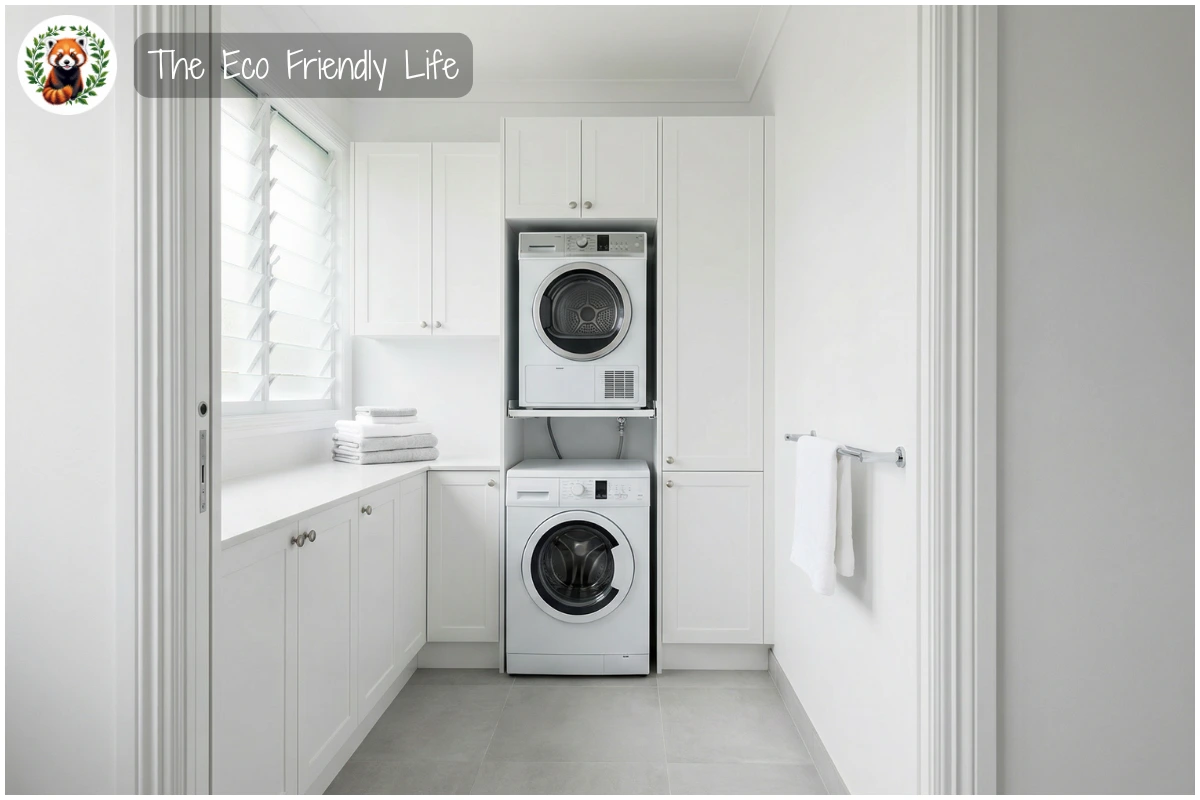
The washing machine represents one of the biggest opportunities: In most households, the washing machine ranks among the top five energy and water consumers. Front-loading washing machines are considerably more efficient than top-loaders, using less water per cycle and extracting far more moisture during the spin cycle — which in turn reduces the drying time and energy needed afterwards. When choosing a model, prioritise those with a cold-water wash programme. Modern detergents are formulated to work effectively in cold water, which eliminates the energy cost of heating entirely for everyday loads.
Tumble dryers and smarter alternatives: Tumble dryers are significant energy consumers, and the most efficient option available today is a heat pump dryer. ENERGY STAR certified models use around 70% less energy than conventional clothes dryers, achieved through a closed-loop system that continuously recycles warm air rather than venting it outside. That said, an outdoor clothesline or indoor drying rack remains the most energy-efficient solution of all — zero running cost and genuinely kind to fabrics. Reserving the dryer for wet-weather days or urgent needs, rather than using it daily, makes a substantial difference over the course of a year.
Water heaters consume more than most people expect: According to the U.S. Department of Energy, water heating accounts for about 18% of a typical home’s total energy consumption, making the water heater one of the most important — and most overlooked — appliances to choose wisely. Heat pump water heaters (also known as hybrid electric water heaters) are 2–3 times more efficient than conventional electric resistance models because they draw heat from the surrounding air rather than generating heat directly with an electrical element. Solar hot water systems are another excellent option where roof space and climate allow, and insulating the hot water pipes between the heater and your taps further compounds those efficiency gains.
Bathroom exhaust fans are often overlooked: Bathroom exhaust fans rarely come up in energy conversations, but older models can run for hours drawing unnecessary power. Modern brushless DC motor fans are significantly quieter and more energy efficient than traditional models, and many now include humidity sensors that automatically activate and deactivate the fan based on moisture levels — eliminating the common habit of leaving one running long after a shower has finished.
From the spin cycle to the shower, the laundry and bathroom offer some of the most achievable and rewarding efficiency upgrades in any home. Now that we’ve covered the key appliances room by room, let’s take a look at some trusted retailers where you can start putting these upgrades into action — from ENERGY STAR certified kitchen and laundry appliances to smart lighting and intelligent thermostats.
Retailers That Support the Planet — Our Product Recommendations
Finding the right appliances is much easier when you know where to look. Below are our handpicked retailer recommendations — four covering the full range of energy-efficient appliances discussed across this article’s topic blocks, plus two family-friendly options to bring energy awareness and engineering curiosity into your kids’ world.
Our Retailer Recommendations for Adults
GE Appliances
Directly addressing the kitchen section, GE Appliances offers one of the most comprehensive ranges of ENERGY STAR certified appliances available, including ENERGY STAR certified refrigerators with variable-speed compressors, certified dishwashers with soil-sensing cycles, and ENERGY STAR induction ranges — all independently verified to use significantly less energy than standard models.
Whirlpool
For the laundry room, Whirlpool makes it straightforward to upgrade to genuinely efficient machines. Their lineup includes an ENERGY STAR® front-load washer designed for cold-water cycles and a hybrid heat pump dryer that recirculates warm air to use around 70% less energy than conventional models — exactly the technology discussed in this article.
Govee
Covering the living room and bedroom, Govee offers a strong range of smart LED bulbs and lighting systems designed for energy-conscious homes. Their smart bulbs are app-controlled, schedule-ready, and compatible with Alexa and Google Assistant — making it easy to automate your lighting and stop energy being wasted in empty rooms. Govee ships to customers globally.
ecobee
Tying directly into the smart home technology section, ecobee produces ENERGY STAR certified smart thermostats that learn your household routine, respond to occupancy in real time, and can reduce heating and cooling costs by up to 26%. The flagship Smart Thermostat Premium — named “best smart thermostat” by Wirecutter — integrates with Apple Home, Amazon Alexa, Google Assistant, and Samsung SmartThings, making it compatible with almost any smart home set-up, while the Smart Thermostat Essential offers a more affordable entry point with the same core energy-saving features.
Our Retailer Recommendations for Kids/Families
KiwiCo
KiwiCo’s Tinker Crate (ages 9–12) and Eureka Crate (ages 12+) deliver monthly hands-on engineering builds that introduce kids to the same principles behind the appliances in this article — motors, circuits, mechanical systems, and energy transfer. It’s a genuinely engaging way to help young people understand how the technology in their own home works, and why efficiency matters. KiwiCo ships to over 60 countries.
4M Toys
4M’s Green Science series includes hands-on kits like the Solar Robot, Windmill Generator, and Water Pump that give kids a tangible, hands-on introduction to clean energy concepts. Ideal for ages 8 and up, these kits make the connection between the energy-efficient appliances at home and the broader principles of renewable energy feel real and immediate. Available globally through major retailers and 4M’s own international store.
From certified kitchen appliances and laundry upgrades to smart lighting, intelligent thermostats, and family-friendly engineering kits, these retailers make it genuinely easy to act on everything covered in this article. Let’s now look at the smart home technology layer that ties all of these appliances together — and multiplies the savings from every upgrade you make.
Smart Home Technology That Multiplies Every Efficiency Gain
Smart plugs are humble but surprisingly powerful: One of the least glamorous and most effective smart home tools available is the smart plug. Inserted into any standard wall outlet, it allows you to control, schedule, and monitor the energy draw of any connected device — from a television left on standby to a phone charger running overnight. The U.S. Department of Energy notes that standby power accounts for 5–10% of residential energy use — making this one of the most accessible and lowest-cost savings opportunities in any home.
Smart thermostats pay for themselves reliably: Heating and cooling represent the single largest energy expense in most homes globally, and a smart thermostat is the most direct technology tool for managing this cost. Unlike conventional programmable thermostats that require you to set fixed schedules, smart thermostats learn your household habits and preferences over time, adjust automatically when you leave or return home, and can be managed remotely via smartphone. ENERGY STAR certified smart thermostats save households around 8% on energy bills annually on average, with homes in extreme climates often seeing considerably greater savings.
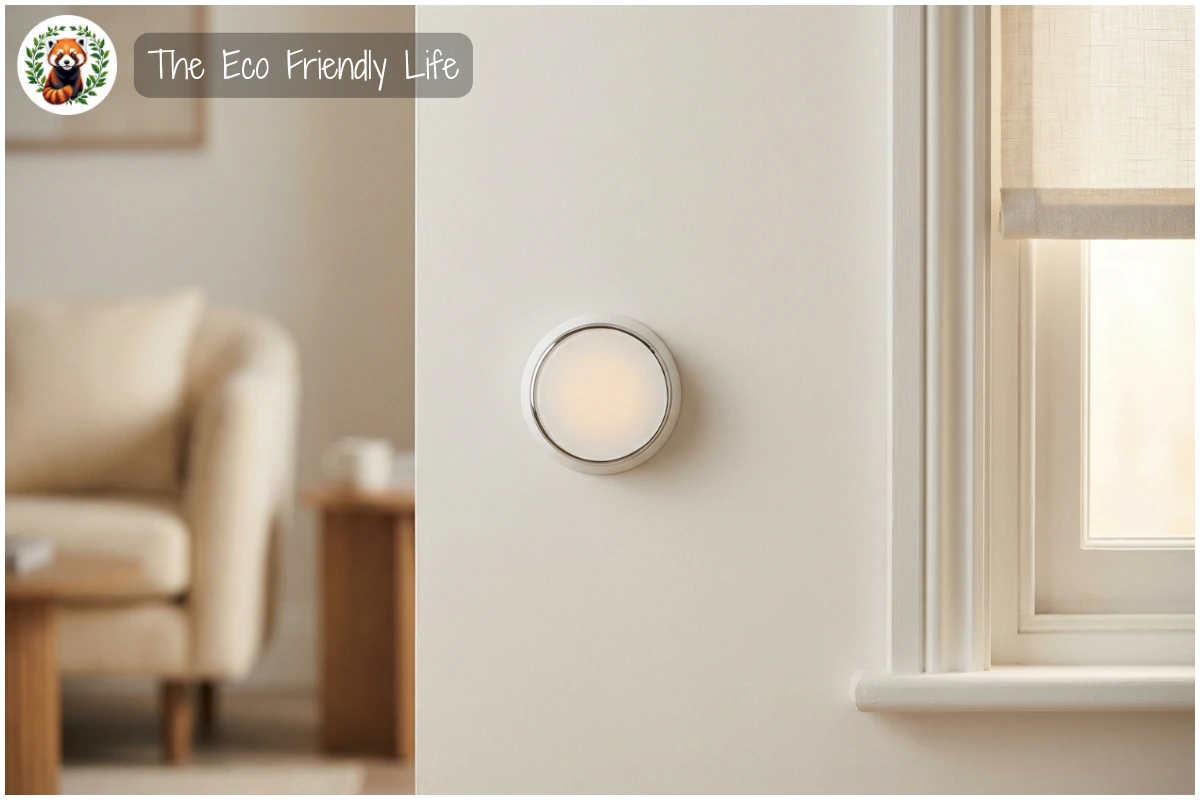
Home energy monitors reveal the full picture: A home energy monitor connects to your electrical meter and provides real-time data on your whole-house consumption, often broken down by device or circuit. This visibility is invaluable for identifying energy-hungry appliances, tracking the measurable impact of new purchases, and setting household reduction goals with real data behind them. Systems like the Emporia Vue and Sense are widely available, integrate with existing smart home platforms, and provide both historical usage data and live consumption alerts.
Smart lighting systems go well beyond the bulb: Switching to LED lighting is the essential first step, but smart lighting systems build meaningfully on this foundation. Features like automatic dimming based on ambient natural light levels, occupancy sensors that switch lights off in empty rooms, and time-based scheduling tailored to your household routine all deliver savings that exceed what efficient bulbs alone can achieve. The combination of high-efficiency bulbs and intelligent control is consistently more effective than either approach on its own.
Smart home technology is the connective thread that turns a collection of efficient appliances into a genuinely intelligent home system. Understanding how these tools work is a great start — but putting them into daily practice is where the real difference happens. In the next section, you’ll find ten practical actions you can start on immediately, many of which require nothing more than a simple habit change.
Practical Daily Tips You Can Action Today
Every one of these habits costs nothing and can be started immediately.
| Tip | How to Implement | Why It Helps |
|---|---|---|
| Wash laundry in cold water | Select the cold wash setting for all everyday loads. | Modern detergents are formulated for cold water, eliminating the energy cost of heating — the biggest draw in a wash cycle. |
| Use your dishwasher’s eco cycle | Choose the eco or energy-saving setting instead of a quick or hot wash. | Eco cycles use lower temperatures over a longer period, cutting both electricity and water use per load. |
| Cut standby power with a smart plug | Plug TVs, gaming consoles, and chargers into a smart plug or power strip and switch it off overnight. | Standby power accounts for 5 to 10 percent of a home’s annual electricity consumption across all devices. |
| Set your fridge to the correct temperature | Aim for 3–4°C (37–39°F) in the fridge and -18°C (0°F) in the freezer. | Running colder than necessary wastes energy continuously without improving food safety. |
| Only run full loads | Wait until the dishwasher and washing machine are fully loaded before running a cycle. | Half-loads use nearly the same energy and water as full loads, effectively doubling the cost per item washed. |
| Use a ceiling fan before switching on the AC | Turn on a ceiling fan first to circulate air and cool the room. | A ceiling fan can allow you to raise your thermostat setting by about 4°F (~2°C), meaningfully reducing air conditioning energy use. |
| Complete your LED lighting switch | Replace any remaining incandescent or halogen bulbs throughout the home with LED equivalents. | LEDs use at least 75% less electricity and last up to 25 times longer, reducing both running costs and replacement frequency. |
| Schedule appliances for off-peak hours | Use built-in timer settings on your dishwasher or washing machine to run overnight where possible. | In many regions, off-peak electricity tariffs are significantly lower, directly reducing your bill without any lifestyle compromise. |
| Clean your fridge’s condenser coils | Vacuum the coils at the back or bottom of your refrigerator once or twice a year. | Dust-clogged coils force the compressor to work harder, increasing energy consumption measurably over time. |
| Use lids when cooking on the stovetop | Place a lid on pots and pans whenever you’re boiling or simmering. | Trapped heat reduces cooking time and lowers the energy required to maintain temperature throughout the cook. |
These habits, consistently applied alongside smart appliance choices, have the potential to deliver a visible reduction in your next energy bill. If you still have questions, the answers to the most common ones are just below.
Frequently Asked Questions
What does ENERGY STAR certification actually mean? ENERGY STAR is an internationally recognised certification program, developed by the U.S. Environmental Protection Agency, confirming that a product meets strict energy efficiency guidelines. Certified products typically use 10–50% less energy than standard models in the same category.
Is it worth replacing a working appliance just to get a more efficient model? In many cases, yes — particularly for older refrigerators, washing machines, and water heaters, where efficiency gains between old and new models are often dramatic. A simple online running cost calculator can help you weigh the annual operating cost of your current appliance against a modern certified equivalent at your local electricity rate.
Do energy-efficient appliances cost more upfront? They often carry a modest price premium, but this is typically recovered through lower energy bills within a few years. Many governments and utility providers also offer rebates or subsidies for purchasing certified appliances, which can significantly reduce or eliminate the initial cost difference.
Can a smart thermostat really make a meaningful difference? Yes — ENERGY STAR data shows that certified smart thermostats save households approximately 8% on heating and cooling costs annually on average, with homes in colder or hotter climates typically saving considerably more. For households with high heating and cooling bills, the device can pay for itself within the first year.
If you’d like to put your support behind organisations working to accelerate these changes at a global scale, the next section highlights some excellent places to direct it.
Organizations to Support — Our Recommendations
These organisations are doing critically important work in the energy efficiency and clean energy space, and all welcome direct public support.
- The American Council for an Energy-Efficient Economy (ACEEE) is a nonprofit organisation dedicated to advancing energy efficiency policies, technologies, and practices in the United States and internationally. Their research directly shapes the appliance energy standards and building codes that define what “efficient” means on the products you buy. You can make a secure, tax-deductible contribution to fuel their ongoing advocacy and research work through ACEEE’s online donation form.
- Rocky Mountain Institute (RMI) is an independent global nonprofit with over 40 years of expertise in accelerating the clean energy transition, with dedicated programmes focused on efficient buildings, home electrification, and appliances. Rated four stars by Charity Navigator for fiscal responsibility and transparency, RMI works with governments, businesses, and communities across the world to make clean energy the practical, affordable default. You can support their mission by making a direct, tax-deductible contribution through RMI’s giving page.
- The Climate Council is an independent, community-funded organisation providing authoritative climate research and public education, with household energy efficiency forming a core part of its advocacy work. Funded entirely by public contributions, it relies on people like you to keep its voice strong. You can make a tax-deductible contribution to keep their research and communications going through Climate Council’s giving page.
Each of these organisations extends the impact of the choices we make at home out into the wider world — supporting their work is one more meaningful way to be part of the solution. If you’d like to go deeper on any of the topics covered in this article, the expert resources below are an excellent next step.
Resources and Further Reading
These expert sources are excellent starting points for a deeper understanding of energy-efficient appliances.
- The U.S. Department of Energy’s Energy Saver portal is one of the most comprehensive publicly available resources on home energy efficiency anywhere in the world. Their dedicated Appliances & Electronics guide covers refrigerators, washing machines, water heaters, lighting, and more — each with practical advice on what to look for and how to reduce running costs.
- The International Energy Agency (IEA) publishes detailed global data and policy analysis on energy efficiency trends, including household appliances and their collective role in reducing worldwide energy demand. The IEA-hosted Energy Efficiency Hub is an excellent starting point for understanding both the scale of the opportunity and the policies driving change globally.
- The ENERGY STAR Product Finder is a practical, searchable database of certified energy-efficient appliances across every category, allowing consumers to compare models by energy use, features, and retail availability. If you’re ready to start shopping, the ENERGY STAR product search is the most reliable tool available for finding verified, independently tested options.
Whether you’re just starting out or looking to fine-tune an existing home set-up, these resources will help you go deeper on any aspect of energy-efficient living.
Our Related Articles
How To Make Your Home Energy-Efficient
Rising energy costs and growing environmental concerns are driving more people than ever to rethink how they power their homes. The good news? Making your…
Read More
Renewable And Non-Renewable Energy Sources Explained
Energy powers every aspect of modern life, from the lights in our homes to the vehicles we drive and the industries that create the products…
Read More
What Is A Sustainable Home?
The way we build and inhabit our homes has a profound impact on the planet. From the energy we consume to the materials we use,…
Read MoreConclusion
From the kitchen to the laundry room, from smart plugs to heat pump dryers, the path to an energy-efficient home is lined with practical, accessible choices available to households everywhere in the world right now. The appliances you live with every day have a direct and lasting effect on both your household budget and your environmental impact — and the encouraging truth is that efficient design, smart technology, and simple daily habits all reinforce each other to deliver results that are genuinely worth the effort.
Start with one room, one appliance, one habit. The collective impact of those individual decisions, multiplied across millions of households, represents one of the most powerful and practical tools we have for building a more sustainable world. Which room in your home do you think has the most room for improvement? Share your answer in the comments below — we read every one.