
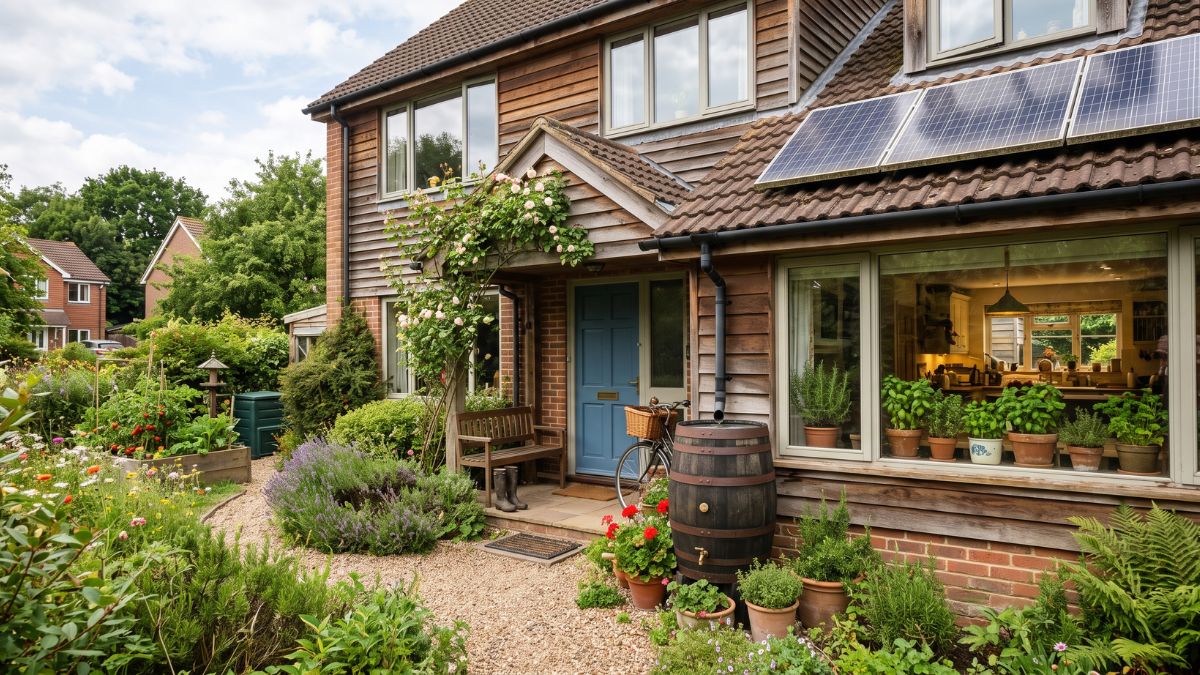

“What is a sustainable home?” is one of those questions that sounds bigger than it is. The honest answer: it isn’t a special architect-designed eco house with solar panels on every angle and a living roof. It’s any home — rented or owned, old or new — that’s managed to use fewer resources and create less waste, one decision at a time.
I’m Katrina, and when we bought our house eight years ago, it had single-pane windows, a water heater older than our oldest son, and a laundry room full of half-empty plastic bottles. We didn’t renovate our way to a lower footprint. We changed how we used the home we already had, one habit and one swap at a time, and watched our utility bills drop along the way. Homes account for a genuinely enormous share of global energy use and emissions, so getting this right matters more than most people realize — but the good news is that “getting it right” is a direction, not a finish line. This guide walks through what actually makes a home sustainable, the five areas that matter most, and where to start if you’re just beginning. Keep reading, and you’ll leave with a real plan, not just a mood board.
🌎🌱🤝 Our Top Pick — Best Non-Toxic Cleaning Starter Kit
Blueland Clean Essentials Kit
We chose this as the single product that best embodies everything this article is about — one refillable system replacing a whole cabinet of single-use plastic bottles.
It turns a genuinely toxic, wasteful corner of the home (cleaning products) into a simple, non-toxic, refill-forever routine.
- ✅ Non-toxic
- ✅ Refillable forever
- ✅ Ships internationally
| ~$46 | Mid-range
👉 Shop Clean Essentials KitWhat Actually Makes a Home Sustainable?
A sustainable home is a system, not a style: it’s a home actively managed to reduce its environmental impact across five connected areas — energy, water, materials, waste, and indoor health — while still being comfortable, functional, and affordable to live in day to day.
Homes carry more environmental weight than most people assume, and understanding that is the first step toward learning how to help the environment from inside your own four walls: buildings are responsible for roughly 32 percent of global energy use and 34 percent of global CO2 emissions, according to the UN Environment Programme. That figure covers everything from the electricity running your refrigerator to the gas heating your shower water, which is exactly why the choices made inside an ordinary home, not just in architecture or new construction, carry so much weight. Learning to help the environment really can start at home.
It isn’t only about how a home runs — it’s also about what it’s built from: producing cement and steel alone accounts for around 18 percent of global emissions, per the same UNEP report. That means the materials inside and around a home, from flooring to countertops to furniture, carry an environmental cost before a single light switch is ever flipped.
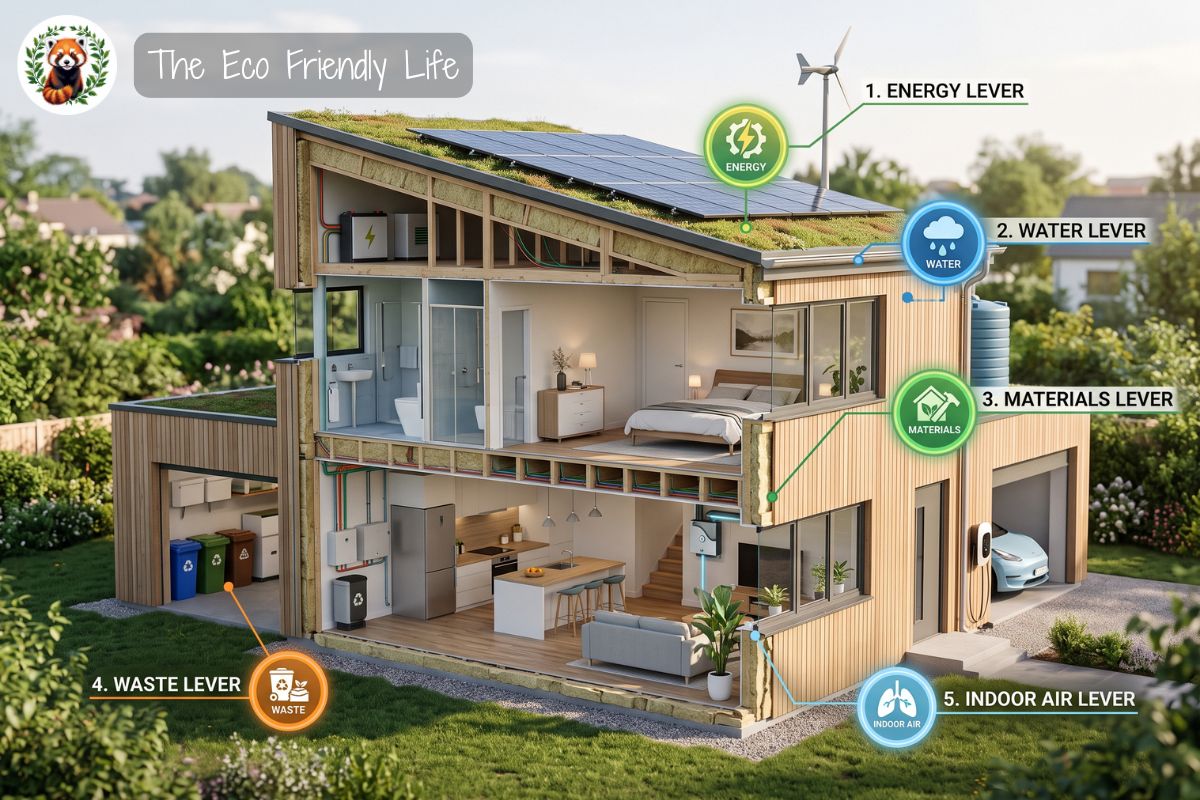
Sustainability here is a spectrum, not a certificate: nobody wakes up with a perfectly sustainable home, and nobody needs to. Every incremental change — a swapped light bulb, a fixed leak, a switched cleaning product — moves a home further along that spectrum, and that’s what living a genuinely green lifestyle actually looks like in practice, not a single dramatic renovation.
Of the five levers, energy is where to start: it’s typically the single biggest contributor to a home’s footprint and, not coincidentally, the place where savings show up fastest on a utility bill. That’s exactly where this guide goes next.
We’re not going to pretend every one of these five levers matters equally in every home, or that the perfect house exists. What follows is a practical breakdown of where the real impact lives, starting with the biggest one.
Energy: The Biggest Lever
Heating and cooling dominate a typical home’s energy use: in the average American household, heating and cooling account for nearly half of a typical annual energy bill, which frequently runs $900 or more, according to ENERGY STAR. That single category alone makes it the highest-leverage place to focus first, whether the goal is lowering emissions or lowering bills.
Water heating is the quiet second-biggest expense: switching to a heat-pump water heater can save around $550 a year, per the same ENERGY STAR data. It’s a less visible upgrade than a new thermostat, but for a household replacing an aging water heater anyway, it’s worth choosing the efficient option rather than a like-for-like replacement.
Lighting is a smaller slice, but an easy one to fix immediately: lighting accounts for about 15% of an average home’s electricity use, and LEDs use up to 90% less energy and last up to 25 times longer than incandescent bulbs, according to the US Department of Energy’s Consumer Guide to Energy-Efficient Lighting. It’s the single cheapest, fastest swap on this list, and there’s genuinely no reason to wait on it.
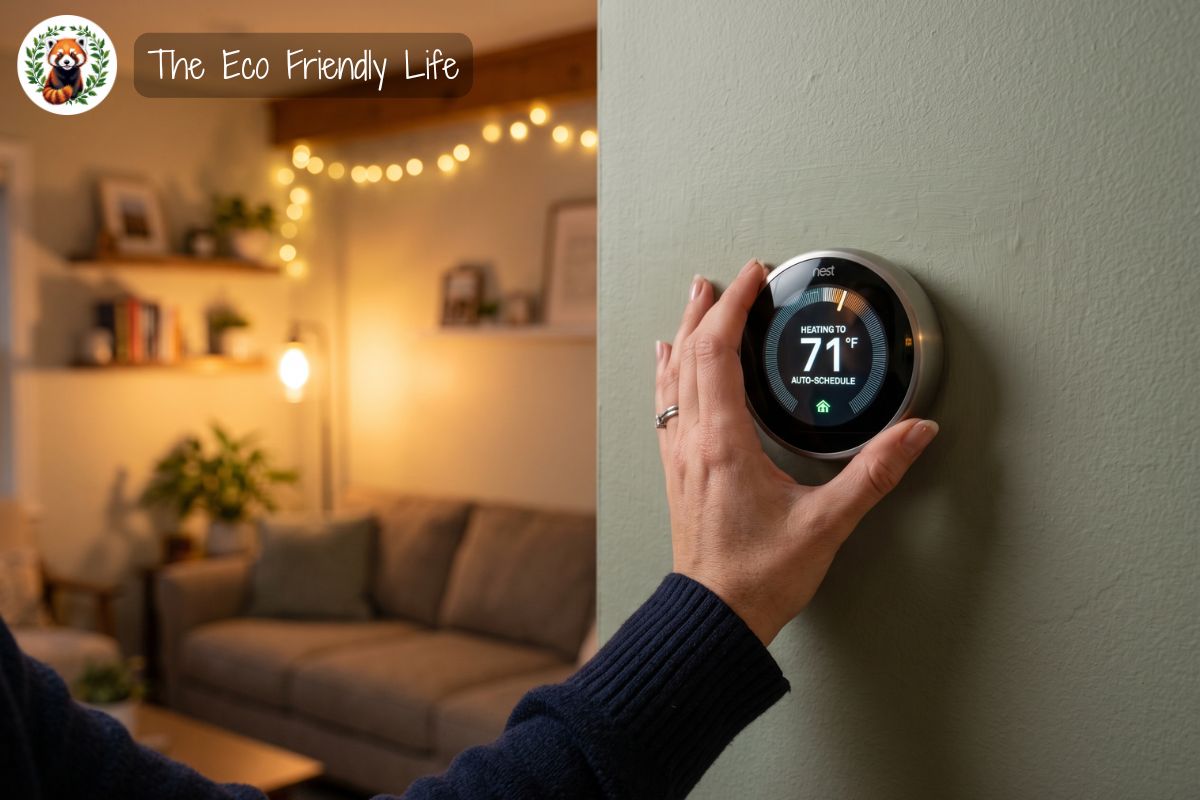
Sealing and insulating multiply the effect of everything else: sealing ductwork and adding insulation can improve HVAC efficiency by up to 10 percent, per ENERGY STAR, and pairing that with a programmable or smart thermostat that automates temperature setbacks means the savings keep compounding without anyone having to remember to adjust a dial. Together, these two habits make the fastest way to make your home energy-efficient genuinely achievable in a weekend, not a renovation project.
A quick honesty check on these numbers: the dollar figures above reflect the average American household specifically, since that’s where the most detailed public data exists. The underlying principle holds well beyond the US, though: heating, cooling, and water heating dominate residential energy use almost everywhere, and the same fixes — sealing, insulating, smarter thermostats, efficient appliances — apply regardless of currency or climate.
Energy is the biggest lever, but it isn’t the only one. Water, waste, and the materials filling a home all carry their own weight, and that’s where we’re headed next.
Water, Waste, and Healthy Materials
Water efficiency pays for itself quickly: homes fitted with WaterSense-labeled fixtures use at least 20 percent less water, and the average family can save more than $380 a year by retrofitting older fixtures, according to EPA WaterSense. Toilets alone account for roughly 30 percent of a home’s indoor water use, per EPA’s toilet-specific data, which makes an older, inefficient toilet one of the highest-impact single fixtures to replace.
Leaks quietly waste an enormous amount of water: the average household loses about 9,400 gallons a year to leaks — roughly the amount needed to wash 300 loads of laundry — money and water disappearing down the drain from something as small as a worn washer or a running toilet flapper. A closer look at how to reduce water usage at home covers leak detection and fixture upgrades in far more depth than this section has room for.
Waste is the next lever, and the numbers are sobering: the average American generates about 4.9 pounds of waste per day, yet only around 32 percent of municipal solid waste is recycled or composted, while roughly 50 percent ends up in a landfill, according to EPA’s national waste data. The gap between what could be diverted and what actually is diverted is where a household has real influence.
A simple hierarchy beats a complicated system: reduce first, reuse second, and recycle or compost last. Buying less and reusing what’s already on hand consistently outweighs any amount of careful sorting, which is exactly the mindset behind a genuine shift toward zero waste living — it starts with less coming into the house, not just smarter bins once it’s there.
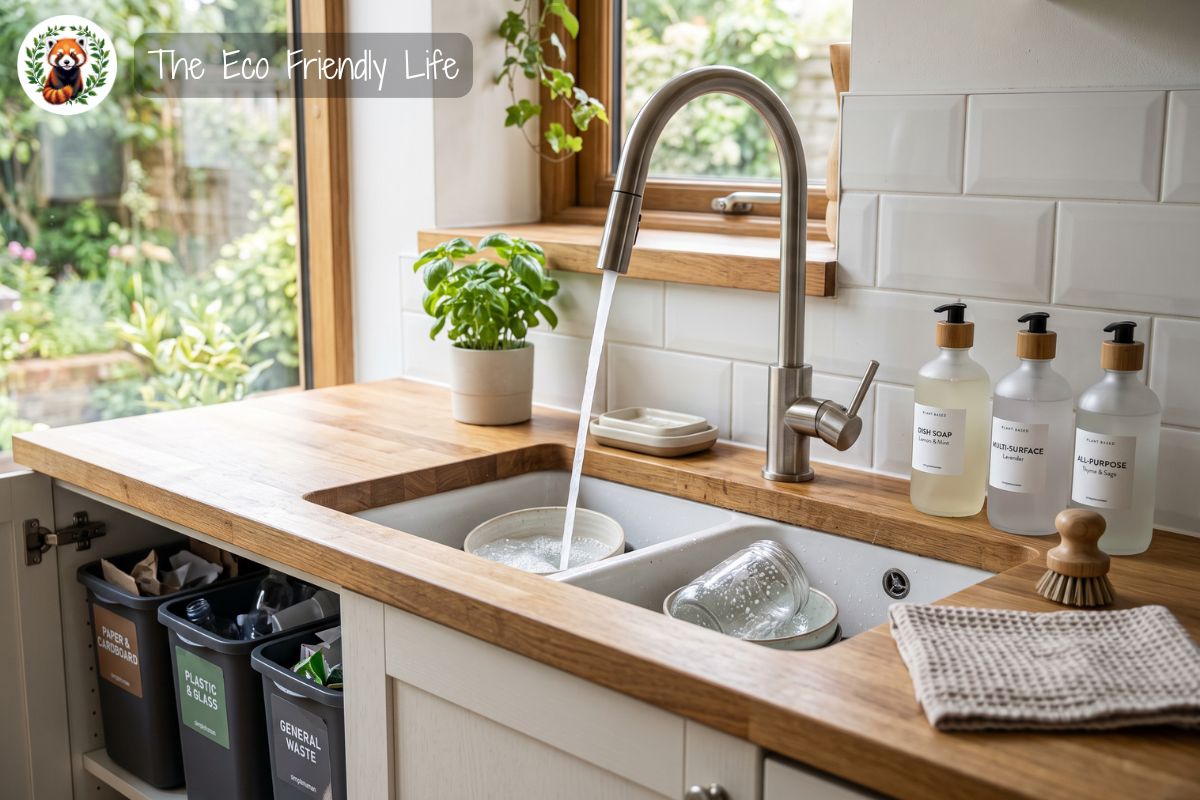
Indoor air quality is the lever most people overlook entirely: people spend around 90 percent of their time indoors, where levels of some pollutants can run two to five times higher than outdoors, largely from paints, cleaning products, and building materials that off-gas volatile organic compounds, per the EPA’s indoor air data. Choosing low-VOC paints, non-toxic cleaners, and durable, well-made furnishings protects both the planet and the people breathing the air inside it.
Water, waste, and materials round out the bigger structural picture of a sustainable home. Once those foundations are in place, the next question is where to actually find the products that make it easier — starting with the essentials below.
Brands and Tools That Support the Planet — Our Recommendations
Once the fundamentals are in place, the right products make sustainable habits easier to stick with. Here’s where we’d actually spend money ourselves, organized by what each retailer does best.
Blueland
About
Blueland makes refillable, non-toxic cleaning products designed to eliminate single-use plastic bottles from the home. As a B Corp with EPA Safer Choice and Cradle to Cradle certifications, it’s one of the most credentialed brands in the sustainable cleaning space.

Our Recommendation
The Clean Essentials Kit is what we featured as our Top Pick above, and it’s genuinely the product we’d hand a first-time buyer to replace an entire cabinet of spray bottles at once.
Who Gives A Crap
About
Who Gives A Crap makes bamboo and recycled paper products, donating 50 percent of profits to sanitation projects worldwide. As a B Corp with FSC-certified materials, it ships to roughly 40 countries, making it one of the most globally accessible picks in this list.
Our Recommendation
We buy the bamboo toilet paper on subscription, and it’s an easy swap that quietly cuts a household’s paper footprint without anyone noticing a difference in quality.
EarthHero
About
EarthHero is a B Corp marketplace curating vetted sustainable products across categories, making it a reliable one-stop shop for household swaps that might otherwise take hours to research individually. Ships within the US.
Our Recommendation
Their reusable paper towels are GOTS-certified organic cotton, and they’re the exact kind of swap that replaces a roll of paper towels you’d otherwise buy every few weeks.
Bee’s Wrap
About
Bee’s Wrap is a B Corp and 1% for the Planet member making beeswax food wraps as a direct plastic-wrap replacement. Ships within the US.
Our Recommendation
The Tri-Fecta assorted pack covers three sizes, and it’s genuinely replaced plastic wrap in our kitchen for everything from cut avocados to leftover bread.
Our Retailer Recommendations for Kids/Families
Blueland
About
Blueland’s family-safe, non-toxic formulas make it an easy choice for households with young kids where harsh chemical cleaners are a real concern.
Our Recommendation
The Hand Soap Starter Set is what’s by every sink in our house — it’s gentle enough for little hands and refillable, so we’re not buying plastic soap bottles every month.
Who Gives A Crap
About
Who Gives A Crap’s tree-free, family-staple paper products make sensitive-skin, kid-friendly options easy to find without sacrificing the brand’s sanitation mission.
Our Recommendation
The bamboo tissues are soft enough for two boys who go through a box a week during cold season, and they still ship to roughly 40 countries.
Every product above ships with the same philosophy behind it: replace something disposable with something built to last. From here, it’s worth zooming out to the everyday habits that make all of this stick long after the first order arrives.
Everyday Swaps That Add Up
Single-use plastic is one of the clearest places a household can cut its footprint: global plastics production has doubled to 460 million metric tons as of 2019, and only about 9 percent of plastic waste gets recycled worldwide, while roughly 50 percent ends up in a landfill, according to the OECD Global Plastics Outlook. Those numbers make the kitchen and bathroom, where single-use plastic tends to concentrate, a genuinely high-leverage place to start.
Kitchen and bathroom swaps do a lot of quiet work: reusable cloth towels, beeswax food wraps, refillable cleaning tablets, and bamboo paper products all replace something that would otherwise be used once and thrown away. None of these require a special skill or a big upfront cost — they just require remembering to buy the reusable version next time instead of the disposable one.
Non-toxic cleaning products solve two problems at once: refillable, plant-based cleaners bearing the EPA Safer Choice label cut down on plastic bottle waste while also reducing indoor VOC exposure, which can run up to 10 times higher indoors than outdoors according to the EPA. Fewer bottles in the recycling bin and cleaner indoor air come from the exact same switch, and choosing non-toxic cleaning products is worth its own closer look if this is the swap you make first.
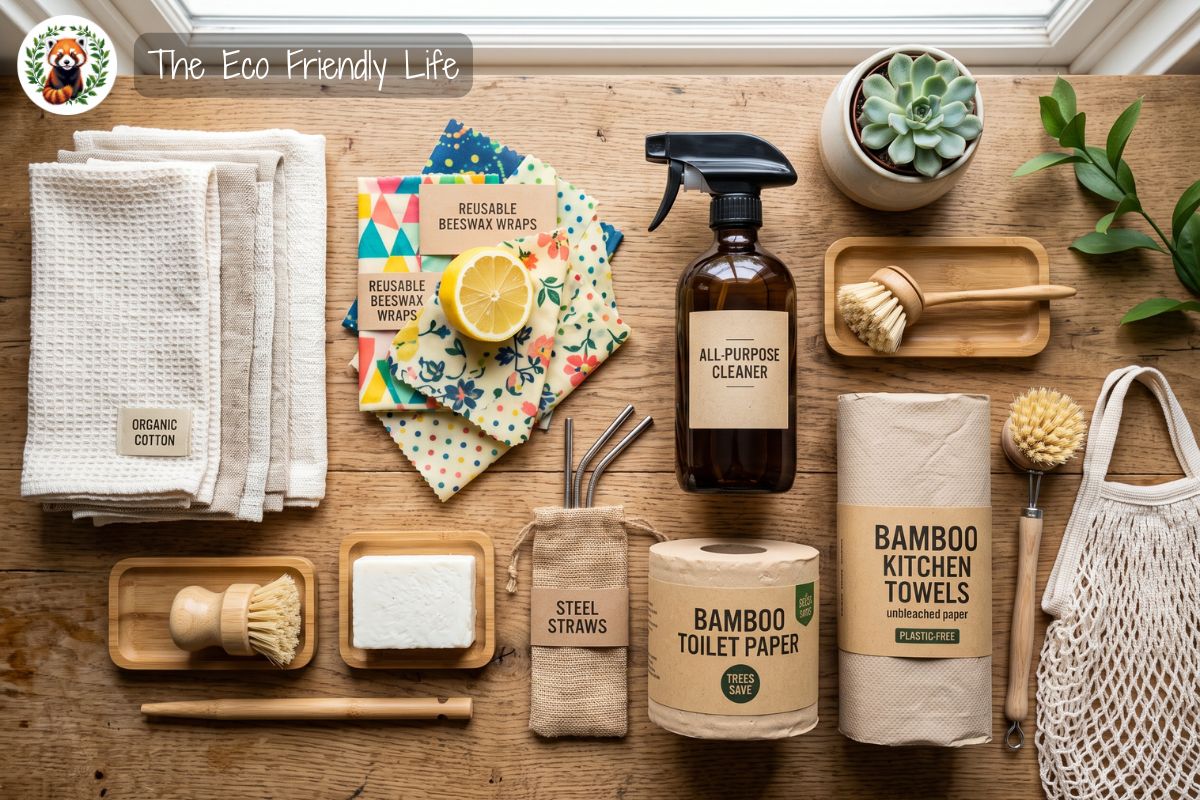
Habits matter as much as the products themselves: bringing reusable bags to the store, running only full laundry and dishwasher loads, buying pantry staples in bulk or via refill stations, and repairing something before replacing it all cost nothing extra and add up faster than any single purchase. Consistency, not gear, is what actually moves the needle over a year.
None of this needs to happen overnight: each small swap compounds on the last one, and a household that makes one new change a month will look completely different a year from now than one that tried to overhaul everything in a single weekend and burned out by February. Progress beats perfection, every time.
With the biggest swaps covered, the next step is turning all of this into a short list of things to actually do this week — which is exactly what’s coming up next.
Practical Daily Tips You Can Action Today
These ten tips cost little or nothing to start and cover every lever discussed above — pick a few and go from there.
| Tip | How to Implement | How It Helps |
|---|---|---|
| Get an energy audit | Contact your local utility — many offer free or discounted home energy assessments. | Pinpoints the biggest sources of waste, from drafts to aging appliances. |
| Switch to LED bulbs, room by room | Replace incandescent or CFL bulbs as they burn out, starting with the most-used rooms. | Uses up to 90 percent less energy and lasts far longer per bulb. |
| Adjust the thermostat a few degrees | Lower it in winter, raise it in summer; automate with a programmable or smart thermostat. | Cuts the single largest slice of a typical energy bill. |
| Seal drafts and insulate | Weatherstrip doors and windows; seal and insulate ductwork. | Improves heating and cooling efficiency by up to 10 percent. |
| Fix leaks and install WaterSense fixtures | Repair dripping faucets and running toilets; swap in WaterSense-labeled aerators and showerheads. | Cuts household water use by 20 percent or more. |
| Wash cold and run full loads | Set the washer to cold cycles and wait for a full load before running it; air-dry when possible. | Most laundry energy goes to heating water, so this saves both energy and water. |
| Swap single-use for reusable | Start with cloth towels, beeswax wraps, and refillable cleaners. | Cuts plastic and paper waste steadily over time. |
| Choose low-VOC, non-toxic products | Look for low-VOC paint and plant-based cleaners when replacing household products. | Improves indoor air quality where pollutant levels can run far higher than outdoors. |
| Set up recycling and composting | Start a simple two- or three-bin system in the kitchen. | Diverts a meaningful share of household waste away from landfill. |
| Kill phantom load | Unplug idle electronics or use smart power strips on entertainment and office setups. | Eliminates standby power draw that runs up bills for no benefit. |
Small as each of these looks individually, together they touch every lever from energy to indoor air — which naturally raises a few common questions.
FAQs
Here are the questions we hear most often from readers just starting out.
What makes a home “sustainable”?
A home that minimizes its environmental impact across energy, water, materials, waste, and indoor health, while staying comfortable and affordable to live in — not a special “eco house.”
Do I have to renovate or spend a lot?
No. The biggest early gains usually come from low- or no-cost habits and inexpensive swaps — LED bulbs, thermostat adjustments, fixing leaks, and reusables — long before any renovation is necessary.
What’s the single most impactful place to start?
Energy, specifically heating and cooling, which is typically the largest share of a home’s total energy use and emissions.
Is a sustainable home more expensive to run?
Usually the opposite. Efficiency measures lower energy and water bills over time and often pay back their upfront cost within a few years.
Can renters make their home more sustainable?
Yes. Habits, LED bulbs, smart power strips, reusables, low-VOC products, and screw-on water-saving aerators don’t require owning the home or making any permanent changes.
Organizations to Support — Our Recommendations
If you’d like to support the bigger picture beyond your own four walls, these three organizations are doing meaningful, credible work.
- The Ocean Cleanup develops technology to remove plastic pollution from oceans and rivers worldwide, directly tackling the single-use plastic problem this article touches on throughout. You can support their work through a direct donation.
- WaterAid America works in more than 30 countries to bring clean water and sanitation to communities that lack it, connecting directly to the water-conservation habits covered above. Their donation page makes it simple to contribute.
- WWF (World Wildlife Fund) operates conservation programs in over 100 countries, anchoring the broader climate and materials themes running through this entire guide. Support is available through a one-time gift.
Every one of these organizations tackles a piece of the same puzzle a sustainable home is built around.
Resources and Further Reading
For readers who want to go deeper on any of the levers covered above, these three sources are the ones we trust most.
- ENERGY STAR is the joint EPA/DOE program covering energy-efficiency guidance, a searchable product finder, and current rebate and tax-credit information for home energy upgrades. Explore their full program.
- EPA WaterSense is the federal program behind water-efficient product labeling, offering fixture guidance and household water-saving data. Visit the WaterSense program for details.
- US DOE Energy Saver is the Department of Energy’s practical hub for home energy-saving guidance across lighting, heating and cooling, insulation, and appliances. Browse the Energy Saver hub for room-by-room tips.
Bookmark any of these three and you’ll have authoritative, non-commercial guidance to return to as your own sustainable-home journey continues.
Our Related Articles

How To Transition To A Zero Waste Lifestyle
Every day, the average person generates waste that adds up to a staggering problem for our planet. With 353 million tonnes of plastic waste created…
Read More
How To Make Your Home Energy-Efficient
Rising energy costs and growing environmental concerns are driving more people than ever to rethink how they power their homes. The good news? Making your…
Read More
What Does It Mean To Live A Green Lifestyle?
“Green lifestyle” gets used constantly and defined almost never. It shows up on packaging, in headlines, in the caption under someone’s kitchen renovation photos —…
Read MoreConclusion
A sustainable home was never about achieving some perfect, finished state — it’s a direction, not a destination. Energy is the biggest lever, water and waste and healthy materials round out the picture, and the small everyday swaps are what make it all stick. None of it requires a renovation budget or a total lifestyle overhaul to start mattering.
If you take one thing from this guide, let it be this: pick one lever, energy is a great place to begin, and pick one swap you can make this week. Have you already started making your home more sustainable? What was the first change you made, and what made the biggest difference for your household?
