
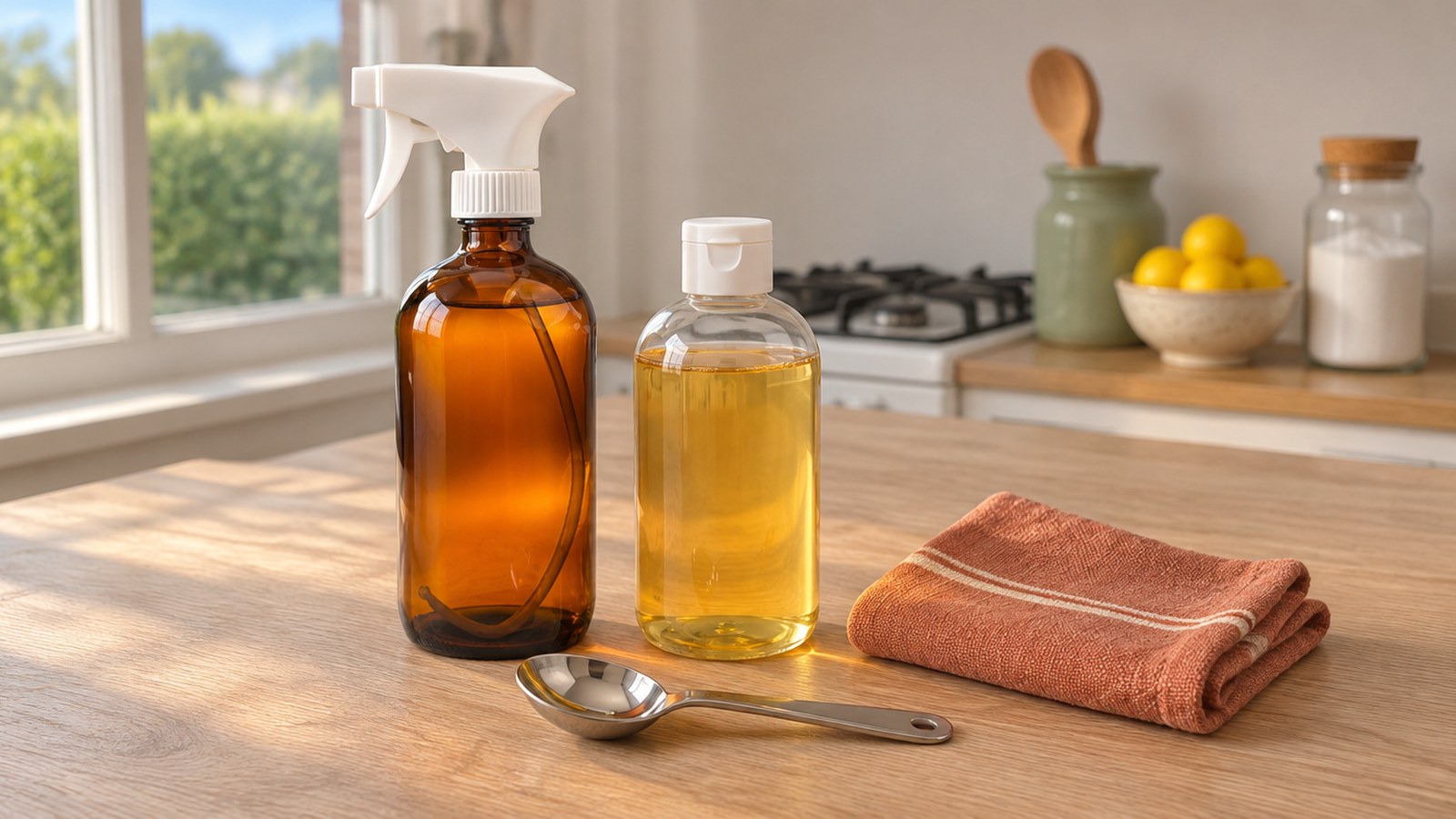

Most homes have a cupboard full of sprays that each do one job. An all-purpose cleaner promises to replace most of them, and a natural one promises to do it without the harsher chemistry. When people ask which is the best overall natural all-purpose cleaner, Dr. Bronner’s Sal Suds comes up again and again, partly because it’s a concentrate you dilute yourself and partly because it’s sold in more countries than most natural cleaners. This review puts its claims next to the evidence.
I’m Al, and before I became a stay-at-home dad to our two boys here in Australia, I spent years teaching high school math and science. That doesn’t make me a formulation chemist, and I won’t pretend it does. What carries over is the habit of asking “how do you know?” about every claim on a label. This isn’t a hands-on test: it’s built from Dr. Bronner’s published formula, the certifiers’ own registers and well over a thousand owner reviews, and I’ll show the working as we go.

🫧🌲 Quick Verdict
Dr. Bronner's Sal Suds Biodegradable Cleaner
★★★★☆ | ~$17 USD | Budget
Best for: Households that want one concentrate for most everyday cleaning, especially greasy kitchens and hard water
It's the most versatile and cheapest-per-use natural cleaner I could verify, but a scent you can't switch off and thinner independent certification keep it off five stars.
- About $0.27 USD per quart of all-purpose spray from the 32 oz bottle (opens in a new tab)
- A detergent that rinses clean (opens in a new tab) in hard water, where soap leaves film
- Every ingredient disclosed with its function (opens in a new tab) and chemical number
- Worth knowing: it isn't on the EPA's Safer Choice register, and there's no unscented version
👉 Shop Sal Suds (opens in a new tab)
Photo 16
What You're Getting
Dr. Bronner's is a family-owned company founded in the US in 1948 and best known for its Pure-Castile soap. Sal Suds is its household cleaner, and it's a different thing entirely: the company describes it as not a soap (opens in a new tab) but a concentrated hard-surface all-purpose cleaner. That distinction matters more than it sounds, and it comes up again below.
You buy it as a concentrate and mix your own spray. Dr. Bronner's sells it in three sizes: 16 oz for $11.29 USD (opens in a new tab), 32 oz for $16.99 and a 1 gallon refill for $54.99, with small discounts on subscription. Retail prices run a little lower in the US; Target had the 32 oz bottle at $14.99 (opens in a new tab) when I checked on November 16, 2026. You get the bottle and nothing else, so you'll need your own spray bottle, ideally a reusable one.
The dilutions are simple. For an all-purpose spray, Dr. Bronner's says 1 Tbsp per quart (opens in a new tab) of water (15 mL in about 1 L), and Lisa Bronner's guide adds the useful tip to put the water in first (opens in a new tab) so it doesn't foam up. Floors take a teaspoon in a gallon of hot water, a sink of dishes takes half a teaspoon or so, and an HE washing machine takes 1 to 2 Tbsp.
The ingredient list is short and fully disclosed. Dr. Bronner's publishes every ingredient with its function and CAS number (opens in a new tab): water; three cleaning agents (sodium lauryl sulfate, lauryl glucoside and sodium coco-sulfate); sodium benzoate as a preservative; Siberian fir, white spruce and black spruce oils for scent; citric acid to adjust pH; sodium chloride to thicken; and limonene, which the company lists as a fragrance allergen from the essential oils. Older bottles and some retailer pages show an earlier recipe with coco-betaine and no preservative, so check the label on the bottle in front of you.
The bottles are 100 percent post-consumer recycled (opens in a new tab) PET plastic, which Dr. Bronner's says can be reused and refilled. For readers outside the US, Sal Suds is easier to find than most natural cleaners. I found it at Well.ca in Canada (opens in a new tab) and on the Woolworths website (opens in a new tab) in Australia, as well as in natural health stores there. In the UK and New Zealand I found fewer stockists, and several listings were sold out when I checked. Prices outside the US are noticeably higher, which is the cost of shipping a US-made liquid around the world. With the bottle and the label laid out, the next step is checking which of its features hold up.
Key Features
It's a genuine concentrate, and that changes the price: Dr. Bronner's says one quart of Sal Suds makes 64 quarts of spray (opens in a new tab), and the arithmetic checks out: 32 fl oz is 64 Tbsp, and the spray recipe uses one tablespoon per quart. At the list price of $16.99, that's about $0.27 USD for each quart of spray. Blueland's multi-surface tablets, by comparison, start at $2.25 a tablet (opens in a new tab) for a 24 oz bottle, which works out to about $3.00 a quart. The same bottle also mops floors, washes dishes and does laundry, so it can replace several products at once, which suits anyone trying to own fewer, better things.
It's a detergent, so hard water doesn't beat it: Here's where the "not a soap" line earns its place. The US Geological Survey explains that the calcium in hard water reacts with soap (opens in a new tab) to form soap scum, and that's why castile soap can leave a film on shiny surfaces. Sal Suds is a synthetic detergent made from plant oils, and Dr. Bronner's says it doesn't react with calcium (opens in a new tab) and magnesium the same way, which is why it recommends Sal Suds over its own castile soap wherever hard water keeps leaving residue. The same chemistry is behind its reputation on grease: Dr. Bronner's says its blend of three surfactants is its best grease cutter (opens in a new tab), which is exactly the job homemade cleaners tend to fail at.
The formula is fully disclosed, down to the allergen: Dr. Bronner's lists every ingredient, including limonene as an allergen (opens in a new tab), which is more than many cleaning labels manage. Its sodium lauryl sulfate (SLS) is sourced from coconut (opens in a new tab) and palm kernel oils. SLS often gets confused with sodium laureth sulfate (SLES), which is made by ethoxylation, the process that can leave traces of 1,4-dioxane behind; we covered why that matters in our ECOS review. SLS isn't ethoxylated, so that particular concern doesn't apply here. One thing the company doesn't claim is a certified supply chain for these surfactants: its help center lists the SLS as plant-derived and certified to "Nothing yet!" (opens in a new tab), so the fair trade and regenerative organic programs Dr. Bronner's is known for apply to its soap oils, not to Sal Suds.
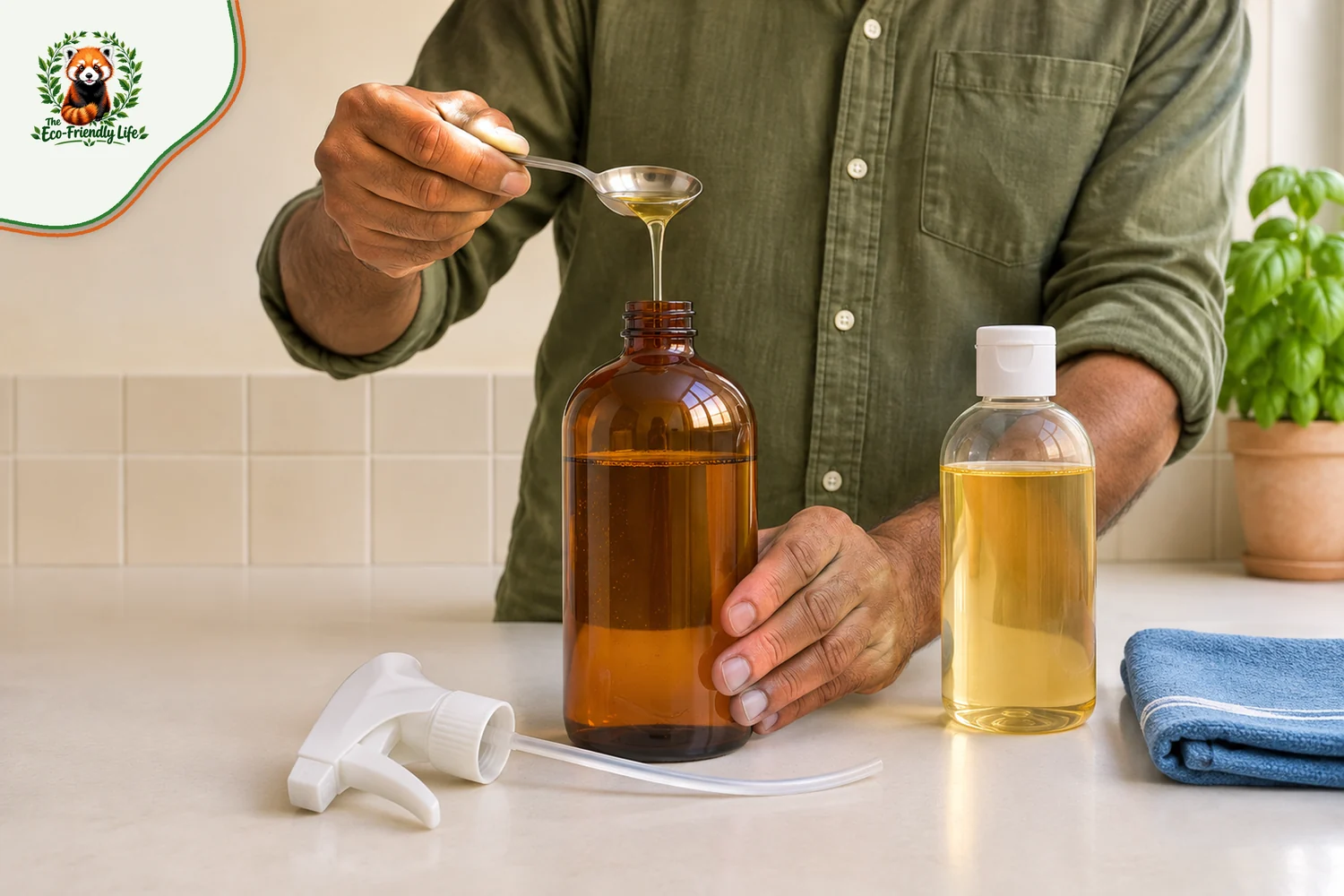
The DIY lesson that sold me on concentrates: Our household went through a long stretch of making our own cleaning products here in Australia: vinegar, bicarb (baking soda), castile soap, the usual repertoire. General surfaces, glass and light cleaning were genuinely fine, and cheaper. Grease and anything that needed to actually disinfect were not, and we spent longer than we should have assuming we were doing it wrong. The savings were smaller than they looked, too. We had a lot of half-full bicarb. If you've been through the same thing, you're in good company. A concentrate such as Sal Suds sits in between: you still mix it yourself, but it's formulated for the greasy jobs.

🍳🧽 Ready to try it?
Dr. Bronner's Sal Suds Biodegradable Cleaner
If grease is the job your homemade spray can't handle, this is the concentrate I'd try first, at about a quarter a bottle of spray.
- About $0.27 USD per quart of spray
- Cuts grease, rinses clean in hard water
👉 Shop Sal Suds (opens in a new tab)
Photo 17
The certifications need reading carefully: This is the part where Sal Suds is weaker than its reputation. It is certified cruelty-free: Cruelty Free International's register lists Dr. Bronner's under Leaping Bunny (opens in a new tab), approved through CCIC, including for multi-purpose cleaners. It is not on the US EPA's Safer Choice register (opens in a new tab), which I searched in full on November 16, 2026, and that's the certification that means an independent agency has reviewed every ingredient (opens in a new tab), set performance standards and audits annually. Dr. Bronner's also says Sal Suds carries the EWG Verified mark, but EWG's site wouldn't let me open its listing to check. And the B Corp logo you may remember is gone: the company announced in February 2025 that it would drop B Corp (opens in a new tab) certification once its fee ran out that September, saying B Lab had let large multinationals certify without credible checks on their supply chains. That's a principled reason, but it still leaves fewer independent checks than many shoppers assume. If you're working out which labels to trust, our guide to non-toxic cleaning products walks through the main ones.
"Readily biodegradable" is the company's own test result: Dr. Bronner's says Sal Suds shows more than 60 percent biodegradation (opens in a new tab) after 28 days under ISO 14593, which it calls "readily biodegradable" under OECD Test Guideline 310. The OECD's own description of that test sets the pass mark at more than 60 percent within a 10-day window (opens in a new tab) inside the 28 days, and Dr. Bronner's doesn't publish the test report or say whether that window was met. I'd expect a formula built on coconut-derived surfactants to break down well, but this is a company-reported result rather than one I could check, which is the habit behind spotting greenwashing on any label.
So the formula holds up where it can be checked, and the softer claims are the company's own. The bigger question is how it behaves on an ordinary weeknight in a real kitchen.
How It Performs in Real Life
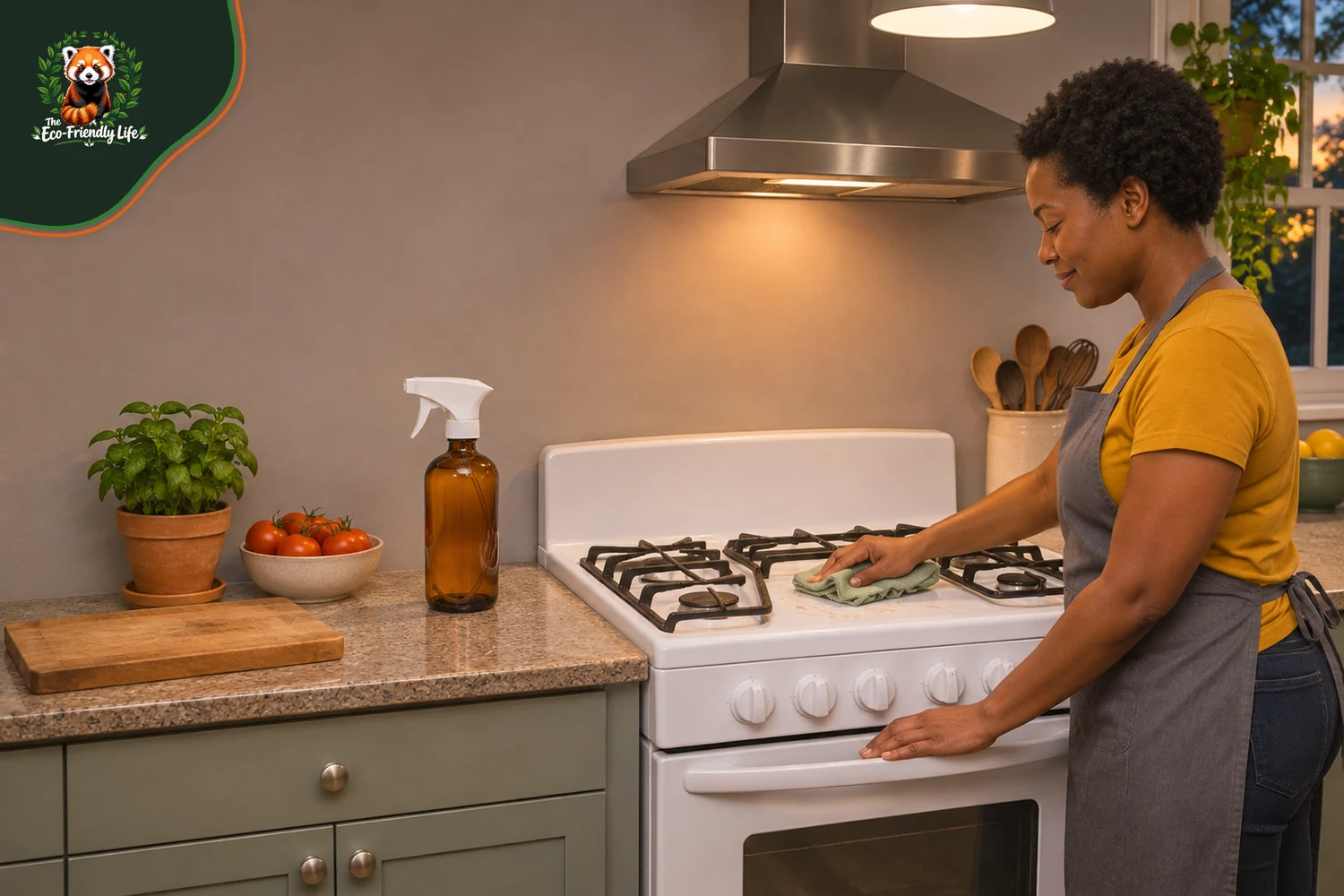
Owners rate it unusually highly: I couldn't find an independent lab test of Sal Suds, so owner reviews are the best evidence available. On Target's US listing, the 32 oz bottle averages 4.9 out of 5 (opens in a new tab) from 1,622 reviews, and 96 percent of reviewers would recommend it. The praise is specific: grease lifting from range hoods and stovetops, one bottle covering dishes, floors and laundry, and how long a bottle lasts. Ratings this high usually mean people who buy a concentrate on purpose and know what they're getting.
The scent is the dealbreaker for some people: Sal Suds smells of fir and spruce, and there's no unscented version. Owners on Target rate the scent 4.86 out of 5 (opens in a new tab), but limonene, one of the compounds in those oils, is an established contact allergen in humans, and the EU's scientific committee rates it as more potent once oxidized (opens in a new tab) by air. That doesn't make the spray dangerous, but if anyone in your house has fragrance allergies or eczema, a fragrance-free cleaner is the safer bet.
Treat the concentrate with a little respect: SLS is an effective cleaner partly because it's tough on oils, including the ones in your skin. The Cosmetic Ingredient Review's safety assessment found that skin irritation rose with concentration (opens in a new tab) and that SLS is safe in products used briefly and rinsed off. A tablespoon in a quart of water is a long way from the concentrate, but if you're pouring it neat, washing a sink of dishes with it often, or have sensitive hands, gloves make sense. That rinse-off-versus-stays-on distinction is the same reason so many people look for sulfate-free shampoos. Dr. Bronner's itself says Sal Suds is for the house, not personal care (opens in a new tab).
It cleans, but it doesn't disinfect: On Target's Q&A, Dr. Bronner's team says Sal Suds is not an EPA-registered disinfectant (opens in a new tab). For most days that's fine. The US CDC says cleaning with soap or detergent and water removes most germs (opens in a new tab), and that disinfecting is usually only needed when someone at home is sick or has a weakened immune system. For those times, keep a registered disinfectant on hand and follow its label. That's the same split our homemade phase taught us the hard way.
Don't mix it with vinegar: A lot of natural cleaning recipes combine soap and vinegar, and Lisa Bronner explains that castile soap and vinegar neutralize each other (opens in a new tab), which may be one reason homemade sprays disappoint. Sal Suds doesn't curdle the same way, but she says vinegar reduces its cleaning (opens in a new tab) power, so use them one after the other rather than in the same bottle. Baking soda is fine as a scrub alongside it, and hydrogen peroxide works better used separately.
Cold storage turns it cloudy: Leave the bottle in a cold laundry, garage or shed and it can turn white and solid. Dr. Bronner's says that's strictly cosmetic (opens in a new tab) and doesn't affect how it works; stand the closed bottle in warm (not boiling) water and it clears.
The bottle is recycled plastic, and recycling isn't a given: The 100 percent recycled PET bottle is better than virgin plastic, and a concentrate means one bottle replaces dozens of ready-made sprays. But PET bottles and jars were recycled at 29.1 percent (opens in a new tab) in the US in 2018, the EPA's latest figures. Buying the gallon refill cuts the plastic further, and if you're working toward a zero waste lifestyle, a bulk-refill shop near you may stock it loose.
Watch where it ships from: Sal Suds is made in California, so a bottle bought in Sydney or London has traveled a long way. Buying from Australia has made our household more careful about checking where something ships from rather than where the brand is based, and that's worth doing wherever you are. A local stockist beats an overseas order, and the larger sizes cut the shipping per spray bottle.
Put together, the evidence points to a cleaner that does the everyday job very well for very little money, with its compromises sitting in the scent, the plastic and the certifications it doesn't have.
Pros and Cons

Pros
- About $0.27 USD per quart of spray, a fraction of the cost of ready-made sprays or tablet refills (opens in a new tab)
- Strong on grease and clean-rinsing (opens in a new tab) in hard water
- One concentrate for surfaces, floors, dishes and laundry
- Every ingredient disclosed, and Leaping Bunny certified (opens in a new tab)
- Easy to buy in the US, Canada and Australia, with patchier stock in the UK and New Zealand
Cons
- No unscented version, and the scent includes limonene, an established contact allergen (opens in a new tab)
- Not on the EPA's Safer Choice register (opens in a new tab), and no longer a B Corp
- A plastic bottle, a concentrate that can irritate skin, and no disinfecting claim
The balance tips clearly toward value and versatility, as long as you're fine with a pine scent and mixing your own spray.
Photo 18
Our Verdict
Sal Suds earns its reputation. It's a true concentrate, so the cost per bottle of spray is tiny, and one product covers most of a household's everyday cleaning. It's formulated for the greasy, hard-water jobs that homemade mixes struggle with, its full ingredient list is public, and it's easy to buy in the US, Canada and Australia.
Its weak spots are real, though. You can't buy it unscented, and the scent carries a known allergen. It has fewer independent certifications than its reputation suggests: no Safer Choice listing, and no longer B Corp. And it's still plastic, it still has to be mixed and it doesn't disinfect.
So who should buy it? Anyone who wants one natural concentrate for most of the house, particularly with a busy kitchen or hard water, and who likes or doesn't mind a pine-fresh smell. If fragrance sensitivity or plastic-free packaging matters more to you than cost, one of the alternatives below fits better.

🌲✨ The Bottom Line
Dr. Bronner's Sal Suds Biodegradable Cleaner
★★★★☆ | ~$17 USD | Budget
Best for: Households that want one natural concentrate for greasy kitchens, floors and everyday surfaces
For about a quarter a bottle of spray, it does more jobs than anything else I checked; just go in knowing it's scented and you mix it yourself.
👉 Shop Sal Suds (opens in a new tab)
Photo 19
How It Compares
Sal Suds wins on cost and versatility, but it isn't the right choice for every home. These two cover the most common reasons to look elsewhere.

♻️🍋 Alternative
Blueland Multi-Surface Cleaner Starter Set
Price tier: Mid-range
A reusable spray bottle with tablets you dissolve in water, refilled from $2.25 a tablet (opens in a new tab) in plastic-free packaging, for counters, sealed wood and stone. Unlike Sal Suds it's listed on the EPA's Safer Choice register (opens in a new tab), but it's a surface spray only, not for floors, and costs roughly ten times as much per quart. Choose it if you never want to buy another plastic bottle and want an EPA-reviewed formula.
👉 Shop Blueland Spray (opens in a new tab)
Photo 20
🌿🚫 Alternative
Seventh Generation All Purpose Cleaner, Free & Clear
Price tier: Budget
A ready-to-use, fragrance-free spray at $4.99 USD (opens in a new tab) for 23 fl oz, listed on the EPA's Safer Choice register (opens in a new tab) with the fragrance-free flag. It needs no mixing and has no scent, but it's mostly water in a plastic bottle and is sold mainly in North America. Choose it if anyone in your home reacts to fragrance and you'd rather spray and wipe.
👉 Shop Seventh Generation (opens in a new tab)
Photo 1
For households that want one natural concentrate to cover most of the cleaning, and don't mind a pine scent, Sal Suds remains the one to beat.
FAQs
These are the questions that come up most often about Sal Suds and natural all-purpose cleaners.
Is Sal Suds safe to use around kids and pets?
Diluted as directed and wiped or rinsed off, it's a mild cleaner for most homes. Store the concentrate out of reach, since SLS irritates more at strength (opens in a new tab), and ask your vet first if a pet has a known sensitivity to scents or essential oils.
Does Sal Suds disinfect?
No. It's a cleaner, not an EPA-registered disinfectant. The CDC says cleaning removes most germs (opens in a new tab), and disinfecting is mainly needed when someone at home is sick.
What's the difference between Sal Suds and Dr. Bronner's castile soap?
Castile is a true soap, which reacts with hard-water minerals and can leave film; Sal Suds is a detergent that rinses clean (opens in a new tab) in hard water and is tougher on grease. Castile is gentler for body care; Sal Suds is meant for the house.
Can I mix Sal Suds with vinegar or baking soda?
Keep vinegar separate, because it reduces Sal Suds' cleaning (opens in a new tab) power. Baking soda is fine as a gentle scrub alongside it.
How long does a bottle last?
At the spray dilution of 1 Tbsp per quart, a 32 oz bottle makes about 64 quarts of spray (opens in a new tab). Most homes will also use it for floors and dishes, so how long it lasts depends on how many jobs you give it.
Our Related Articles
Every time you reach under the sink for a spray bottle or scoop of laundry powder, you’re making a choice — and its effects
Read article
Laundry detergent is one of the few things a household buys over and over for decades, so the price per load matters more than
Read article

Every day, the average person generates waste that adds up to a staggering problem for our planet. With 353 million tonnes of plastic waste
Read article
Conclusion
Sal Suds does what a natural all-purpose cleaner should, and more: one concentrate handles surfaces, floors, dishes and laundry, it copes with grease and hard water, and a bottle of spray costs about a quarter. Its weak points are a scent you can't avoid, a plastic bottle and fewer independent certifications than its reputation suggests.
If you want one natural concentrate to replace most of the sprays under your sink and you're happy with a pine-fresh smell, this is the one I'd start with.
Have you tried Sal Suds, and which job did it handle that your old cleaner, homemade or store-bought, never quite could?
