
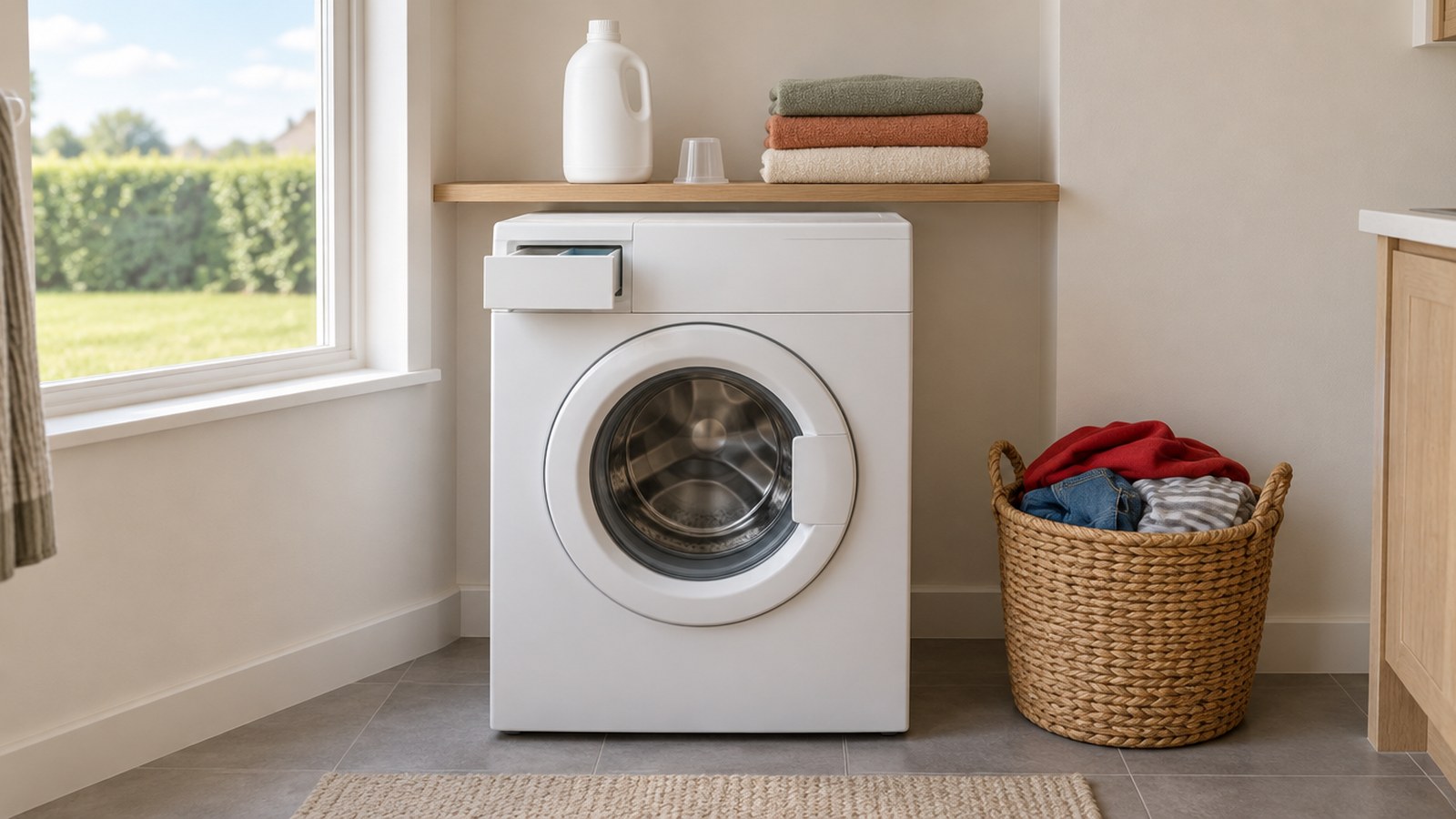

Laundry detergent is one of the few things a household buys over and over for decades, so the price per load matters more than the price on the shelf. Plenty of eco brands cost two or three times what a supermarket jug does, which leaves a lot of people asking whether a budget eco-friendly laundry detergent can be both cheap and genuinely better. ECOS Hypoallergenic Laundry Detergent with Enzymes, Free & Clear, is the one that keeps coming up in that conversation, so this review puts its claims next to the evidence.
I’m Al. I trained as a high school math and science teacher, and I’m now at home full time with our two boys here in Australia. I’m not a chemist or a laundry engineer. What I bring is a science teacher’s reflex to check who verified a claim before I repeat it, and I’ll say up front that our family hasn’t used this detergent: ECOS isn’t sold in Australia. So this is a review built from the registers, the label and thousands of owner reports, and I’ll show you the working as we go.

🧺💧 Quick Verdict
ECOS Hypoallergenic Laundry Detergent with Enzymes, Free & Clear
★★★★☆ | ~$12 USD | Budget
Best for: US and Canadian households with high-efficiency washers who want a certified fragrance-free detergent for the lowest cost per load
It's the cheapest certified fragrance-free enzyme liquid I could verify, but a plastic jug and North America-only availability keep it off five stars.
- About $0.10 USD per load in a high-efficiency washer, based on the 110 oz bottle (opens in a new tab)
- Listed by name on the EPA's Safer Choice register (opens in a new tab), with the fragrance-free flag
- Three stain enzymes in a liquid that dissolves in cold water (opens in a new tab)
- Worth knowing: it comes in a plastic jug, and the 120-load count assumes the smaller high-efficiency dose
👉 Shop ECOS Detergent (opens in a new tab)
Photo 12
What You're Getting
ECOS is made by Earth Friendly Products, a company that says it has been family-owned and operated (opens in a new tab) since 1967 and that more than 120 of its cleaning products carry the US EPA's Safer Choice label. It's a certified women-owned business (opens in a new tab), and the EPA's register shows it has been a Safer Choice partner (opens in a new tab) since 2008. The product in this review is the enzyme version of its fragrance-free liquid, which the EPA lists as "ECOS Plus with Enzymes, Free & Clear."
The bottle reviewed here is the 110 fl oz size, sold at Walmart as 120 loads (opens in a new tab) for $12.14 USD when I checked on November 11, 2026. Walmart's prices move, and its two-packs and four-packs cost a little less per bottle, so check at the checkout. ECOS also makes it in a 70 oz size (opens in a new tab), and the enzyme line comes in Lavender and Magnolia & Lily as well as Free & Clear. You get one plastic jug with a measuring cap, nothing more.
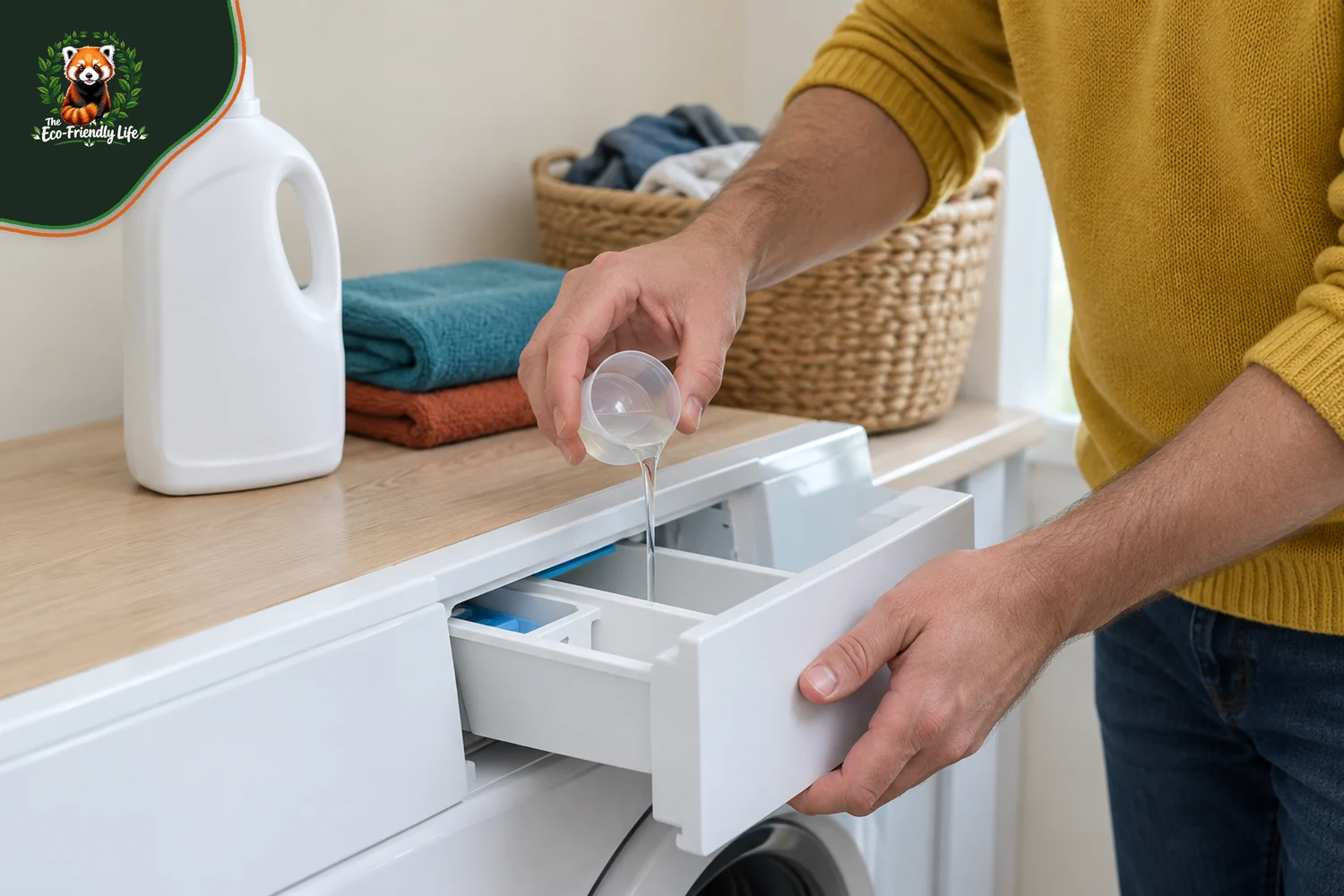
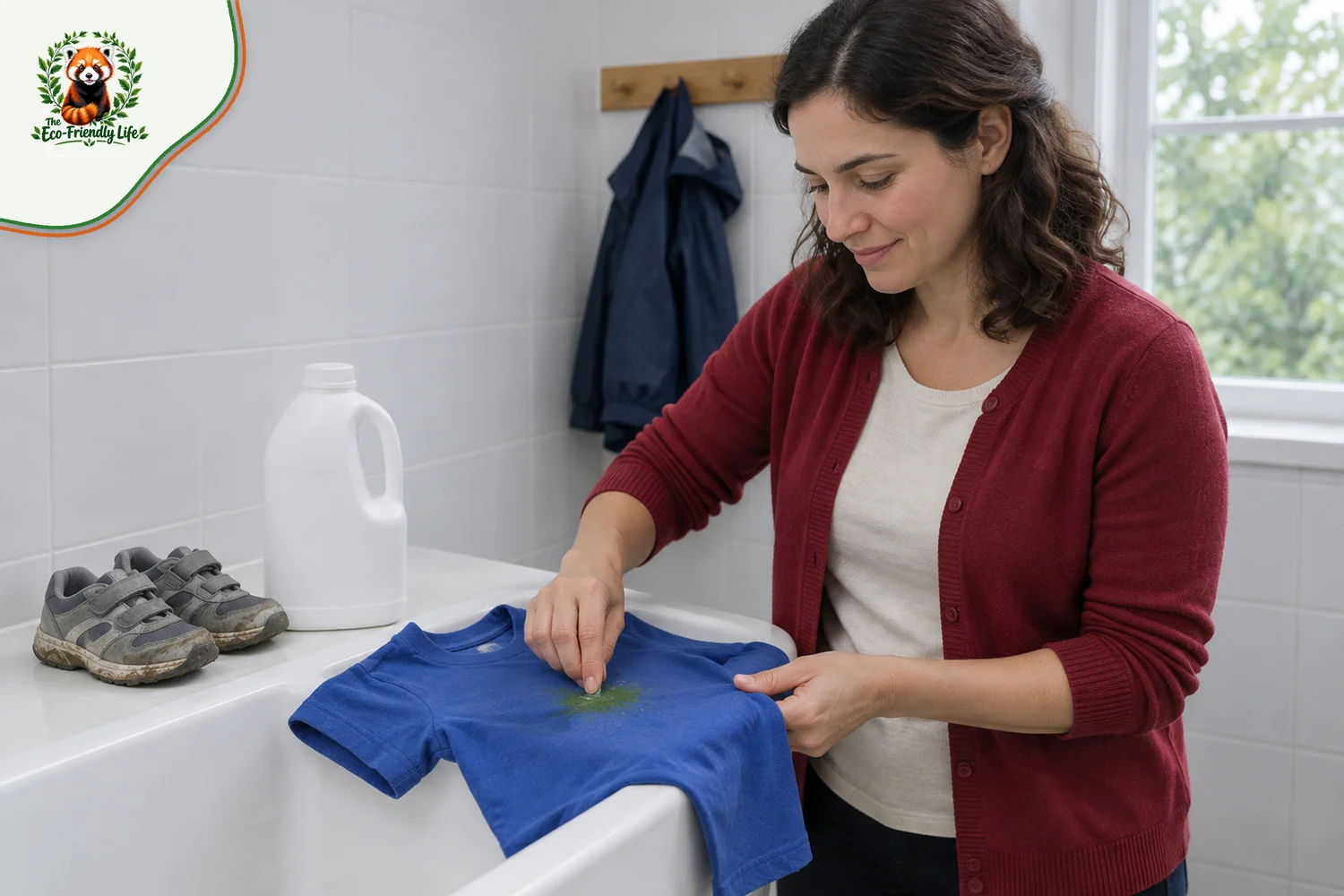
The dose is about 1 oz per load (opens in a new tab) in a high-efficiency (HE) washer and 2 oz in a standard top-loader. Walmart's directions put a heavily soiled load at just under 2 oz (opens in a new tab) in an HE machine or just under 3 oz in a standard one. For stains, ECOS says to rub a few drops straight onto the mark before washing.
The ingredient list is short. ECOS lists water, three plant-based cleaners (opens in a new tab) (cocamidopropyl betaine, sodium coco-sulfate and cocamidopropylamine oxide), two preservatives (phenoxyethanol and caprylyl glycol), sodium citrate as a water softener, sodium hydroxide to adjust pH, and an enzyme blend of protease, amylase and mannanase. Walmart's listing also shows sodium formate (opens in a new tab), a common enzyme stabilizer. There's no added fragrance or dye. ECOS says it's manufactured in the USA (opens in a new tab) with globally sourced ingredients and made with renewable energy.
Where you can buy it matters for a global audience. ECOS's own site points shoppers to US retailers (opens in a new tab), and the only other country where I found it on sale was Canada, where Well.ca stocks (opens in a new tab) the enzyme-free version. I couldn't find it sold in the UK, Europe, Australia or New Zealand. Readers outside North America will want the alternatives further down. With the bottle and the label laid out, the next step is checking which of its features hold up.
Key Features
It's on the Safer Choice register by name: Plenty of detergents carry eco-looking logos, so the first thing I checked was the certifier's own list rather than the bottle. The EPA's product search (opens in a new tab) lists "ECOS Plus with Enzymes, Free & Clear" under laundry detergents for home use, and marks it as meeting Safer Choice's separate fragrance-free criteria (opens in a new tab). That listing means more than a marketing badge. The EPA says it reviews every chemical ingredient (opens in a new tab) regardless of its percentage, sets performance standards products must meet, reviews packaging, and audits certified products every year. If you're working out which non-toxic cleaning products to switch first, a register-verified fragrance-free detergent is a sensible place to begin.
Enzymes do the heavy lifting in cold water: Budget detergents often skip enzymes, and this one doesn't. The American Cleaning Institute explains that detergent enzymes act as small selective scissors (opens in a new tab) that break stains into pieces: protease for protein stains such as grass, blood and egg, amylase for starches, and mannanase for barbecue sauce, chocolate, ice cream and toothpaste. Enzymes also work at low temperatures, and that's where the environmental saving sits, because ENERGY STAR says water heating uses (opens in a new tab) about 90 percent of the energy a clothes washer needs. The one gap is fat: ECOS doesn't list lipase, the enzyme aimed at oily marks, so greasy stains are where you'd expect it to struggle most.
The cost per load is genuinely low, if you dose for an HE machine: At $12.14 for a bottle sold as 120 loads, this works out at about $0.10 USD a load. For comparison, Consumer Reports puts its cheapest featured liquid, Kirkland Signature Ultra Clean, at about 14 cents (opens in a new tab) a load, and notes that green and gentle formulas tend to sit among the pricier detergents. The catch is in the dose. The 120-load count assumes the 1 oz HE dose (opens in a new tab). In a standard top-loader at 2 oz, the same bottle gives roughly 55 loads, and the cost climbs to about $0.21 a load. If you're replacing a washer anyway, an efficient washing machine is what makes that smaller dose possible in the first place.

👚🌿 Ready to try it?
ECOS Hypoallergenic Laundry Detergent with Enzymes, Free & Clear
If the lowest cost per load matters most and you run an HE washer, this is the certified fragrance-free liquid I'd look at first.
- About $0.10 USD per HE load
- Safer Choice, fragrance-free
👉 Shop ECOS Detergent (opens in a new tab)
Photo 13
The label number assumes a dose you may not use: Our household went through a stretch of making our own cleaning products here in Australia: vinegar, bicarb, castile soap, the usual repertoire. The savings were real but smaller than they looked, because you buy the base ingredients in quantity and then don't use them evenly. We had a lot of half-full bicarb. That's the lesson I'd bring to any cost-per-load figure, ECOS included. The number on the label is a projection built on a dose somebody chose, and the only way to know your own cost is to measure what you actually pour.
No ethoxylated cleaners, which sidesteps 1,4-dioxane: 1,4-dioxane isn't an ingredient you'll ever see on a label. New York's environment department describes it as a trace contaminant (opens in a new tab) that forms as a side product when certain ingredients are made, and the state has capped it at 1 ppm in household cleaning products since December 31, 2023. The chemical distributor Univar explains that it's a by-product of ethoxylated (opens in a new tab) chemicals, so the risk sits with formulas built on them. The three cleaners on the ECOS ingredient list (opens in a new tab) are betaine, sulfate and amine-oxide types rather than ethoxylated ones, and ECOS says its whole laundry range is made without dyes (opens in a new tab), formaldehyde, parabens, phosphates and phthalates. Outside New York there's no label line for 1,4-dioxane, so reading the cleaners is about as close as a shopper can get.
Its climate claims are its own: ECOS describes itself as "climate positive," carbon neutral since 2013 (opens in a new tab) and water neutral since 2016, and says it offsets 110 percent of its impacts after first cutting them. It also says its four US facilities run on renewable energy. What the page doesn't say is which offset registry, standard or independent verifier stands behind those numbers. In the US, the FTC's Green Guides expect offset claims to rest on competent and reliable (opens in a new tab) measurement and to avoid selling the same reduction twice, which is exactly what a named verifier would show. ECOS also says it earned TRUE Platinum Zero Waste certification in 2015; TRUE is run by GBCI, which reviews documentation (opens in a new tab) and requires annual performance data, though I couldn't open a listing for ECOS's facilities to confirm it. None of this makes the claims false. It does mean they're the kind of statement worth weighing below a register entry, which is the habit behind spotting greenwashing anywhere.
So the label holds up where it can be checked, and the softer claims are honestly labeled as the company's own. The bigger question is how it behaves once it's in a real machine on an ordinary wash day.
How It Performs in Real Life
There's no independent lab score, so I looked at what there is: I couldn't find a published independent stain test of this detergent. Consumer Reports' 2026 detergent ratings (opens in a new tab) don't include ECOS, though CR explains that it tests in cool, hard water and recommends looking for the Safer Choice seal. What every Safer Choice product does have to clear is the EPA's requirement that it perform comparably (opens in a new tab) to conventional products. That's a pass mark rather than a ranking, so I'd read it as "does the job," not "beats everything."
Owners rate it highly, and the complaints are minor: On Walmart's US listing, the 110 oz bottle averages 4.6 out of 5 (opens in a new tab) from 7,239 ratings. The breakdown shows 81 percent (opens in a new tab) at five stars and 6 percent at one or two. The themes owners raise most are the lack of scent, sensitive skin, stain removal and value. The visible complaints are small ones: a faint "off" smell from the unscented base for a few people, a big bottle that's heavy to pour when full, and fewer suds than some owners expect.
Cold tap water is colder than most people think: The water coming into a washer on a "tap cold" setting can be much colder than the label on the dial suggests, especially where the weather is cold. Iowa State University Extension says water below 60°F (about 16°C) (opens in a new tab) is too cold for detergents to help much, that powders can leave residue in cold water, and that heavy-duty liquids dissolve whatever the temperature. That's a quiet advantage for a liquid detergent such as ECOS. If your machine has both "cold" and "tap cold," the first is usually the better choice when your tap water runs very cold.
"Hypoallergenic" is a claim, not a standard: ECOS says this formula was tested to verify (opens in a new tab) it's unlikely to irritate skin allergies. That's worth knowing, but the US FDA says there are no federal standards (opens in a new tab) or definitions for "hypoallergenic" on cosmetics, so the word means whatever a company wants it to mean. One more detail matters if eczema is the reason you're shopping. The National Eczema Association's Seal is listed for ECOS's enzyme-free Free & Clear (opens in a new tab), not this enzyme version. Enzymes are a known respiratory sensitizer in concentrated form, which the ACI says is why detergent makers supply them as liquids or coated granules (opens in a new tab), and it rates the consumer risk as extremely low.
The jug is the weak point: This is a plastic bottle that's mostly water, shipped by truck. Whether your local program takes the jug varies, and the EPA's latest material figures put the US recycling rate for HDPE milk and water bottles at 29.3 percent (opens in a new tab) and for plastics overall at 8.7 percent. If you're working toward a zero waste lifestyle, that gap is the honest reason to pay more for a plastic-free format.
Plastic-free costs more per load: If the jug is a deal-breaker, the step up we've already covered in our Blueland review swaps it for tablets in a reusable tin with paper refills. Blueland quotes $0.32 to $0.35 (opens in a new tab) a load, roughly three times what ECOS costs in an HE washer, so it's a trade of money for packaging.
Packaging is a tell worth watching: In our house, packaging has become one of the things we notice, because it's where a company's stated values meet its actual operation. Most eco products we've ordered here in Australia arrive sensibly packed, but every so often something eco-branded turns up wrapped in three layers of plastic, and that mismatch says more about a company than its sustainability page does. If you order online, check how it arrives before you reorder, and if a subscription is on offer, match the delivery interval to how fast you really get through a bottle.
Washing habits matter as much as the bottle: The biggest gains from any detergent come from how you use it. ENERGY STAR says cold water generally does a good job (opens in a new tab) unless you're dealing with oily stains, so pretreat greasy marks with a few drops and wash everything else cold. Full loads, the right dose and fewer washes for clothes that aren't dirty are all part of building a sustainable wardrobe that lasts longer.
Put together, the evidence points to a detergent that does the everyday job well for very little money, with its compromises sitting in the packaging and in where you can buy it.
Pros and Cons

Pros
- About $0.10 USD per load in an HE washer, lower than CR's cheapest featured liquid at about 14 cents (opens in a new tab)
- Listed by name on the EPA's Safer Choice register (opens in a new tab), including the fragrance-free criteria
- Protease, amylase and mannanase for food and grass stains (opens in a new tab)
- No added fragrance or dye, and on Leaping Bunny's certified brand list (opens in a new tab) since 2000
- Easy to find in ordinary US stores, with 4.6 out of 5 (opens in a new tab) from more than 7,000 owner ratings
Cons
- A plastic jug that's mostly water, in a country that recycles 8.7 percent (opens in a new tab) of its plastics
- Sold in the US and Canada only, so most readers outside North America can't buy it
- The 120-load count assumes the HE dose; top-loaders pay about $0.21 a load
- "Climate positive" and carbon neutral are ECOS's own claims (opens in a new tab), with no named verifier
The balance tips clearly toward value, as long as you live where it's sold and can live with the jug.
Photo 14
Our Verdict
ECOS with Enzymes, Free & Clear, earns its reputation as a budget eco-friendly laundry detergent. The parts that can be checked hold up: it sits on the EPA's Safer Choice register under its own name, it carries the fragrance-free flag, and its enzymes cover the stains families make most often. At about a dime a load in an HE washer, it costs less than many conventional detergents, which is rare for a certified product.
The compromises are real, though. The jug is plastic, the load count depends on owning a high-efficiency machine, and the climate claims are ECOS's own rather than a verifier's. For anyone outside the US and Canada, it simply isn't an option.
So who should buy it? A North American household with an HE washer that wants a certified, fragrance-free detergent without paying an eco premium. If plastic-free packaging matters more to you than price, or if eczema is the main reason you're switching, one of the options below fits better.

👕🌱 The Bottom Line
ECOS Hypoallergenic Laundry Detergent with Enzymes, Free & Clear
★★★★☆ | ~$12 USD | Budget
Best for: North American households with HE washers who want a certified fragrance-free detergent at the lowest cost per load
A certified fragrance-free enzyme liquid for about a dime a load is hard to beat; just go in knowing you're buying a jug.
👉 Shop ECOS Detergent (opens in a new tab)
Photo 15
How It Compares
ECOS wins on price, but it isn't the right detergent for every reader. These two cover the most common reasons to look elsewhere.

🔄🧼 Alternative
Blueland Laundry Tablets, Free & Clear
Price tier: Mid-range
Pressed tablets in a reusable tin with compostable paper refills, at about $0.32 to $0.35 USD (opens in a new tab) a load. It drops the plastic jug entirely and ships beyond North America, but it costs roughly three times as much per load as ECOS. Choose it if plastic-free packaging is your first priority, or if you live in the UK, Australia or New Zealand.
👉 Shop Blueland Tablets (opens in a new tab)
Photo 16
♻️📦 Alternative
smol Fragrance-Free Non-Bio Laundry Capsules
Price tier: Budget
A UK subscription capsule at £6.00 GBP for 24 (opens in a new tab) (25p a wash), in plastic-free cardboard, from a Certified B Corp (opens in a new tab). Its fragrance-free capsules are certified by Allergy UK, though capsules give you no control over dose. Choose it if you live in the UK, where ECOS isn't sold.
👉 Shop smol Capsules (opens in a new tab)
Photo 17
For North American readers who want the lowest cost per load from a certified fragrance-free detergent, ECOS remains the one to beat.
FAQs
These are the questions that come up most often about ECOS and budget eco detergents.
Is ECOS laundry detergent really eco-friendly?
The parts that can be checked independently are solid: the enzyme Free & Clear formula is on the EPA's Safer Choice register (opens in a new tab), and the brand has been on Leaping Bunny's certified list (opens in a new tab) since 2000. Its packaging is a plastic jug, and its climate-positive claim is the company's own.
Is ECOS good for eczema or sensitive skin?
It has no added fragrance or dye, and ECOS says it was tested to be unlikely to irritate skin. If eczema is the concern, note that the National Eczema Association's Seal is listed for ECOS's enzyme-free Free & Clear (opens in a new tab), not the enzyme version. Retailer ingredient lists for that version don't always match, so check the label on the bottle you buy and ask your doctor if you're unsure.
How many loads does a 110 oz bottle really do?
About 120 in an HE washer at the 1 oz dose, which Walmart's listing uses for its count (opens in a new tab). In a standard top-loader at 2 oz, expect roughly 55, and fewer if you dose up for heavily soiled loads.
Does ECOS work in cold water?
ECOS says it works in all water temperatures, and as a liquid it dissolves whatever the temperature (opens in a new tab). In very cold water below about 60°F, any detergent struggles, so a "cold" setting rather than "tap cold" helps.
Can I buy ECOS outside the US?
ECOS's own site points to US retailers (opens in a new tab), and in Canada Well.ca sells (opens in a new tab) the enzyme-free version. In the UK, smol is a comparable budget option. Elsewhere, look for a detergent certified by an independent body your own country recognizes.
Our Related Articles
Laundry runs quietly underneath family life, a load or two most days, which makes detergent one of the few products a household buys over
Read article
Every time you reach under the sink for a spray bottle or scoop of laundry powder, you’re making a choice — and its effects
Read article

Every day, the average person generates waste that adds up to a staggering problem for our planet. With 353 million tonnes of plastic waste
Read article
Conclusion
ECOS with Enzymes, Free & Clear, does what a budget eco detergent should: it holds a certification you can check yourself, skips the fragrance and dye, and cleans everyday loads for about a dime each in an HE washer. Its weak points are the plastic jug, its North America-only reach and climate claims that rest on the company's word.
If you live in the US or Canada and want a certified fragrance-free detergent without paying extra for the label, this is the one I'd start with.
Have you switched to ECOS, and did the cost per load match the bottle once you started measuring your own doses?
