
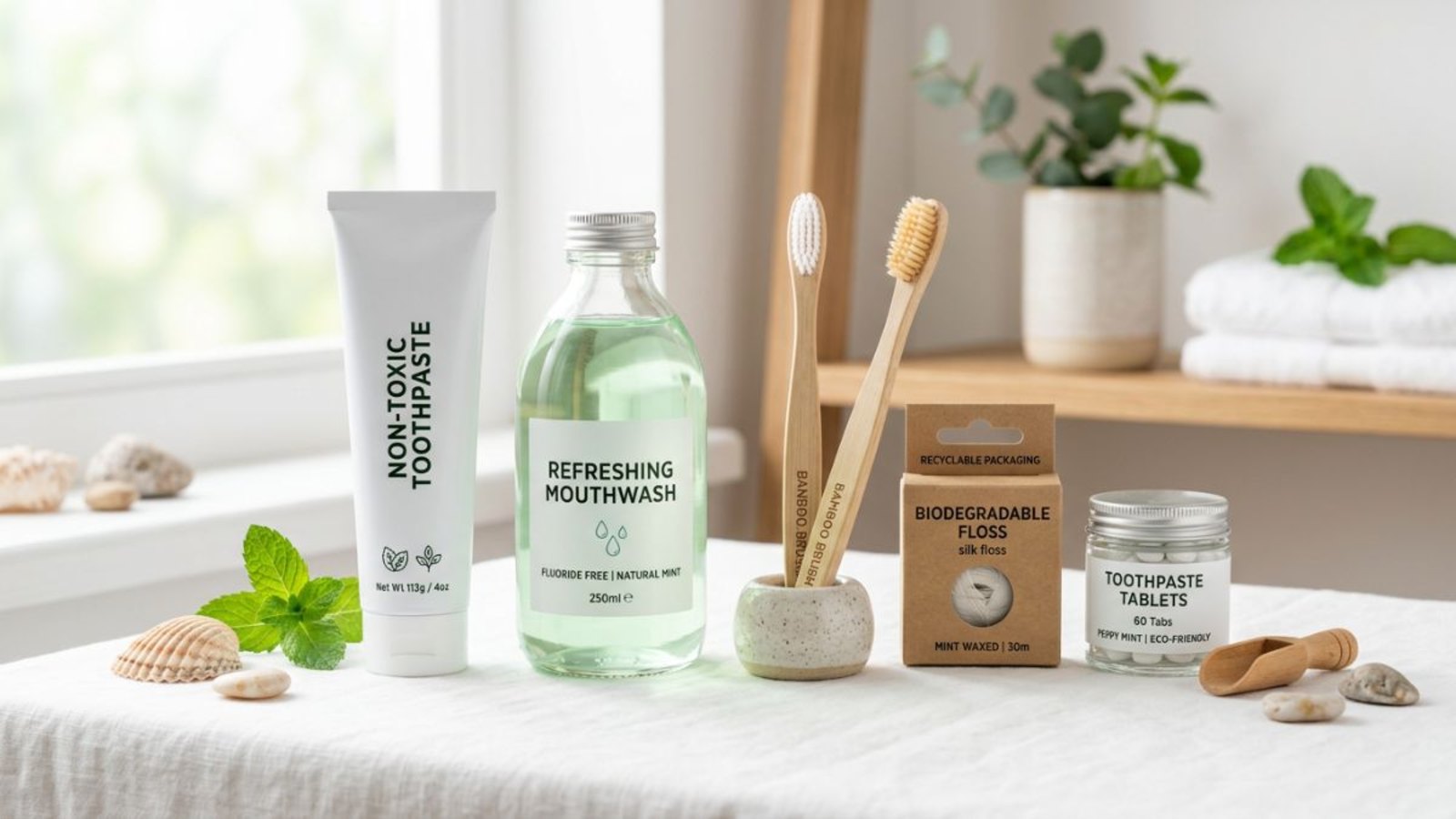

Most of us learned to brush our teeth before we were old enough to read the ingredient list on the tube — and for the most part, we have never questioned it since. Conventional toothpaste has occupied the same spot on the bathroom shelf for generations, backed by decades of advertising and reassuring endorsements. But oral care products are something we use every single day, often twice a day, in direct contact with the soft tissue of our mouths — and a small amount of what goes in there gets swallowed in the process. That frequency of exposure is worth thinking about carefully.
Hi, I’m Katrina. I came to non-toxic oral care not as a dentist or a toxicologist but as a parent who started reading ingredient labels after we began working through the chemicals in our household. Toothpaste was one of the last categories I checked, and it turned out to be one of the more surprising. There are common conventional ingredients with real scientific questions attached to them, genuinely effective natural alternatives that most people have never encountered, and a growing number of brands building honest, well-formulated products. Whether you are simply curious about what is in your toothpaste or actively looking to make a change, I hope this guide gives you what you need to decide for yourself. Read on — it is worth your time.
⭐ Our Top Pick — Best Non-Toxic Toothpaste
Davids Hydroxi™ Sensitive+Whitening Nano Hydroxyapatite Toothpaste
I chose Davids over several other hydroxyapatite toothpastes because it combines a fully transparent ingredient list with EWG Verified status, a recyclable metal tube, and one of the most detailed, honest explanations I have seen of why nano-hydroxyapatite actually works — the kind of brand communication that builds real trust.
It remineralizes and strengthens enamel using nano-hydroxyapatite — the same mineral that makes up tooth enamel — without fluoride, SLS, artificial flavors, or preservatives.
- ✅ Nano-hydroxyapatite active | EWG Verified
- ✅ SLS-free | No artificial additives
- ✅ Recyclable metal tube
- ✅ Available globally via iHerb
| Mid-range
👉 Shop Davids Hydroxi (opens in a new tab)What Your Toothpaste Is Actually Made Of
An ingredient you use every day without thinking twice about: Sodium lauryl sulfate, or SLS, appears in roughly 90 percent of commercial toothpastes. It is an industrial surfactant — the same class of chemical used in engine degreasers — added purely to produce the foam that makes brushing feel effective. Foam has no demonstrated clinical role in cleaning teeth; it is entirely cosmetic. The more substantive concern is what SLS does to the tissue in your mouth: peer-reviewed research has consistently linked it to microscopic damage of the oral mucosa and, for many people, a significant increase in canker sore frequency. Clinical studies have documented meaningful reductions in mouth ulcer occurrence when patients switched to SLS-free formulas. If you have ever experienced recurring mouth ulcers without an obvious cause, your toothpaste is a reasonable and often overlooked factor. The same surfactant category creates a parallel set of concerns in our guide to sulfate-free shampoos (opens in a new tab) — products that foam without the foam being necessary for the cleaning to work.
Triclosan has a regulatory history worth understanding: Triclosan is an antibacterial compound historically added to toothpastes, soaps, and various household products. The U.S. Environmental Protection Agency (opens in a new tab) regulates triclosan as a pesticide ingredient and has been conducting ongoing registration review, assessing endocrine effects, reproductive and developmental toxicity, and carcinogenicity based on accumulating evidence. Peer-reviewed research has raised concerns about triclosan’s potential to disrupt thyroid hormone metabolism, contribute to antibiotic resistance, and accumulate in body tissue — it has been detected in human breast milk, blood, and amniotic fluid in populations worldwide. The European Union moved faster than the US in banning triclosan from mouthwash products and restricting its use in children’s oral care. If your toothpaste lists triclosan on the label, this is a clear and practical reason to switch.
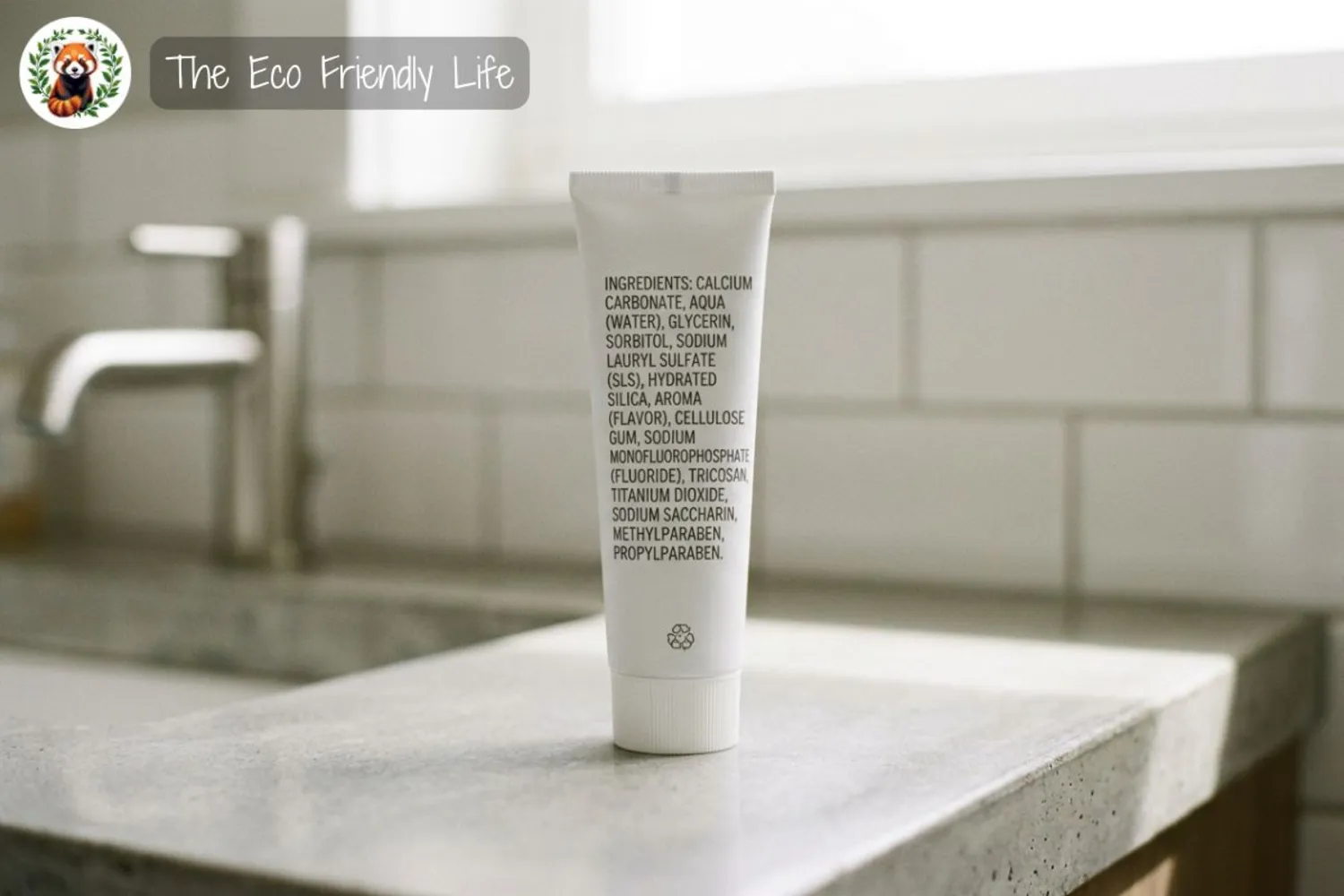
Fluoride is effective, and that is not the complete picture: Fluoride has been a standard active ingredient in toothpaste since the 1950s, and the American Dental Association (opens in a new tab) reports that community water fluoridation continues to reduce tooth decay by 20 to 40 percent in children and adults — a track record backed by extensive clinical evidence. That track record is real and should not be dismissed. The more specific and narrow concerns are these: fluorosis, which causes visible white spots or streaks on developing teeth, can result from excess fluoride ingestion during childhood, and the U.S. Centers for Disease Control and Prevention has noted that toddlers and preschoolers often take in more fluoride from toothpaste than is recommended. There are also ongoing scientific discussions about neurological effects at high chronic exposure levels, particularly in regions with naturally elevated fluoride in groundwater. None of this makes fluoride in adult toothpaste dangerous at recommended doses — but it is the legitimate scientific and regulatory context behind why fluoride-free alternatives for young children, and for adults who prefer to minimize exposure, have become a credible and well-researched category rather than fringe thinking.
Artificial dyes, synthetic fragrances, and titanium dioxide are aesthetic ingredients, not functional ones: These appear in conventional toothpastes purely for appearance — the bright white color, the uniform gloss, the strong artificial mint intensity. None of them clean teeth. Independent ingredient safety databases rate titanium dioxide with moderate concern for non-reproductive organ toxicity, and the EU’s Scientific Committee on Consumer Safety has raised specific concerns about nano-form titanium dioxide used in cosmetic products. Artificial dyes carry their own lists of potential sensitivities. Checking your toothpaste against a reputable ingredient database takes less than two minutes and gives you an independent safety rating to work from.
Reading the ingredient list on your toothpaste is a good first step. Knowing what to look for instead is the one that changes what you actually buy.
The Ingredients That Actually Work
Hydroxyapatite is the most significant development in oral care most people have never heard of: Hydroxyapatite (HAp) is a naturally occurring calcium phosphate mineral that makes up approximately 97 percent of tooth enamel and 70 percent of dentin — in other words, your teeth are largely composed of it. Japanese oral care researchers began exploring biomimetic hydroxyapatite as a remineralizing ingredient in the 1970s, and Japan approved it as an anti-cavity active ingredient in 1993. It has since been approved in Canada and Europe. A rigorous 18-month double-blinded, randomized clinical trial published in Frontiers in Public Health (opens in a new tab) found that a fluoride-free hydroxyapatite toothpaste was non-inferior to 1,450 ppm fluoride toothpaste for cavity prevention in adults: 89.3 percent of the hydroxyapatite group showed no increase in decay over the full study period. The researchers additionally noted that hydroxyapatite is safe if swallowed, does not interfere with the oral microbiome, and does not stain tooth surfaces — meaningful advantages that fluoride does not share.
⚙️ Recommended: Davids Hydroxi™ Toothpaste
Davids was my choice for this article because it uses rod-shaped nano-hydroxyapatite — the form research indicates is most effective at penetrating enamel fissures — combined with xylitol, baking soda, and coconut oil, all in a recyclable metal tube with EWG Verified status and a fully transparent ingredient deck.
- ✅ Nano-HAp active | EWG Verified | SLS-free | No fluoride, no artificial flavors
- ✅ Recyclable metal tube | Available globally via iHerb
Xylitol does something most sweeteners cannot: Xylitol is a naturally occurring sugar alcohol found in birch trees, corn cobs, and many fruits. Unlike regular sugar, it cannot be metabolized by Streptococcus mutans — the primary cavity-causing bacterium in the human mouth. When S. mutans attempts to consume xylitol, it cannot extract energy from it and eventually dies, measurably reducing the bacterial load over time with consistent use. Xylitol has substantial clinical research behind it and is recommended by many dental professionals as a practical complement to brushing. Using xylitol-containing gum, lozenges, or toothpaste after meals is one of the simplest available steps for maintaining a healthier oral environment. The same kind of ingredient-level thinking applies across personal care categories — our guide to non-toxic makeup (opens in a new tab) covers how to approach that evaluation process more broadly.
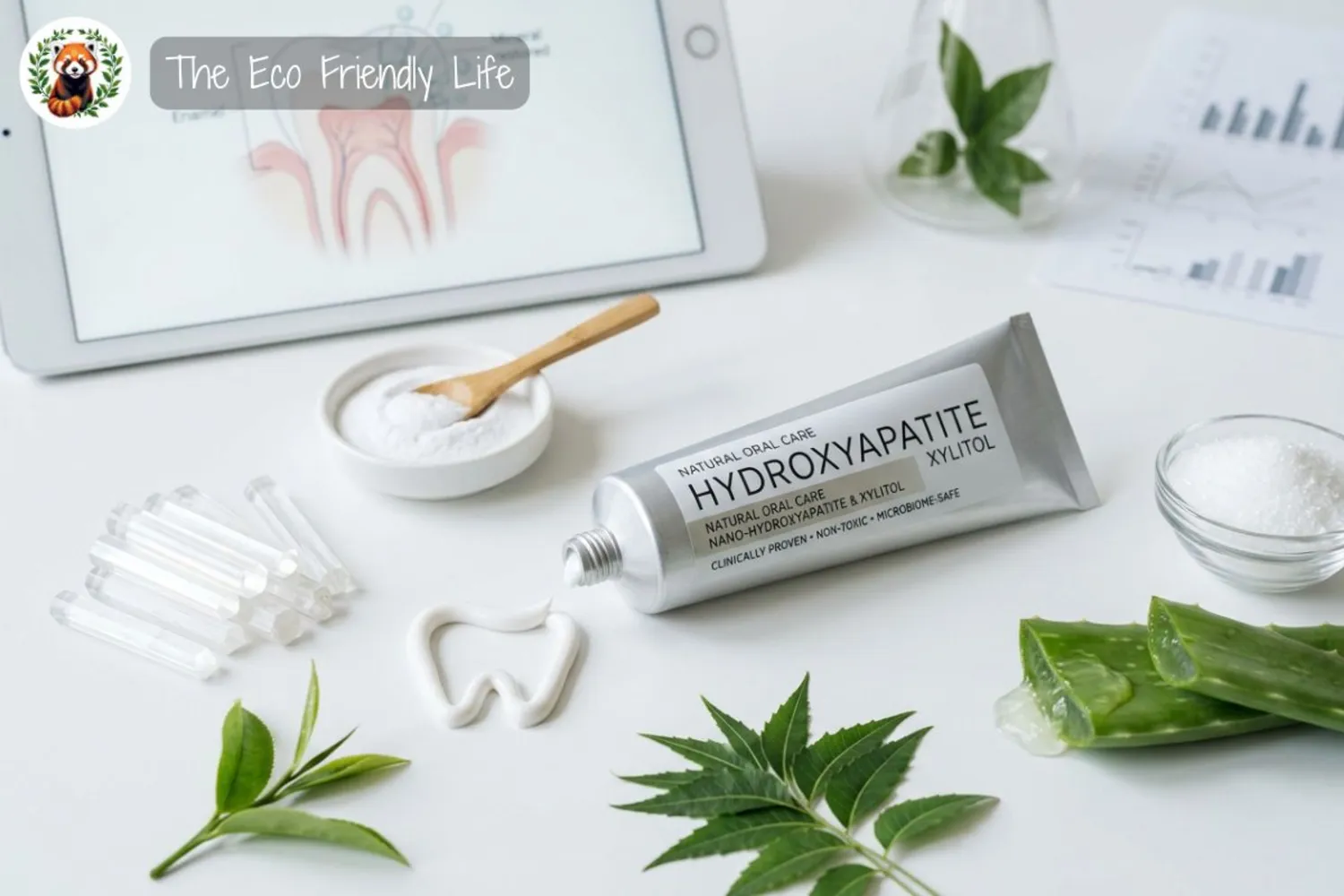
Baking soda has genuinely earned its reputation: Sodium bicarbonate — baking soda — has been used to clean teeth for well over a century, and its efficacy holds up under scientific scrutiny. It is a gentle mechanical abrasive that polishes surface stains without the harshness of some synthetic alternatives, and it neutralizes acid in the mouth, shifting the pH environment away from conditions that favor decay-causing bacteria. Multiple clinical reviews have confirmed that baking soda toothpastes deliver effective plaque removal. Most of the better non-toxic brands use it as a foundational ingredient, typically in combination with xylitol and hydroxyapatite, rather than relying on it alone.
Botanical ingredients support the whole oral environment: Neem extract has been used in Ayurvedic oral care for centuries, and modern research has validated some of that traditional application — neem demonstrates meaningful antibacterial activity against the pathogens responsible for tooth decay and gum disease. Green tea extract contains catechins that inhibit oral bacterial growth and reduce inflammation. Aloe vera soothes sensitive gum tissue and contributes mild antimicrobial properties. These are supporting ingredients rather than primary active agents, but they help create a healthier oral environment without the collateral disruption that broad-spectrum antibacterials can cause. Our overview of organic skincare (opens in a new tab) explores how to evaluate botanical ingredients more fully when making personal care decisions.
From knowing which ingredients to seek out in toothpaste, the natural next question is what to do about the rest of your oral care routine — particularly mouthwash, which has its own ingredient considerations that most people have not looked at closely.
Building a Complete Non-Toxic Oral Routine
Conventional mouthwash has its own ingredients worth reconsidering: The active ingredient in most mainstream mouthwashes is alcohol — typically ethanol at concentrations of 14 to 27 percent. Alcohol-based mouthwash kills bacteria in the short term, but it kills indiscriminately, stripping the mouth of beneficial bacteria alongside harmful ones and leaving oral tissue dry and irritated. Some research has raised questions about associations between long-term daily use of high-alcohol mouthwash and oral cancer risk, though the evidence is not yet definitive. Chlorhexidine, used in prescription mouthwashes for therapeutic gum disease treatment, is effective but causes significant tooth staining with extended use and is not formulated for daily maintenance over the long term. For everyday oral hygiene, the goal is not to sterilize the mouth — it is to support a healthy and balanced oral microbiome.
Natural mouthwash alternatives operate by different mechanisms: Alcohol-free rinses built around xylitol, aloe vera, coconut oil derivatives, or essential oils such as peppermint and tea tree work without the collateral disruption that alcohol causes. Oil pulling — swishing a tablespoon of coconut or sesame oil for 10 minutes before brushing — is an Ayurvedic practice with some modern research support for reducing harmful oral bacteria and improving gum health, functioning as a complement to regular brushing rather than a replacement. The World Health Organization’s (opens in a new tab) oral health fact sheet affirms that twice-daily brushing with effective products and consistent flossing represent the foundation of good oral hygiene — the case for non-toxic options is built on delivering those fundamentals without the ingredients that raise scientific concerns.
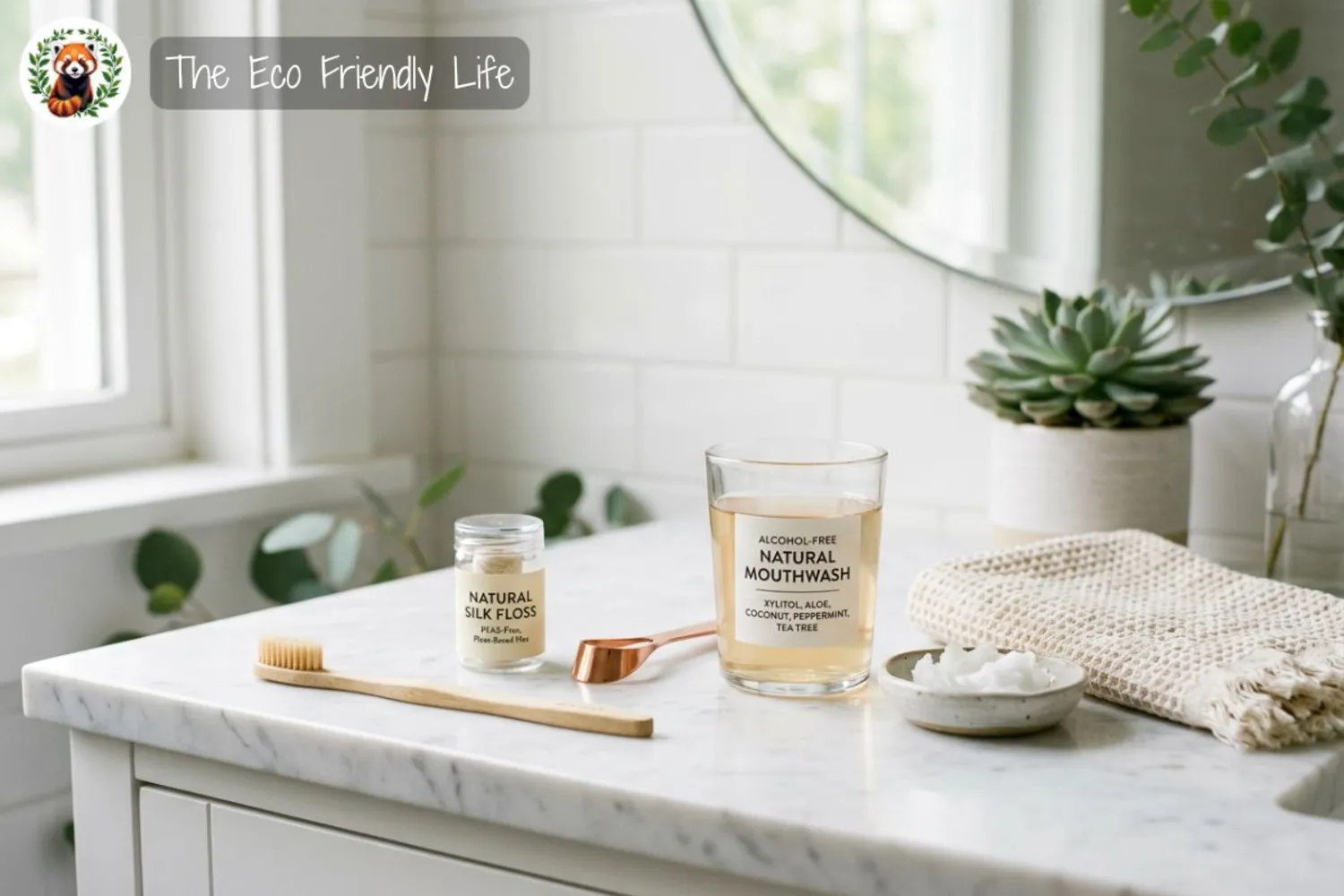
Floss and tongue care often get overlooked in the clean-living conversation: Most conventional dental floss is coated with per- and polyfluoroalkyl substances (PFAS) — the same class of chemicals associated with health concerns in non-stick cookware and waterproof textiles — to help it glide smoothly between teeth. PFAS-free alternatives made from natural silk, corn fiber, or plant-based nylon are now widely available and perform equally well. Tongue scrapers — particularly copper or stainless steel — mechanically remove the bacterial biofilm that accumulates on the tongue overnight, which accounts for a significant portion of bad breath. Replacing your plastic toothbrush every three months with a bamboo-handled alternative reduces both your chemical exposure and your bathroom plastic footprint in one straightforward swap. These changes add up without adding time to your routine — it is primarily about which products you reach for.
The full picture includes mechanical habits, not just product choices: Building a complete non-toxic oral routine takes no longer than a conventional one. Thorough twice-daily brushing, regular flossing, and consistent dental checkups remain the foundation regardless of which toothpaste you select. The same logic — choosing products whose ingredient profile supports rather than disrupts your body’s natural systems — extends to every corner of a sustainable household. Our guide to eco-friendly cleaning products (opens in a new tab) covers how to apply that same framework to the rest of the home.
With the science of what to use and how to use it established, the next section covers the brands and retailers that have actually done this well.
Brands and Tools That Support the Planet — Our Recommendations
The non-toxic oral care market has grown considerably in the last several years, which means quality and transparency vary significantly between brands. Some have built clean formulas from the ground up with properly researched ingredients; others have added “natural” to the label without changing much underneath. The options below represent retailers and brands I found genuinely worth recommending — because their formulations are defensible, their ingredients are transparent, and they are accessible to readers in most parts of the world.
Adult Oral Care
iHerb
For readers who want access to the widest selection of verified non-toxic oral care brands in one place — and particularly for international shoppers who cannot easily access brand-direct US shipping — iHerb ships to over 180 countries and carries Davids, Boka, Wellnesse, Jack N’ Jill, RiseWell, Tom’s of Maine, Dr. Bronner’s, and dozens more. Their quality verification program applies to every product in the catalog. The Davids Hydroxi™ toothpaste featured in our top picks is available via their Davids Hydroxi listing (opens in a new tab). I recommend iHerb as the starting point for any reader outside North America who wants access to multiple clean brands without separate international shipping arrangements. Ships to 180+ countries.
Davids
Davids produces a range of nano-hydroxyapatite toothpastes with EWG Verified status, recyclable aluminum tubes, and a fully transparent ingredient list — no SLS, no fluoride, no artificial flavors or preservatives. Their Hydroxi Sensitive+Whitening Toothpaste (opens in a new tab) is the formula I recommend for everyday adult use: rod-shaped nano-HAp combined with xylitol, baking soda, and coconut oil in a format that also minimizes packaging waste. Orders within the US and North America ship directly from the Davids site; international readers should access Davids via iHerb where the full range is stocked. Ships within North America direct; available globally via iHerb.
Wellnesse
Founded by health writer Katie Wells, Wellnesse uses micro-hydroxyapatite — a form the brand favors specifically because it falls outside emerging EU nanoparticle regulations — combined with neem oil and green tea extract for additional microbiome support. Their whitening toothpaste (opens in a new tab) has earned strong reviews for reducing sensitivity, and the brand’s commitment to clean labeling is genuine. Wellnesse ships directly to the US, Canada, Australia, and a number of European countries including the UK, Germany, France, and Ireland.
Boka
Boka’s nano-hydroxyapatite toothpaste range covers several flavors and represents one of the more credible clean-formula options available in the US market — no fluoride, no SLS, no parabens. The brand has invested in a scientific advisory panel to validate its formulations, which adds a layer of transparency I appreciate in a category where marketing claims can easily outpace ingredient reality. Their toothpaste collection (opens in a new tab) ships within North America; international readers can access Boka through iHerb. Ships within North America; available globally via iHerb.
Kids and Family Oral Care
Jack N’ Jill
Jack N’ Jill is an Australian family-owned brand that has been making natural toothpaste for babies and young children since 1949 and now distributes to over 20 countries. The formula is ECOCERT Cosmos Natural Certified, fluoride-free, and safe to swallow — which matters considerably for children who cannot yet spit reliably. Flavors include strawberry, blueberry, raspberry, and banana, sweetened with xylitol and natural fruit extracts rather than saccharin. The packaging uses bio-based and minimal materials. North American readers can order directly from Jack N’ Jill Kids USA (opens in a new tab), and the brand is also available through iHerb for global readers. Ships internationally.
Wellnesse Kids
Wellnesse’s kids formula uses the same micro-hydroxyapatite foundation as their adult toothpaste, in a strawberry flavor developed to appeal to children, and in a formulation that is safe to swallow in the small amounts young children use during brushing. This makes the brand a practical choice for families who want the whole household following the same product philosophy without maintaining separate adult and children’s systems. Their oral care collection (opens in a new tab) covers both adult and children’s formulations at each age stage. Ships to US, Canada, Australia, and select European countries.
With a clearer sense of which brands are worth trusting, it helps to consider the environmental dimension — because the decisions made at the product level have consequences that extend well beyond the bathroom cabinet.
The Environmental Cost of Conventional Oral Care
The toothpaste tube is one of the most persistently overlooked pieces of household packaging waste: The average person uses roughly 300 toothpaste tubes in a lifetime. Most of those tubes are made from multi-layer laminate — a combination of aluminum foil and various plastics bonded together — that cannot be processed in any standard curbside recycling program in the world. They go to landfill or into waterways. The global toothpaste market produces an estimated one billion such tubes per year, the overwhelming majority of which have no viable recycling route. Understanding sustainability principles (opens in a new tab) at the systems level makes it clear why format choices matter alongside ingredient choices: the container is part of the product’s total impact.
The chemicals in conventional oral care do not stay in the bathroom: Mouthwashes, toothpastes, and other rinse-off oral care products introduce their ingredient lists into the water supply every time they are used. Triclosan and certain synthetic preservatives have been identified in rivers, lakes, and marine environments, where they affect aquatic organisms and contribute to antibiotic resistance in microbial populations. Before the US enacted its microbead ban in 2015, plastic microbeads from some toothpastes were passing through wastewater treatment at scale. Many countries have now addressed microbeads, but the broader question of pharmaceutical and personal care product residues in waterways remains an active area of environmental concern. The logic mirrors what drives sustainable food principles (opens in a new tab): what enters the environment through daily consumption choices accumulates and compounds over time.
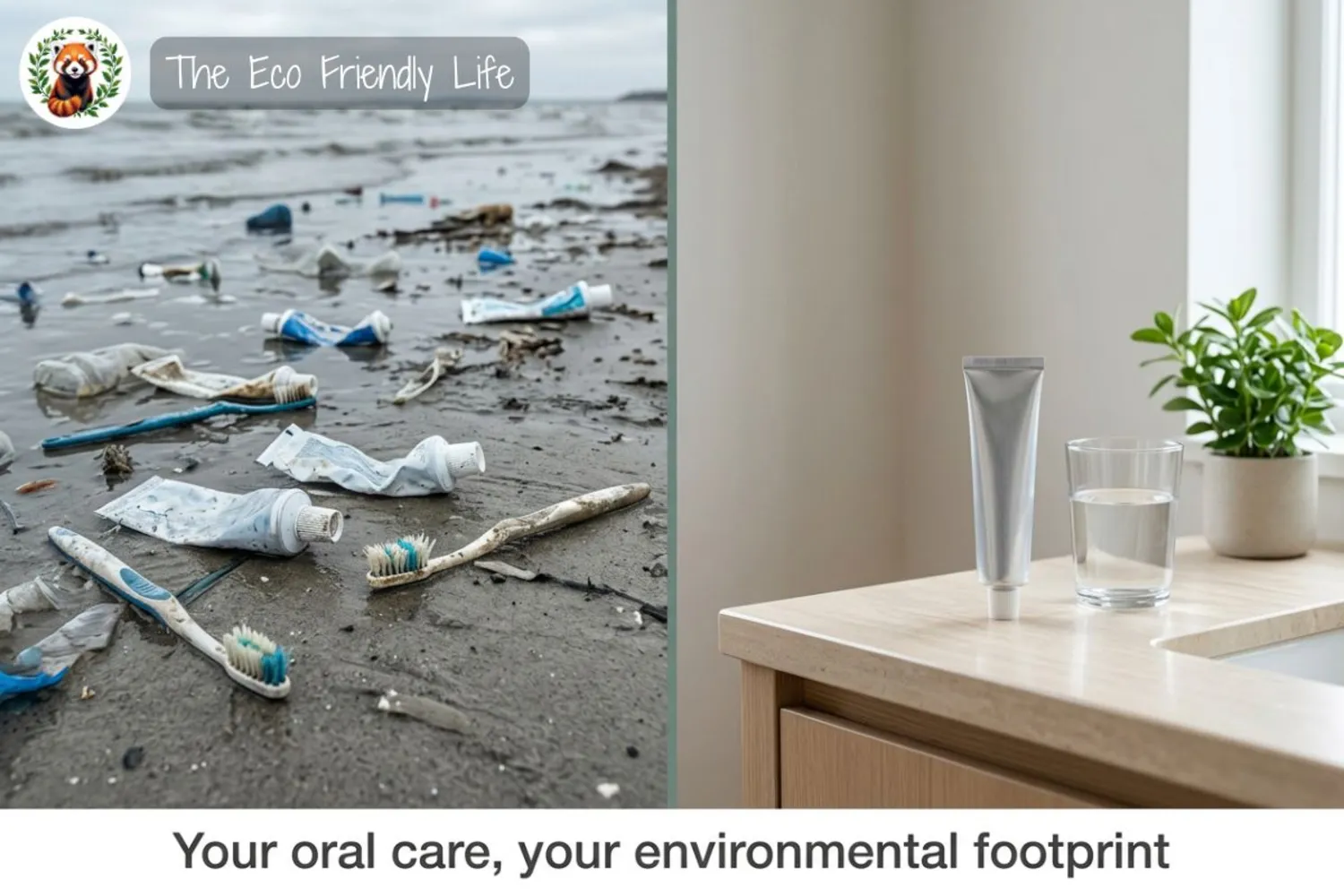
Sustainable formats are now practical, not specialized: The brands covered in our recommendations above are directly addressing this problem. Davids uses recyclable aluminum tubes. Huppy’s toothpaste tablet format eliminates the plastic tube entirely, with compostable refill packaging shipped every four months. Jack N’ Jill uses bio-based packaging materials. Bamboo-handled toothbrushes biodegrade over time; plastic-handled ones do not. Toothpaste tablets and tooth powders are no longer niche products available only through specialty health retailers — they are stocked on global platforms like iHerb and shipped to over 180 countries.
The industry is beginning to move, but the consumer decision remains the fastest route to change: Several large brands have committed to tube recyclability programs, and services such as TerraCycle operate collection points for oral care packaging that has no standard recycling route. Some dental practices partner with take-back schemes. These developments are welcome. Choosing a brand that has already resolved its packaging problem — rather than waiting for a legacy brand’s long-term sustainability commitments to materialize — is still the most direct and immediate action available in this category.
The practical section below translates the key points of this guide into specific daily habits you can begin on your next shopping trip.
Practical Daily Tips You Can Action Today
Here are ten changes to your oral care routine — each modest on its own, and meaningful in aggregate:
| Tip | How to Implement | How It Helps |
|---|---|---|
| Switch to SLS-free toothpaste | Look for options specifically labeled SLS-free — Davids, Wellnesse, and Boka all qualify | Reduces oral tissue irritation and canker sore risk with no compromise to cleaning effectiveness |
| Use a tongue scraper daily | Use a copper or stainless steel scraper front to back 5 to 10 times each morning before brushing | Removes overnight bacterial biofilm; the single most effective daily step for reducing bad breath |
| Choose xylitol gum after meals | Look for gum listing xylitol as its primary sweetener; use after eating when brushing is not practical | Actively reduces cavity-causing bacteria between meals; an easy addition with a measurable protective effect |
| Swap to alcohol-free mouthwash | Look for rinses with xylitol, aloe vera, or essential oils rather than ethanol as the active component | Supports a healthier oral microbiome by avoiding the broad-spectrum bacterial kill that alcohol causes |
| Replace your toothbrush with bamboo | Buy bamboo-handled replacements and change them every three months as usual | Reduces bathroom plastic significantly; bamboo handles decompose where plastic handles do not |
| Try toothpaste tablets for travel | Pack a tin of tablets rather than a tube on any trip; use exactly as you would regular toothpaste | Removes the most common piece of oral care plastic from travel kits; no liquid volume restrictions to deal with |
| Check your products on EWG Skin Deep | Search your current toothpaste and mouthwash at ewg.org before your next shop | Provides an independent ingredient safety rating in under two minutes, enabling direct product comparisons |
| Switch to PFAS-free floss | Choose silk, corn fiber, or plant-based nylon floss — most natural health retailers stock these | Removes a meaningful source of daily PFAS exposure with no change to flossing effectiveness |
| Oil pull occasionally | Swish a tablespoon of coconut oil for 10 minutes before brushing two or three times per week | Modest research supports reduction in harmful oral bacteria; works as a complement to brushing, not a replacement |
| Rinse with water after acidic food and drink | Use plain water immediately after citrus, vinegar, or carbonated drinks; wait 30 minutes before brushing | Removes acid from the tooth surface without brushing it into softened enamel while the acid is still active |
FAQs
Is fluoride-free toothpaste as effective as fluoride toothpaste at preventing cavities?
For most adults, hydroxyapatite-based toothpaste is a genuine alternative rather than a downgrade. Multiple clinical trials — including an 18-month randomized controlled trial published in 2023 — have shown that HAp formulas are non-inferior to fluoride toothpaste for cavity prevention and offer additional benefits for sensitivity, periodontal health, and whitening. The key is choosing a product with a meaningful concentration of the active ingredient and using it consistently. For children, particularly toddlers who cannot yet spit, HAp’s safe-if-swallowed profile offers a specific practical advantage that fluoride does not.
What should I look for when reading a toothpaste ingredient label?
Look for the absence of SLS, triclosan, saccharin, synthetic dyes, parabens, and titanium dioxide in nano form. Look for the presence of hydroxyapatite, xylitol, baking soda, or fluoride if you prefer it. A product with a fully transparent ingredient list and no vague “fragrance” entries is a better starting point than one that is opaque about its formula. The EWG Skin Deep database makes this comparison straightforward and free.
Does non-toxic mouthwash actually work?
Yes, though the mechanism differs from alcohol-based mouthwash. Xylitol rinses work specifically against cavity-causing bacteria. Essential oil-based rinses have documented antibacterial activity against the primary pathogens of oral disease. What non-toxic mouthwash does not deliver is the intense burning sensation of high-alcohol products, which many people interpret as effectiveness but which is actually tissue irritation. For therapeutic treatment of diagnosed gum disease, follow your dentist’s specific recommendations; for daily oral maintenance, a non-toxic, alcohol-free rinse is both appropriate and preferable.
Can young children use the same non-toxic toothpaste as adults?
Generally yes in terms of ingredients — hydroxyapatite is safe for all ages — but the formulation matters. Brands like Jack N’ Jill are designed specifically for babies and toddlers whose swallowing reflex is still developing; these formulas are safe to ingest in the small amounts a child would use during brushing. For children old enough to spit but still using pea-sized amounts, most hydroxyapatite toothpastes are appropriate. Always check the brand’s own age guidance for the specific product, as concentration and flavoring can vary between ranges.
Organizations to Support — Our Recommendations
Oral health is a global equity issue. Access to dental care, hygiene education, and even basic products like fluoride toothpaste varies enormously across the world, with communities in lower-income countries carrying a disproportionate burden of preventable disease. These organizations are working to change that, and all accept direct donations from the public.
- Dentaid — a UK-registered charity that has worked in over 70 countries providing refurbished dental equipment, volunteer clinical teams, and oral health education programs to communities in Africa, Asia, and South America, as well as running mobile dental clinics for vulnerable people in the UK. Their work directly addresses the shortage of accessible dental care infrastructure in underserved communities globally. You can support them through their donate page (opens in a new tab).
- ADA Foundation — Give Kids A Smile — the charitable arm of the American Dental Association has run the Give Kids A Smile program since 2003, providing free oral health screenings, treatment, and education to underserved children across the United States. More than six million children have received free oral health care through the program. Donations support expanding access and funding the dental professional volunteers who make it possible. Learn more and contribute via their GKAS program page (opens in a new tab).
- Smile Train — a global nonprofit operating in over 90 countries that provides free cleft lip and palate repair surgery for children who would otherwise go without treatment. Cleft conditions significantly impair oral function, dental development, speech, and nutrition from birth. Smile Train operates through local partner surgeons and healthcare providers, making the model sustainable in communities where the need is highest. Support their work through their website (opens in a new tab).
Every contribution — however modest — directly supports access to dental care and oral health education for people who would otherwise go without either.
Resources and Further Reading
If you want to go deeper into the science and standards behind non-toxic oral care, these three resources are among the most useful independent starting points.
- EWG Skin Deep — Oral Care Database — the Environmental Working Group’s Skin Deep database (opens in a new tab) rates personal care product ingredients for safety and transparency using data from nearly 60 scientific and regulatory databases. Their oral care section covers toothpastes, mouthwashes, whitening products, and baby toothpastes, each with a hazard score and data availability rating. It is the most practical starting point for quickly evaluating any product you are considering purchasing.
- CDC 2024 Oral Health Surveillance Report — the U.S. Centers for Disease Control and Prevention’s most recent oral health surveillance report (opens in a new tab) covers national data on dental caries, tooth retention, and tooth loss. The data provides important context for understanding who bears the greatest burden of preventable oral disease and why daily hygiene choices matter at a population level.
- ScienceDirect — Hydroxyapatite Systematic Review (2025) — a recent peer-reviewed systematic review and meta-analysis (opens in a new tab) synthesizing clinical evidence on hydroxyapatite-based, fluoride-free toothpastes for caries prevention and early lesion remineralization. This is the most current primary scientific source for understanding the evidence behind the HAp claims in this article and a strong companion to the Frontiers in Public Health clinical trial cited in the topic sections above.
These three resources collectively give you the ingredient evaluation tools, the population health context, and the current clinical evidence base needed to make confident, well-informed oral care decisions.
Our Related Articles
Benefits Of Switching To Sulfate-Free And Paraben-Free Shampoos
Most of us reach for our shampoo bottle each morning without giving its ingredient list a second glance. Yet the products we use to clean…
Read More (opens in a new tab)
A Guide To Choosing Non-Toxic Makeup
Navigating the world of beauty products can feel overwhelming, especially when you start to uncover the hidden ingredients lurking in your favorite lipsticks and foundations….
Read More (opens in a new tab)
The Basics Of Organic Skincare: Key Ingredients And Benefits
The beauty and skincare world has witnessed a remarkable transformation in recent years, with more people seeking products that nourish their skin while respecting the…
Read More (opens in a new tab)Conclusion
Conventional oral care has relied on a relatively short ingredient list for decades — most of those ingredients tolerable at low doses, some worth reconsidering given what science has learned since they were introduced, and the packaging almost universally problematic for the environment. The alternatives have matured considerably. Hydroxyapatite-based toothpaste now has sufficient clinical evidence behind it to be a credible choice for most adults and children. SLS-free and alcohol-free formulas exist at every price point. Sustainable packaging formats — tablets, aluminum tubes, compostable packaging — are globally accessible rather than confined to specialty retailers. Switching to a non-toxic oral care routine does not require sacrifice; it requires knowing what to look for and where to find it.
What does your current oral care routine look like? Have you already made a switch to a fluoride-free or SLS-free product, or are there specific ingredients or brands you have been curious about? Drop a comment below — I’d like to hear what has worked for readers and what questions this guide has not yet answered.
