
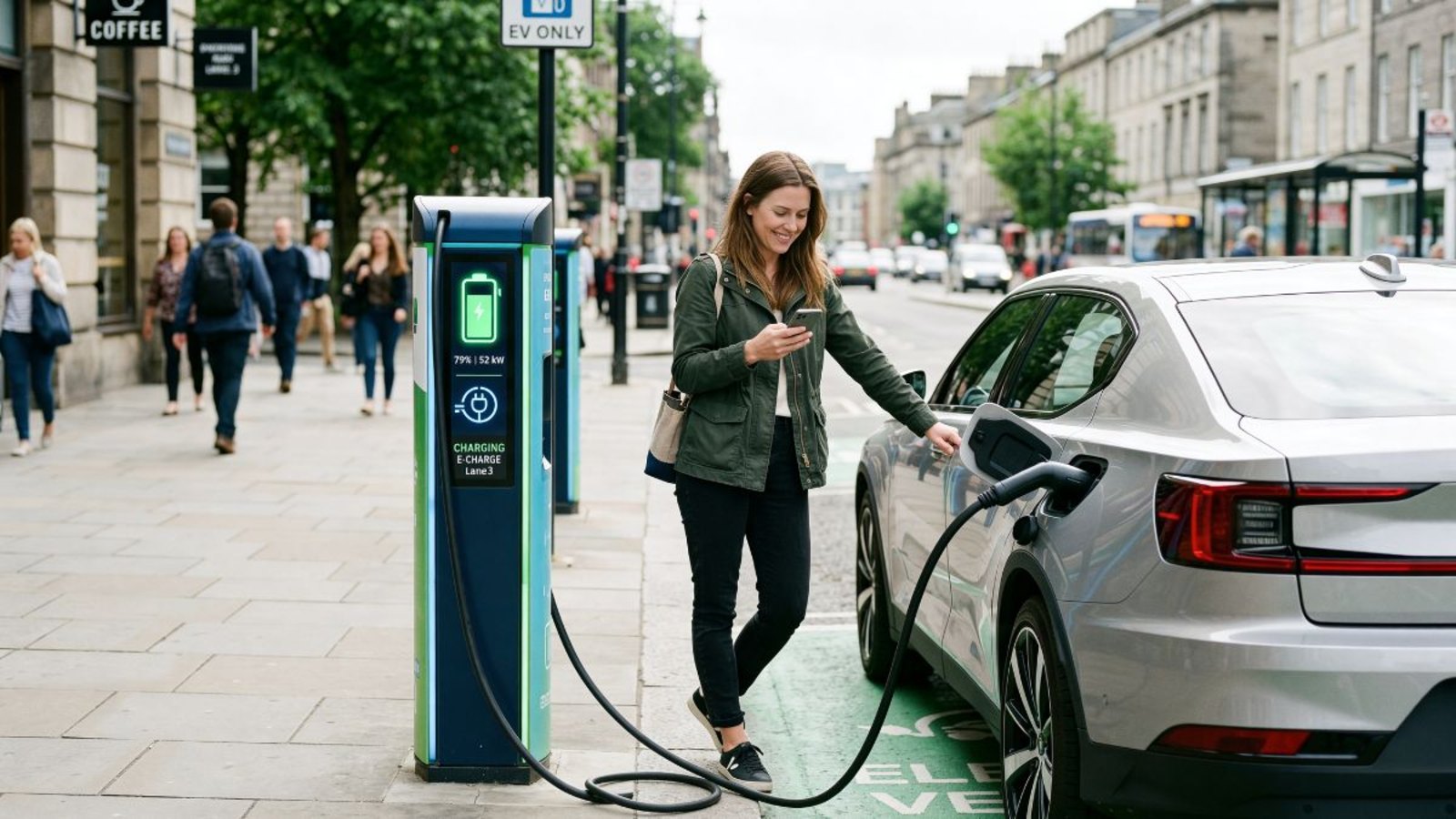

Electric vehicles have moved from niche curiosity to everyday reality faster than almost anyone expected. A few years ago, seeing one on the road was a novelty; today, in cities from Oslo to Shanghai to Los Angeles, they are simply part of the traffic — and with good reason. The shift to electric transportation is one of the most meaningful changes happening in the world right now, touching everything from the air we breathe in cities to the long-term stability of our energy systems.
Hi, I’m Al — one-half of The Eco-Friendly Life and a sustainability enthusiast who genuinely believes that informed choices make a real difference. When I first started researching electric vehicles seriously, the volume of information out there felt daunting: battery chemistry, charging speeds, lifecycle emissions, government incentives. So I’ve pulled it all together into one place. Whether you’re weighing your first EV purchase, already driving electric, or simply curious about what this shift really means for the planet, I hope this guide gives you everything you need to feel confident. Keep reading — the full picture is more encouraging than you might think.
🚗🔌🔋 Our Top Pick — Best Home EV Charger
Lectron Level 2 EV Charger (240V | 40A | NEMA 14-50)
I chose this charger because it covers almost every EV on the road — any vehicle using the J1772 standard — at a price point that won’t break the bank, and it’s genuinely portable if you need to take it to a vacation rental or a relative’s home. The 240V, 40-amp output adds roughly 25 to 30 miles of range per hour, so your car is full every morning without fuss.
- ✅ Compatible with all J1772-standard EVs
- ✅ ETL, Energy Star & FCC certified
- ✅ Portable with carrying case | UL 2251–certified handle
- ✅ Ships internationally
| Mid-range
👉 Shop Lectron Charger (opens in a new tab)Understanding Electric Vehicles
A new kind of engine for a new era: An electric vehicle replaces the internal combustion engine — entirely, or in part — with one or more electric motors powered by a rechargeable battery pack. Rather than burning gasoline or diesel, an EV draws stored energy and converts it directly into motion at the wheels. That fundamentally different approach is what gives EVs their performance advantages, lower running costs, and dramatically reduced environmental footprint compared to conventional vehicles.
Three main categories define the landscape: Battery electric vehicles (BEVs) run entirely on electricity and produce zero tailpipe emissions. Plug-in hybrid electric vehicles (PHEVs) pair an electric motor with a smaller combustion engine, allowing drivers to cover shorter trips on electricity and longer ones on fuel. Standard hybrid electric vehicles (HEVs) use regenerative braking to supplement a combustion engine but cannot be plugged in. BEVs now represent approximately 68.8 percent of the global EV market, according to the IEA’s Global EV Outlook 2026 (opens in a new tab), and they are the fastest-growing segment by a significant margin.
The global market has crossed a critical threshold: In 2025, more than 20 million electric cars were sold worldwide — roughly 25 percent of all new car registrations globally. That represents a 20 percent increase over 2024, continuing an unbroken trend of annual growth that has held every year since 2021. China accounts for over 50 percent of worldwide EV sales, driven by manufacturers such as BYD, NIO, and Xpeng. Europe recorded more than 4.2 million EV sales in 2025, a more than 30 percent year-on-year increase. In the United States, EV sales reached a quarterly record of 438,487 units in Q3 2025.
The technology has matured significantly: Early concerns about range, reliability, and charging have largely been answered. Today’s mainstream BEVs offer real-world ranges of 250 to 400 miles on a single charge. Battery replacement rates remain extremely low — an analysis by Recurrent Auto of over 15,000 EVs in 2024 found a replacement rate of approximately 2.5 percent. One reason the emissions case for EVs keeps improving is the energy source behind them: our guide to renewable and non-renewable energy (opens in a new tab) explains how the electricity mix powering EV charging is getting cleaner in most countries, year by year.
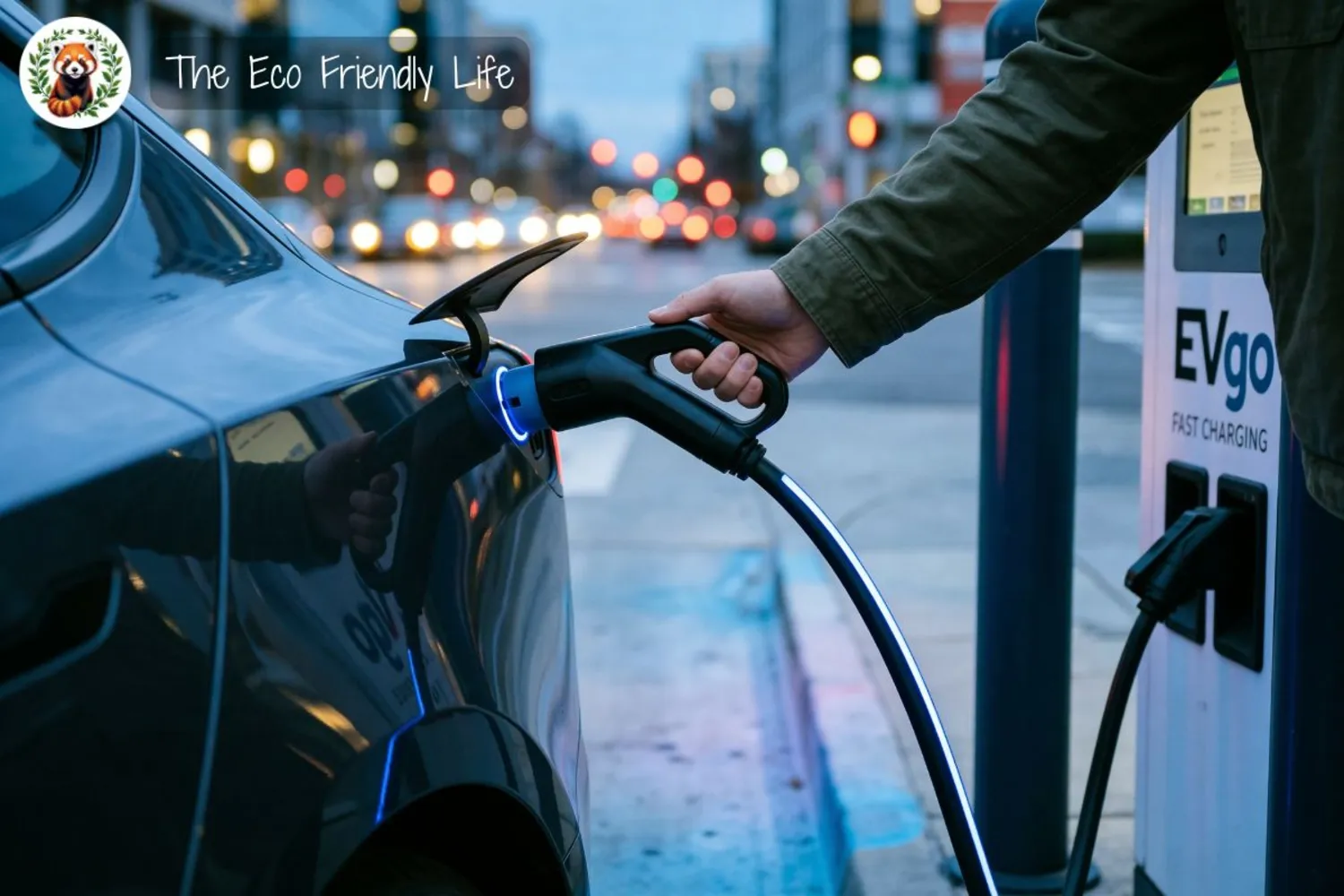
Those numbers tell a clear story: the shift to electric transportation is already underway at scale. The next question worth asking is what it actually does for the environment.
The Real Environmental Impact of Electric Vehicles
The lifecycle question gets asked constantly — here is the honest answer: Critics of EVs often point to the carbon cost of battery manufacturing, and it is a fair point worth taking seriously. Producing a battery EV generates approximately 40 percent higher emissions during the manufacturing phase than producing a comparable gasoline car, primarily because of the energy-intensive process of refining battery materials. However, a landmark 2025 lifecycle analysis by the ICCT (opens in a new tab) found that those production emissions are fully offset within the first 17,000 kilometers of driving, after which BEVs maintain a growing climate advantage for the rest of their operational lives. Over a full vehicle lifetime, BEVs produce lifecycle emissions approximately 73 percent lower than comparable gasoline cars.
Grid decarbonization accelerates that advantage every year: The environmental benefit of driving an EV depends partly on how clean the electricity grid is in your region — but grids are getting cleaner fast. The ICCT confirmed in its 2025 update that electric cars are getting cleaner faster than expected, driven by rapid grid decarbonization. In Europe, renewable energy is projected to account for 56 percent of electricity generation by 2025, up 18 percentage points from 2020, with forecasts reaching 86 percent by 2045. According to recent analysis by the Union of Concerned Scientists (opens in a new tab), over 90 percent of Americans now live in areas where driving the average EV produces fewer emissions than the most efficient gasoline vehicle on the market.
Tailpipe emissions affect real people in real places: Beyond the climate argument, EVs produce zero tailpipe emissions of nitrogen oxides, volatile organic compounds, and particulate matter — pollutants directly linked to respiratory disease, cardiovascular illness, and premature mortality. Urban residents, most exposed to traffic-related pollution, stand to benefit most. The EPA’s transportation pollution research (opens in a new tab) documents the outsized health burden carried by communities located near high-traffic corridors. Switching a city’s vehicle fleet toward electric is one of the fastest routes to measurable improvements in public health. Transportation emissions sit within the broader climate change story (opens in a new tab) — causes, effects, and solutions — and understanding that bigger picture shows why electrifying transport is considered one of the highest-impact levers we have.
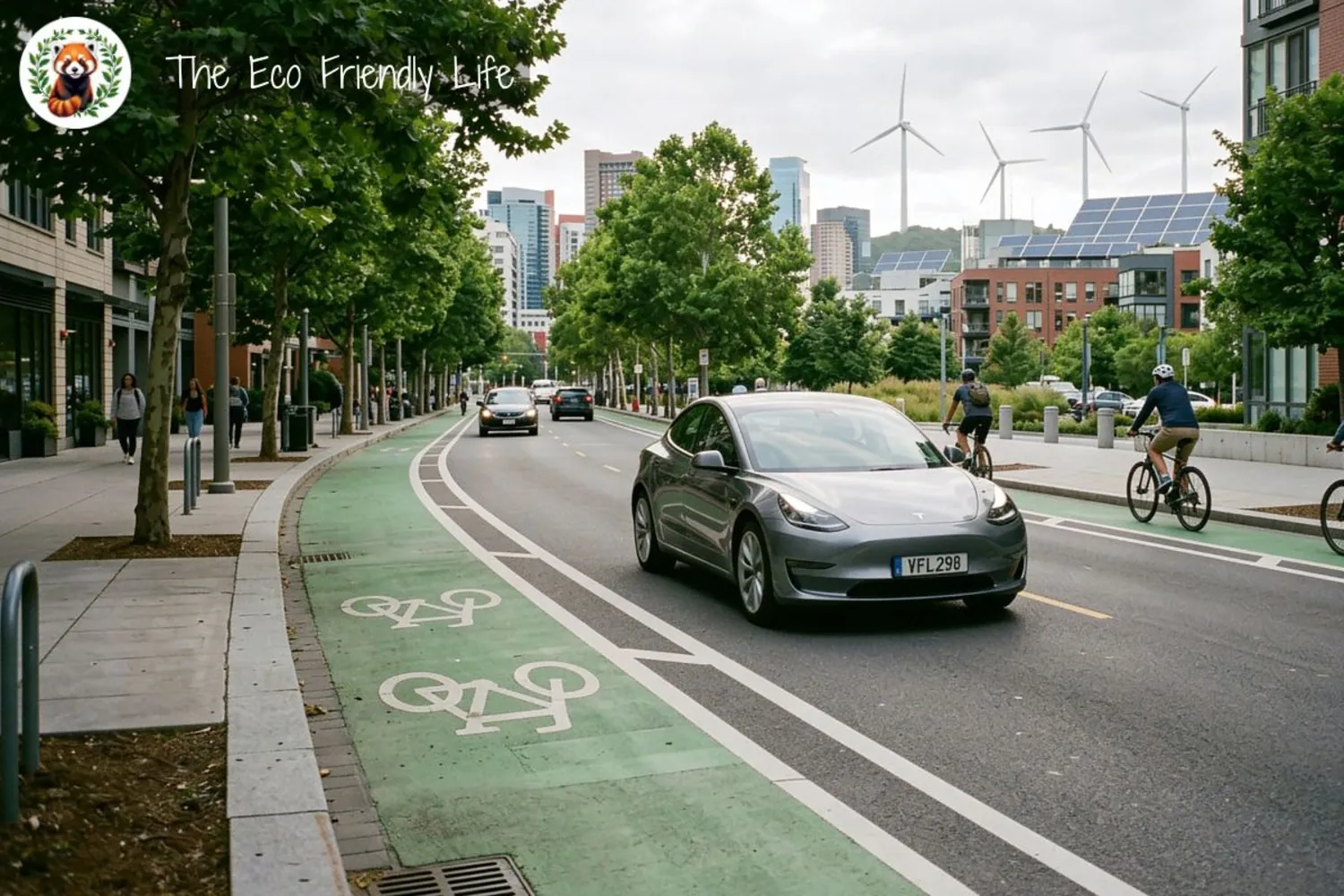
Oil displacement is already measurable at scale: The global EV fleet now displaces approximately 1.2 million barrels of oil per day, reducing the environmental damage associated with extraction, refining, and transporting petroleum. Battery packs that reach the end of their vehicle service life can be repurposed for stationary energy storage — extending their useful life by a decade or more — before the metals inside are recovered through closed-loop recycling systems that conserve lithium, cobalt, and nickel for new battery production.
The environmental case for EVs is well-established and getting stronger. Let’s turn to what the shift means financially.
The Financial Case for Going Electric
Running costs are where EVs win clearly and immediately: The per-mile cost of electricity is lower than gasoline in virtually every market globally. Combined with the far greater energy efficiency of electric motors — which convert roughly 80 percent of electrical energy into motion, compared to around 20 to 30 percent for internal combustion engines — EVs cost significantly less to fuel per kilometer traveled. Maintenance costs are also substantially lower: no oil changes, no transmission servicing, no exhaust system repairs, and brake pads that last longer because regenerative braking systems recapture kinetic energy rather than converting it to heat.
Battery costs are approaching the tipping point for price parity: The biggest barrier to mass EV adoption has always been the upfront purchase price, driven largely by battery costs. Those costs have fallen dramatically over the past decade. According to BloombergNEF’s 2025 battery price survey (opens in a new tab), average lithium-ion battery pack prices fell to $108 per kilowatt-hour in 2025 — down from $115 in 2024 — with prices in China reaching $84 per kilowatt-hour. At sub-$100 per kilowatt-hour, analysts broadly agree that EVs can be manufactured to undercut equivalent gasoline vehicles on purchase price without government subsidies, a threshold expected across global markets within the next two to three years.
Government incentives have accelerated adoption globally — but policy stability matters: Policy frameworks vary significantly by country, but most major economies have introduced some combination of purchase subsidies, tax credits, or zero-emission vehicle mandates. Canada has mandated that 20 percent of new vehicle sales must be zero-emission by 2026, rising to 100 percent by 2035. The European Union has set CO2 reduction targets for heavy-duty vehicles of 45 percent by 2030 and 90 percent by 2040. The U.S. federal EV tax credit expired at the end of 2025, and the impact was visible almost immediately — market growth stalled sharply in late 2025, underscoring just how much policy certainty matters.
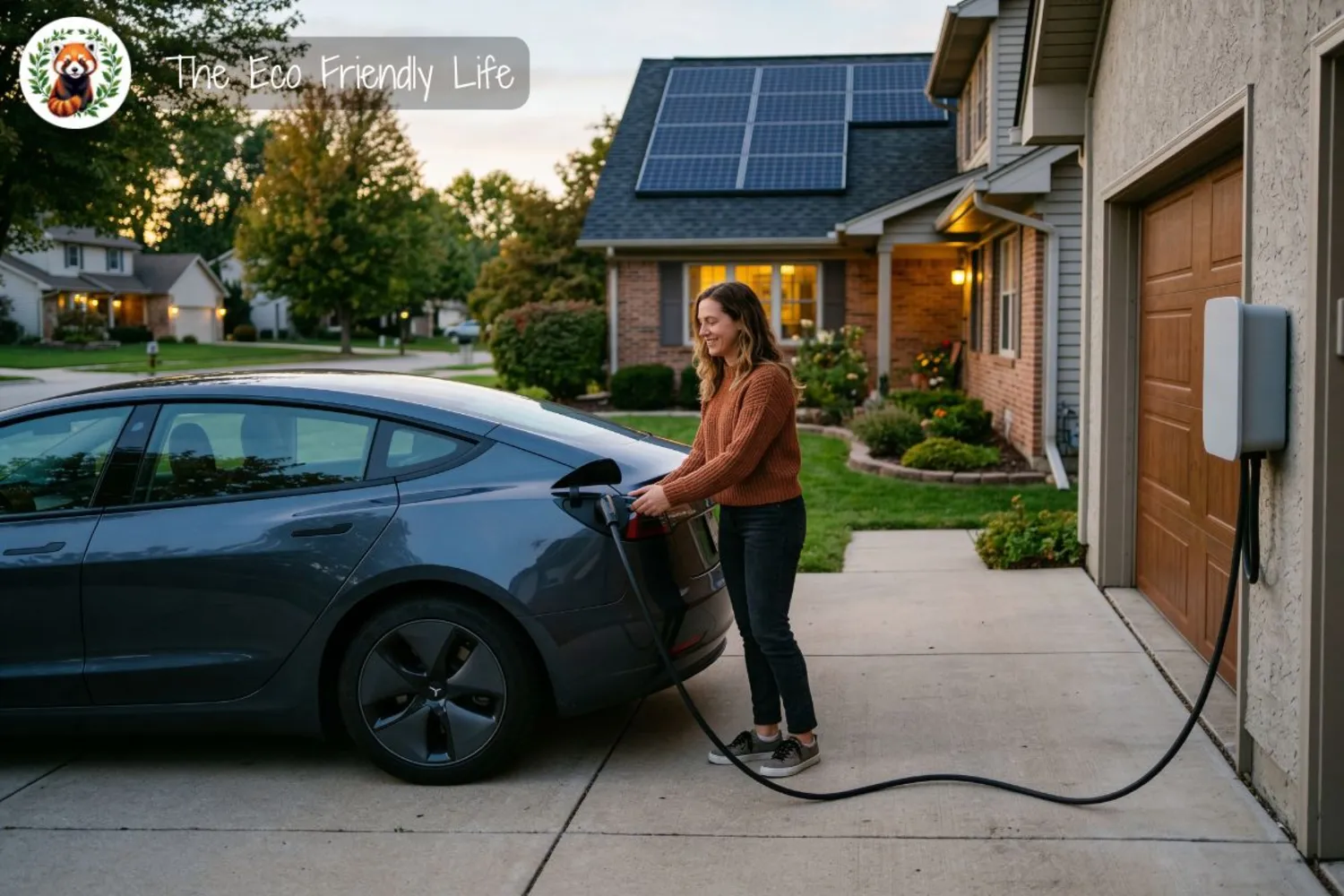
Energy independence has strategic and personal implications: At the national level, EV adoption reduces dependence on imported petroleum, strengthening energy security and insulating economies from oil price shocks. For individual drivers, charging at home means fuel costs become predictable — and pairing that home charging with rooftop solar takes it even further. Our guide to solar power benefits (opens in a new tab) is worth a read if you’re thinking about building that kind of whole-home energy setup around your EV.
If you’re persuaded by the financial case and ready to act on it, the right starting point is knowing which brands and products are genuinely worth your money.
Brands and Tools That Support the Planet — Our Recommendations
Most people buying their first EV — or upgrading their setup — quickly discover that the vehicle itself is only part of the picture. A home charger, the right accessories, and even an e-bike for shorter trips can all make a meaningful difference to how much you actually use your car versus other electric alternatives. Here are the brands I recommend, chosen for product quality, topic relevance, and international availability.
Our Picks for Adults
ChargePoint
ChargePoint is one of the world’s largest EV charging networks, and their Home Flex Level 2 charger (opens in a new tab) is a standout for home installation — adjustable from 16 to 50 amps, compatible with all plug-in vehicles, and available either hardwired or as a plug-in unit. I’d recommend ChargePoint to any homeowner who wants a future-proof charger backed by a company that also operates one of the largest public charging networks in North America and Europe.
Lectron EV
Lectron specializes in EV charging solutions and accessories, including their Level 2 NEMA 14-50 charger (opens in a new tab) and Tesla-to-J1772 adapters that make cross-brand charging straightforward. I chose Lectron because their pricing is genuinely competitive and their accessories catalog covers almost every charging scenario you’ll run into. Ships internationally.
EcoFlow
EcoFlow’s portable power stations and solar panels are a natural companion for eco-conscious EV households. Their DELTA Pro portable power station (opens in a new tab) integrates with solar panels to provide home backup power, and the newer DELTA Pro 3 supports bidirectional energy flow. I recommend EcoFlow to anyone who wants their home energy setup to be as sustainable as their vehicle. Ships internationally.
Aventon
Aventon makes well-regarded electric bicycles for shorter urban trips where an e-bike is faster and more practical than a car. Their Pace 500 cruiser e-bike line (opens in a new tab) features a 500W motor, disc brakes, a torque sensor for a more natural ride feel, and up to 60 miles of range — solid value at a mid-range price. Ships to the US, Canada, and select international markets.
Our Picks for Families
Lectric eBikes
Lectric eBikes makes affordable cargo e-bikes that can genuinely replace short car trips. Their XPedition cargo e-bike series (opens in a new tab) is purpose-built for hauling kids, groceries, and gear — featuring a 1,310W peak motor, 450-pound payload capacity, and hydraulic disc brakes. I’d recommend Lectric to any family looking for an accessible, well-reviewed entry into electric cycling. Ships within North America.
Segway
Segway’s range of electric scooters covers a wide age range, making them a practical option for older teens and adults looking for zero-emission short-range mobility. Their Ninebot KickScooter F3 (opens in a new tab) delivers 1000W peak power, up to 44 miles of range, front suspension, and integrated turn indicators — a well-equipped daily commuter scooter. Ships internationally.
Once you’ve got the right equipment, the next thing worth understanding is how to actually use it — starting with charging at home and on the road.
Charging Your EV — What You Actually Need to Know
Three levels of charging, and only two of them matter for most people: EV charging falls into three categories. Level 1 uses a standard household outlet and adds roughly 4 to 5 miles of range per hour — barely adequate for anything other than a plug-in hybrid with very light daily mileage. Level 2 uses a dedicated 240V circuit and adds 25 to 50 miles per hour, enough to fully charge most EVs overnight. DC fast charging delivers an 80 percent charge in 20 to 40 minutes at compatible public stations. For the vast majority of EV owners, Level 2 home charging handles daily needs, with DC fast charging reserved for longer trips.
Home charging is the foundation of the EV ownership experience: Waking up to a full battery every morning — without a trip to a fuel station — is one of the most underappreciated benefits of driving electric. The IEA’s Global EV Outlook 2026 confirmed that home charging remains the preferred and most convenient method for the majority of EV owners globally, and that preference is unlikely to change as the fleet grows. A Level 2 charger (installed by a qualified electrician on a dedicated 240V circuit) typically costs $300 to $900 for the unit plus installation. Many utility companies offer time-of-use tariffs that significantly reduce the cost of overnight charging at off-peak hours.
🚗🔌 Recommended: Lectron Level 2 EV Charger
I recommend the Lectron Level 2 charger for home use specifically because it plugs directly into a NEMA 14-50 outlet — no hardwired installation needed — making it accessible for renters and homeowners alike, and easy to take with you if you move.
- ✅ 240V | 40A | ETL, Energy Star & FCC certified
- ✅ J1772 connector — compatible with all non-NACS EVs
- ✅ Portable carrying case included
Vehicle-to-grid technology is turning EVs into energy assets: Increasingly, EV manufacturers and charging equipment makers are integrating Vehicle-to-Grid (V2G) and Vehicle-to-Home (V2H) capabilities into their products. This bidirectional technology allows an EV battery to feed stored energy back into the home during a power outage, or into the grid during peak demand periods — potentially generating revenue for vehicle owners while supporting grid resilience. If you’re thinking about pairing your EV with rooftop solar, our solar panel basics (opens in a new tab) guide explains exactly how that combination works and what to expect. And if you’re already looking at whole-home energy efficiency more broadly, our roundup of top energy-efficient home appliances (opens in a new tab) pairs naturally with an EV-and-solar setup.
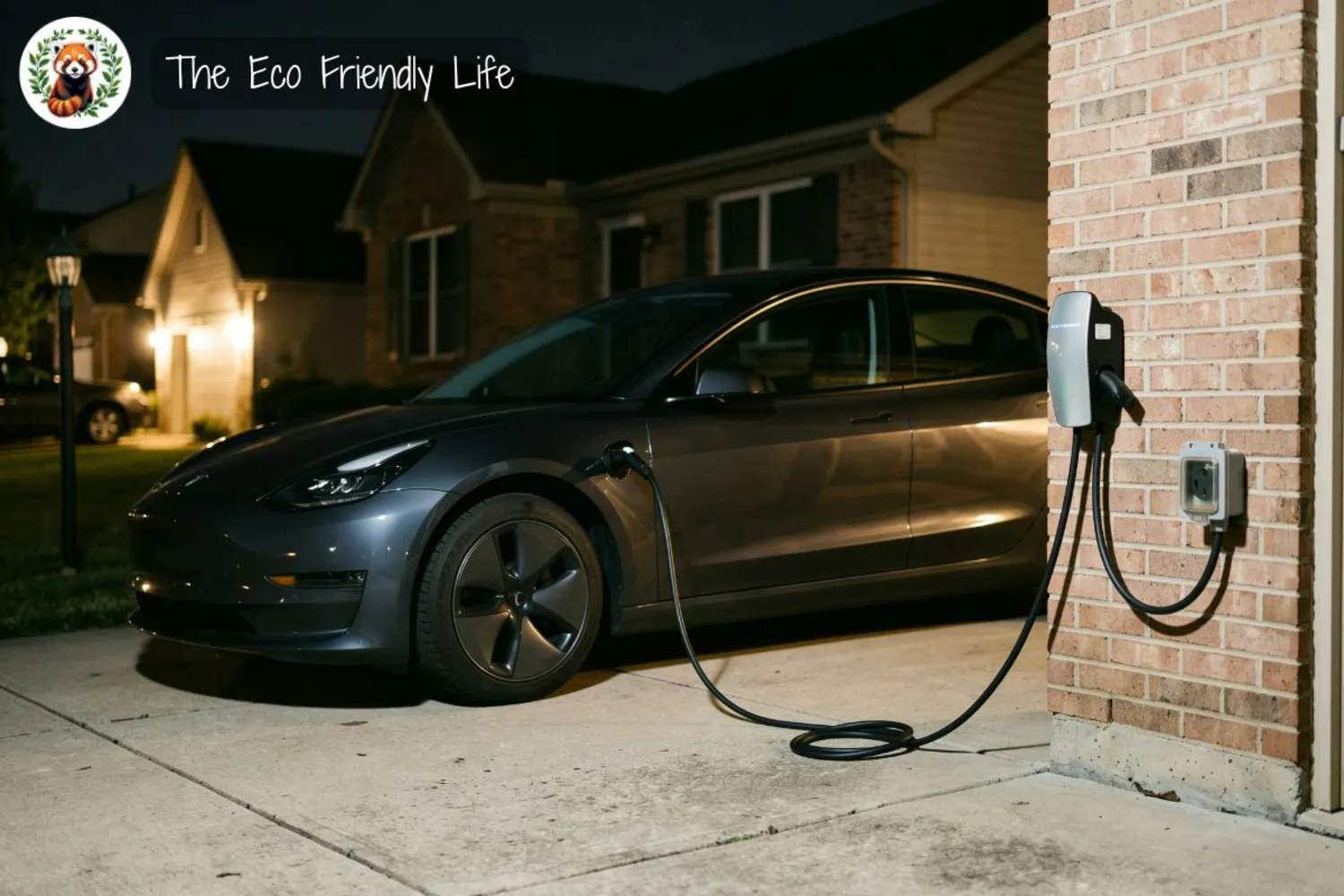
Public charging networks are expanding rapidly: In the UK alone, there were over 92,000 public EV charging points in operation by early 2026. The United States, Europe, and China are all investing heavily in Level 2 and DC fast-charging infrastructure along highways, at retail locations, and in residential communities. Key public networks include EVgo, ChargePoint, and Tesla’s Supercharger network, which has now opened to non-Tesla vehicles in most markets. For drivers in well-served regions, range anxiety is rapidly becoming a practical non-issue rather than a genuine barrier — and our eco-friendly travel tips (opens in a new tab) cover the broader picture of reducing transport emissions for every kind of journey.
Knowing how charging works removes most of the uncertainty around making the switch. Here are ten practical habits that will help you get the most out of your EV from day one.
Practical Daily Tips You Can Action Today
A few simple habits make a real difference to your range, your battery longevity, and your running costs.
| Tip | How to Implement | How It Helps |
|---|---|---|
| Charge overnight on off-peak rates | Check your utility’s time-of-use tariff and set your charger timer to run between 11 pm and 7 am. | Cuts your per-mile energy cost significantly and reduces strain on the grid during peak periods. |
| Use regenerative braking fully | Select the strongest regenerative braking setting your vehicle offers. | Recaptures kinetic energy into the battery, extending range and reducing brake pad wear. |
| Pre-condition your cabin | Use your EV’s app to heat or cool the cabin before you leave, while still plugged in. | Reduces battery drain during your trip, especially in extreme heat or cold. |
| Plan charging stops before long trips | Use apps like PlugShare or A Better Route Planner before any journey over 150 miles. | Eliminates guesswork and ensures you reach stations with comfortable margins. |
| Keep tire pressure correct | Check monthly — EVs benefit more than gasoline cars due to different weight distribution. | Proper inflation improves efficiency and extends range noticeably on every drive. |
| Charge to 80 percent for daily use | Set your charging limit to 80 percent for everyday driving; charge to 100 percent only before long trips. | Slows battery degradation — lithium-ion chemistry lasts longer when not held at full charge continuously. |
| Combine short trips | Group errands into single outings rather than making multiple short journeys. | Short stop-start trips are where EVs are least efficient; consolidating them helps considerably. |
| Look into home solar | Get quotes for a rooftop solar installation if you own your home. | Pairing solar with an EV can bring your effective fuel cost to near zero over time. |
| Search for local incentives | Look up national and regional EV rebates, reduced registration fees, and charging grants in your area. | Many incentives go unclaimed simply because drivers aren’t aware they exist. |
| Use an e-bike for short trips | Consider an electric bicycle for trips under five miles instead of the car. | Replaces the shortest, least efficient car journeys with zero-emission alternatives. |
Frequently Asked Questions
Are electric vehicles really better for the environment than gasoline cars? Yes — over their full lifecycle, and by a substantial margin. While battery production does generate higher initial emissions, the ICCT’s 2025 lifecycle analysis found that BEVs offset those production emissions within the first 17,000 kilometers of driving, and produce approximately 73 percent lower lifetime emissions than comparable gasoline vehicles.
How long does it take to charge an EV? It depends on the charging level. A Level 2 home charger adds 25 to 50 miles of range per hour, so most vehicles are fully charged overnight. A DC fast charger at a public station can deliver an 80 percent charge in 20 to 40 minutes for compatible vehicles.
What happens to EV batteries when they wear out? Batteries that no longer meet vehicle performance standards are typically repurposed for stationary energy storage — home battery systems or grid-scale installations — before being recycled to recover lithium, cobalt, and nickel for use in new batteries.
Is it expensive to maintain an electric vehicle? In most cases, substantially cheaper than maintaining a gasoline vehicle. EVs have fewer moving parts, require no oil changes, and use regenerative braking that greatly reduces brake pad wear over the life of the vehicle.
Organizations to Support — Our Recommendations
These globally respected organizations work directly on the issues that matter most to sustainable transportation. Supporting their work is one of the most direct ways to amplify the impact of your own choices.
- International Council on Clean Transportation (ICCT) — An independent, nonprofit research organization that provides rigorous, unbiased analysis to policymakers working on vehicle emissions, fuel economy standards, and the energy transition. Their lifecycle emissions research directly shapes EV policy worldwide. Support their work by donating to ICCT (opens in a new tab).
- Union of Concerned Scientists (UCS) — UCS combines scientific research with public advocacy to push for cleaner vehicles, a decarbonized electricity grid, and stronger environmental standards. Their transportation program has been instrumental in making the emissions case for EVs publicly accessible and understood. Support them via the UCS donation page (opens in a new tab).
- Transport & Environment (T&E) — Europe’s leading clean transport campaign group, T&E pushes for zero-emission vehicles, cleaner fuels, and better charging infrastructure across the EU and beyond. Their policy work contributed directly to the EU’s binding CO2 standards for cars and trucks. Follow their work at transportenvironment.org (opens in a new tab)
Each of these organizations relies on public support to stay independent and continue doing work that genuinely moves the needle.
Resources and Further Reading
For anyone who wants to go deeper on the EV transition, these are the sources I return to most.
- IEA Global EV Outlook 2026 — The most comprehensive annual overview of the global EV market, covering sales data, policy frameworks, charging infrastructure, battery technology, and emissions trends. Published by the International Energy Agency. Access the full report at the IEA EV Outlook 2026 (opens in a new tab).
- BloombergNEF Electric Vehicle Outlook — BloombergNEF’s annual long-term scenario analysis for EV adoption, battery cost trajectories, and the broader shift to clean transportation. Particularly useful for understanding where purchase price parity is heading. Available at BloombergNEF EV reports (opens in a new tab).
- International Council on Clean Transportation — ICCT publishes detailed lifecycle emissions analyses, real-world efficiency data, and policy assessments for EVs globally. Their ICCT life cycle analyses (opens in a new tab) page is the clearest place to follow the science as it develops.
Bookmark these — the EV space moves fast, and these sources stay ahead of it.
Our Related Articles

Solar Power: How It Works And Its Benefits
The sun rises every morning, casting its golden rays across our planet and providing an abundant source of free energy that could power our homes,…
Read More (opens in a new tab)
Climate Change: Causes, Effects And Solutions
The planet we call home is sending us urgent signals. From unprecedented heatwaves scorching cities to devastating floods reshaping coastlines, climate change has moved from…
Read More (opens in a new tab)
Renewable And Non-Renewable Energy Sources Explained
Energy powers every aspect of modern life, from the lights in our homes to the vehicles we drive and the industries that create the products…
Read More (opens in a new tab)Conclusion
Electric vehicles are no longer a future technology — they are the present, arriving in significant numbers on roads across every continent. The environmental benefits are real and growing stronger every year as electricity grids get cleaner. The financial case is increasingly compelling as battery costs fall toward purchase price parity with gasoline vehicles. And the practical experience of waking up to a full battery, driving quietly through cities, and contributing to cleaner air is genuinely better than most people expect before they try it.
Whether you’re planning your first EV purchase, adding a home charger, exploring electric bikes for shorter trips, or simply curious about what the shift means for the planet, the evidence points clearly in one direction. Have you already made the switch to electric — or are you still weighing it up? I’d love to hear where you are in the comments below.
