
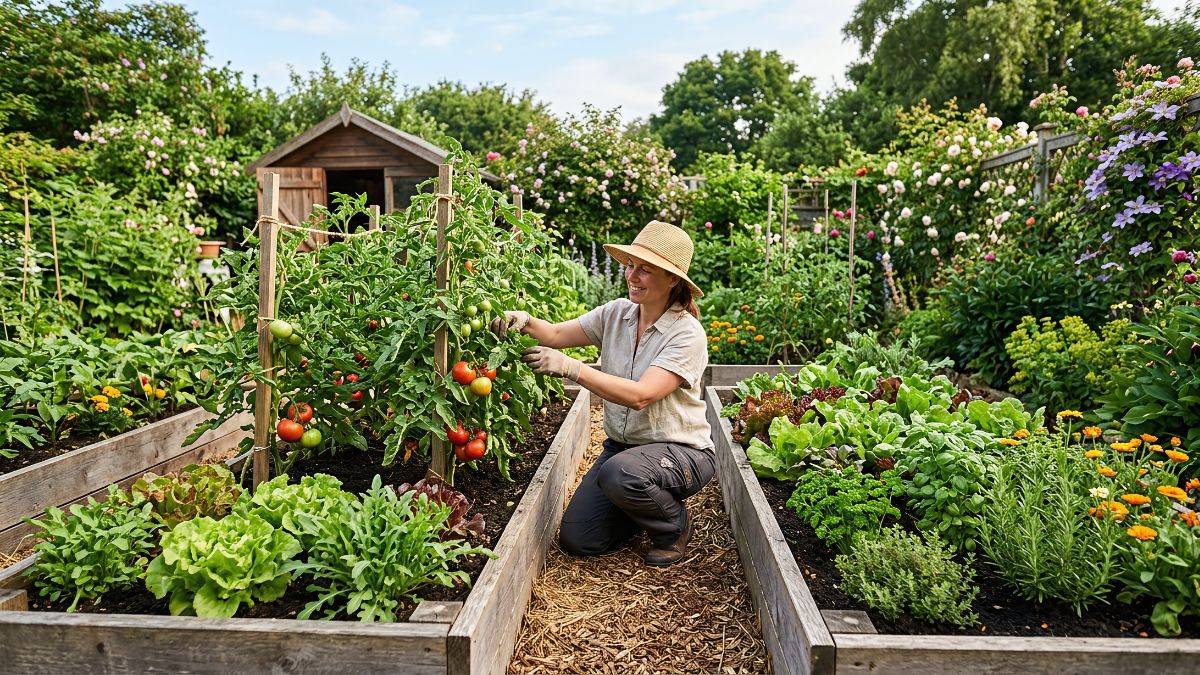

There’s a version of organic gardening that looks like a magazine spread — raised beds arranged just so, lush foliage at every stage of growth, no pest in sight. Then there’s the version most of us actually live through: a lot of trial and error, questions we weren’t sure how to answer, and the occasional heartbreak over a whole tray of seedlings. Both versions are part of the same story, and the organic approach — with its emphasis on working with natural systems rather than against them — has a way of making that learning curve feel purposeful rather than simply discouraging. This article covers the basics: what organic gardening is built on philosophically and practically, how to approach soil health and composting, how to manage pests and weeds without synthetic chemicals, and how to make better choices about the seeds and varieties you grow.
I’m Al, and I won’t claim to come at this from a professional standpoint — I’m a home gardener who started getting more serious about our backyard three years ago, when my then-six-year-old son asked whether the spray I was using was safe to touch. I said I thought so, but I wasn’t actually certain, and that uncertainty nagged at me for the rest of the afternoon. What followed was a lot of reading, a slow rebuild of how our family gardens, and a growing conviction that the organic approach isn’t just better for the environment — it makes you a more observant, more responsive grower. Organic gardening is a way of thinking about the garden as a living system, and that shift in thinking is what this article is really about. If you’re just starting out, or you’ve been at it intuitively and want a stronger framework, let’s start from the ground up.
🌎🌱🤝 Our Top Pick — Best Organic Seed Collection
Organic Heirloom Seed Assortment — 10 Pack by True Leaf Market
When I ordered this for the first time, having ten varieties arrive together — every one certified organic and open-pollinated — made planning the season feel considerably less overwhelming than it had when I was hunting individual packets from a generic garden center. A single purchase covers the foundation of an organic kitchen garden without requiring you to verify the credentials of ten different seed companies on your own. Best suited for gardeners starting fresh or exploring organic for the first time; experienced growers with specific variety requirements will prefer selecting individually from True Leaf’s full catalog.
- ✅ 10 certified organic, heirloom varieties in one collection: Broccoli, Basil, Watermelon, Cilantro, Carrot, Kale & more
- ✅ All non-GMO, open-pollinated, and current crop year — no old stock
- ✅ Ships to U.S., Canada, and internationally
| Price: $23.52 · Price tier: Mid · Ships: U.S., Canada, and internationally
👉 Shop True Leaf (opens in a new tab)The Core Principles of Organic Gardening
A definition worth unpacking: The USDA’s National Organic Program (opens in a new tab) describes organic production as a system that integrates cultural, biological, and mechanical practices that support resource cycling, promote ecological balance, and conserve biodiversity. That’s a useful framing because it tells you what organic gardening is reaching toward — not merely the absence of synthetic chemicals, but the presence of something more deliberate. An organic garden isn’t passive. It’s a managed system designed to work the way functioning ecosystems do: inputs become outputs, waste becomes fertility, diversity creates resilience.
What this looks like in practice: For a home gardener, the organic framework (opens in a new tab) means making choices at every stage — what you feed the soil, how you respond to pest pressure, what seeds you plant — with the garden’s long-term health as the organizing principle rather than this season’s convenience. Certified organic farms must maintain three consecutive years without prohibited synthetic inputs before their land qualifies for certification. Home gardeners don’t need to certify anything. But the same logic applies: the soil you’re working toward is built over seasons, not from a spray bottle, and the expectations for the first year or two should reflect that.
The evidence for the approach: The Rodale’s Farming Systems Trial (opens in a new tab) has been running since 1981 and remains the longest continuous side-by-side comparison of organic and conventional methods in the United States. Organic plots in the trial consistently built higher levels of soil carbon and nitrogen than conventional plots. Organic yields matched conventional in years of normal rainfall and outperformed them during drought, primarily because organically managed soils retained moisture more effectively. Fossil energy inputs in organic systems ran more than 30 percent lower than conventional equivalents — a margin that has held across four decades of data and has been corroborated at research centers including the University of California at Davis and Iowa State University.
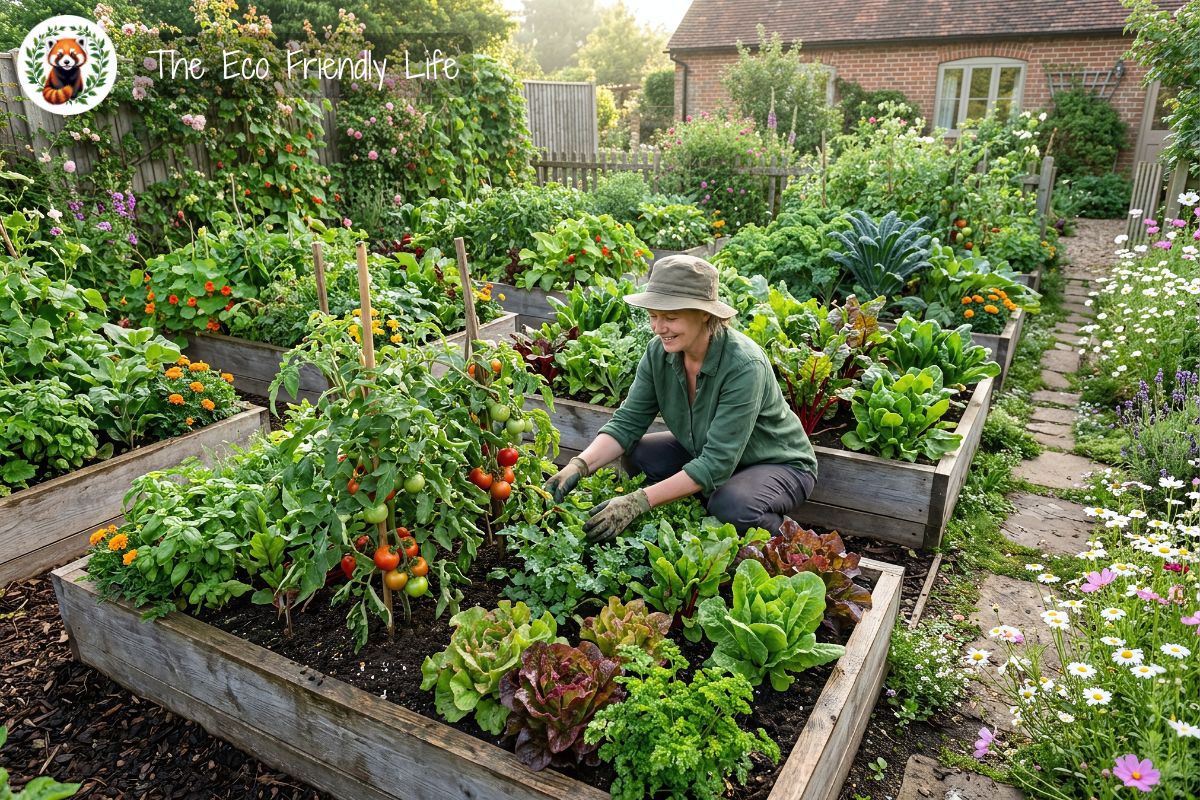
Where organic has real limits: Knowing what organic principles require (opens in a new tab) is as important as understanding what they promise. Organic certification doesn’t automatically mean “better for the environment” in every application. Some approved organic inputs — copper-based fungicides, sulfur sprays, rotenone — can have meaningful ecological impacts when overused. The goal isn’t to substitute organic-approved products for synthetic ones and consider the work done. It’s to reduce dependence on inputs of any kind by building a garden that functions well on its own. That’s harder, it takes longer, and it’s where the most interesting gardening happens. Yields in an organic garden’s first season or two may be lower than in a conventional system that’s been running on synthetic support — that’s worth knowing before you start.
The principles behind organic gardening are easier to understand in the abstract than they are to sustain consistently — and that’s partly what makes the practice engaging over time. Every decision becomes a question worth asking. The most foundational of those decisions, and the one where the organic approach differs most clearly from conventional gardening, involves what’s happening below the surface.
Building Healthy Soil — The Foundation of Every Organic Garden
The difference between dirt and soil: Composting (opens in a new tab) is the most direct way a home gardener can feed the biological system described below, but the system itself starts with understanding what makes soil more than a medium. Conventional gardening tends to treat soil as a medium — something to hold roots in place while you add the nutrients a plant needs via fertilizer. Organic gardening works from a different premise: soil is a living system, and the most important job in any organic garden is keeping that system functional. Healthy soil is extraordinarily dense with life: a single teaspoon can contain more bacteria than there are people on Earth, alongside fungi, nematodes, protozoa, and mycorrhizal networks that extend plant roots to nutrients they couldn’t access alone. When that biology is intact, plants largely feed themselves through it. When it’s disrupted — by heavy tillage, synthetic fertilizer applications, or pesticide runoff — gardeners end up supplying the inputs the ecosystem would otherwise provide for free.
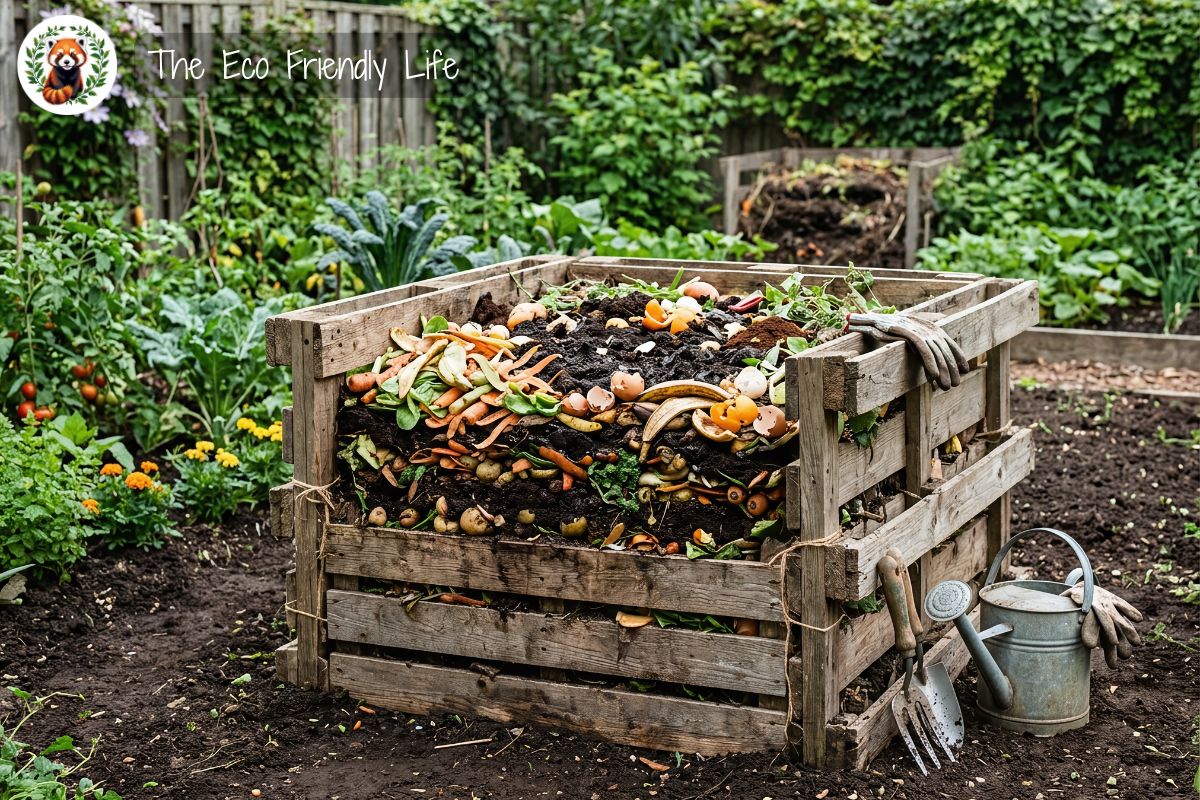
Composting as the cornerstone of organic fertility: The EPA (opens in a new tab) estimates that food scraps and yard waste make up more than a quarter of what households send to landfills each year. Compost intercepts that waste and converts it into one of the most effective soil amendments available: finished compost adds organic matter, improves water retention, introduces beneficial microorganisms, and provides a slow-release source of nutrients that plants take up as they need them. The mechanics are simple — a mix of nitrogen-rich “greens” (vegetable scraps, coffee grounds, fresh grass clippings) with carbon-rich “browns” (dried leaves, cardboard, straw) breaks down over two to twelve months depending on how actively the pile is managed. The main barrier is usually setup, not complexity — once a system is in place, it becomes automatic.
The mycorrhizal network and why tillage matters: Beneath the soil surface, most plants form partnerships with mycorrhizal fungi that extend effective root reach far beyond what roots alone could access. These fungi exchange phosphorus and water with plant roots in return for the sugars the plant produces through photosynthesis. The relationship is fragile: synthetic fertilizers make the partnership unnecessary, and mechanical tillage physically breaks the fungal threads. A comprehensive FAO soil biodiversity report (opens in a new tab) identified intensive tillage and synthetic inputs among the primary drivers of soil biodiversity loss globally. For home gardeners, this translates to practical choices: no-dig or minimal-disturbance methods, mulching heavily to protect surface biology, and reducing or eliminating synthetic fertilizers that short-circuit the microbial relationships you’re trying to cultivate.
Cover crops and green manures — feeding the soil between seasons: Growing a cover crop on bare soil between main crops is one of the most cost-effective tools in organic soil management and requires nothing beyond the seed itself. Cover crops add organic matter when turned in, suppress weeds during the off-season, and — if the crop is a legume such as clover, vetch, or field peas — fix atmospheric nitrogen directly into the soil. Buckwheat, winter rye, crimson clover, and hairy vetch are all widely used and simple to establish. The limitation is timing: this approach works best when you have enough of a gap between crops for the cover to establish meaningfully. If your beds are rarely empty, cover cropping needs to be planned deliberately into your rotation rather than added as an afterthought.
Soil building is the longest game in organic gardening — the kind where the investment made in the first season quietly shapes every season that follows. Getting that foundation right makes almost every other challenge significantly more manageable, including the one most new organic gardeners spend the most time worrying about.
Managing Pests and Weeds the Organic Way
Why conventional pesticides create a self-reinforcing problem: Synthetic broad-spectrum pesticides kill targeted pests — and also the natural predator populations that would otherwise keep those pests in check. Ladybugs, parasitic wasps, ground beetles, lacewings, and spiders all feed on common garden pests; broad-spectrum applications don’t distinguish between the pest and the predator. What follows is a garden that grows more dependent on chemical intervention because the built-in checks have been removed, and pest resistance develops over time. A Nature Sustainability study (opens in a new tab) tracked 1,081 bee species across the United States between 1995 and 2015 and found that increases in neonicotinoid and pyrethroid use are among the strongest drivers of declining bee occupancy — which matters for any garden that depends on pollination, a practical concern as much as an environmental one.
Integrated Pest Management — the organic decision framework: The organic approach to pests isn’t passive. It’s a hierarchy of responses that begins with prevention and escalates only when monitoring shows a genuine problem. The case for avoiding synthetic pesticides (opens in a new tab) is well established: this framework, called Integrated Pest Management (IPM), starts with cultural controls: choosing pest-resistant varieties, rotating crops to break pest cycles, maintaining plant health so they can tolerate moderate pressure, and providing habitat for beneficial insects. If a problem emerges, the response should be proportional to the actual damage being done — not to the mere presence of any pest. A handful of aphids on one plant is not an emergency. A spreading infestation across multiple beds is.
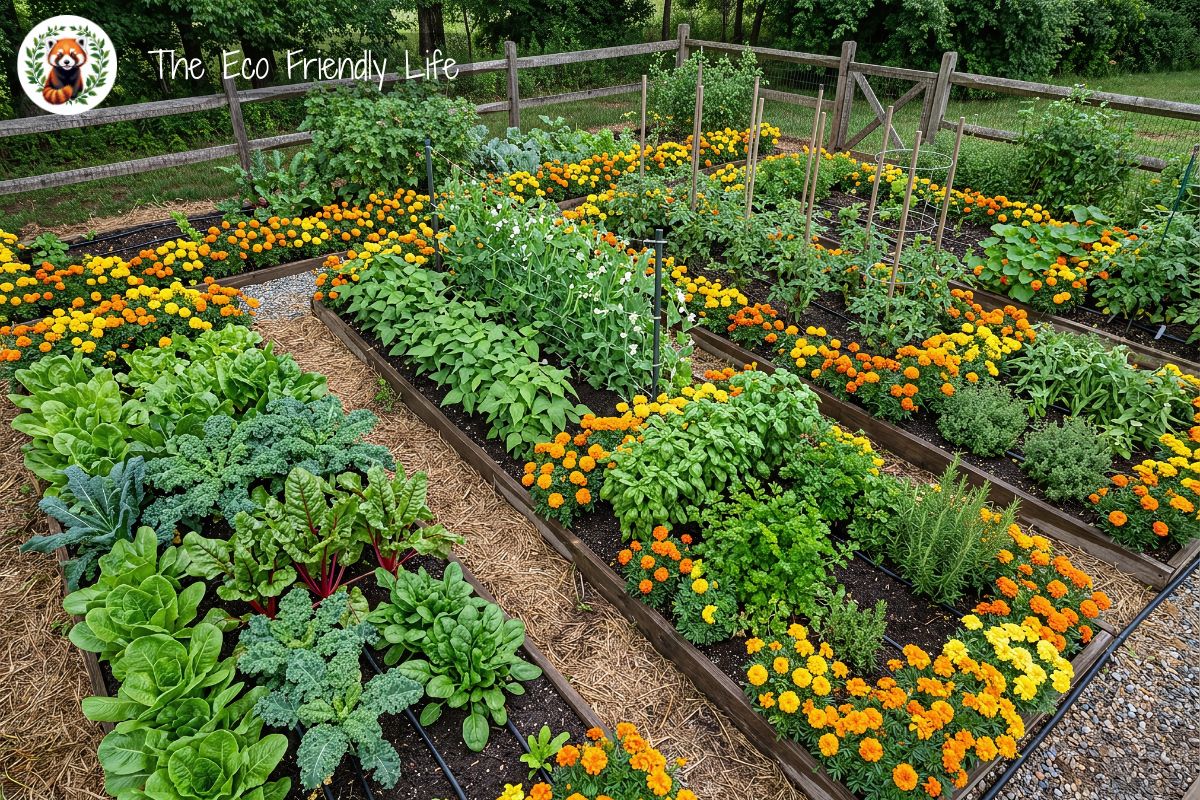
Companion planting and physical barriers: Some of the most effective organic pest management requires no products at all. French marigolds interplanted with brassicas have documented efficacy against root-knot nematodes. Nasturtiums function as genuine trap crops for aphids, drawing infestations away from more valued plants. Phacelia, sweet alyssum, and dill attract hoverflies and parasitic wasps that keep caterpillar and aphid populations in check. Physical barriers handle the jobs they’re designed for consistently: fine mesh row covers exclude most flying insects from seedlings, copper tape provides a reliable barrier for slugs and snails, and hand-picking remains underrated for all its tedium. The honest caveat on companion planting more broadly: some claimed combinations — basil improving tomato flavor, for instance — are largely anecdotal. The beneficial insect habitat function is far better supported, and that’s where the real value lies.
When organic treatments are appropriate — and their real limits: If cultural and physical controls haven’t contained a problem, organic-approved treatments are available. Neem oil disrupts the development and reproduction of many insect pests without killing on contact. Diatomaceous earth works mechanically on soft-bodied insects including slugs and earwigs. Insecticidal soap controls aphids, whitefly, and spider mites effectively. Bacillus thuringiensis (Bt), a naturally occurring soil bacterium, is highly specific to caterpillar species. The important caveat: organic-approved does not mean harmless. Neem oil and insecticidal soap can harm beneficial insects if applied when they’re active or if direct contact is made. Treating at dusk, when pollinators are less active, reduces collateral damage significantly. None of these treatments should be a first response — they belong at the end of the IPM hierarchy, not at the beginning of it.
Learning to manage pests organically is mostly a matter of observation and patience — learning your garden’s specific pressure points, monitoring regularly, and responding before small problems become large ones. That same quality of attention pays dividends when it comes to the choices that shape the season before a single pest arrives.
Brands and Tools That Support the Planet — Our Recommendations
Finding reliable suppliers for organic gardening is easier than it was even a decade ago, but the quality gap between a specialist and a general garden center is still significant. The retailers below each genuinely serve the organic gardening market rather than treating it as a secondary product category.
True Leaf Market
About
True Leaf Market has been supplying non-GMO, heirloom, and certified organic seeds since 1974 — one of the longest-established organic seed companies in North America. Their catalog covers more than 3,000 varieties, from everyday vegetable garden staples through specialty microgreens, sprouting seeds, and cover crops, at prices that work for both occasional home gardeners and more serious seasonal growers. Ships to U.S., Canada, and internationally.
Our Recommendation
10-Pack Seed Assortment (opens in a new tab) ($23.52) — 10 certified organic, current-crop-year heirloom vegetables and herbs in one purchase; a strong foundation for a first organic kitchen garden, though experienced growers who know their preferred varieties will likely want to shop individually.
Planet Natural
About
Planet Natural has specialized in organic and natural gardening products since 1991 — a decade before the USDA organic seal existed — and their catalog reflects that depth. They stock composting equipment, organic fertilizers, soil amendments, biological pest control, and growing accessories with the selection depth to serve an established organic system rather than just a beginner’s first season. Ships within the U.S.
Our Recommendation
Compost Tea Bags (opens in a new tab) (Merrill’s 12pk) — Beneficial microorganisms and soil nutrients delivered without a brewer; a practical starting point for gardeners building soil biology from the ground up.
Botanical Interests
About
Botanical Interests produces some of the most information-rich seed packets available to home gardeners, with all seeds non-GMO and untreated and many varieties certified organic or heirloom. What sets them apart for beginners is the growing information printed on each packet — germination rates, spacing, timing, direct-sow and transplant guidance — which reduces first-season guesswork meaningfully. Ships within the U.S.
Our Recommendation
Organic Vegetable Seeds collection (opens in a new tab) — Certified organic varieties with detailed growing information on every packet; ideal for gardeners who want to learn as they plant rather than reaching for a separate reference.
Grow Organic
About
Grow Organic (Peaceful Valley Farm & Garden Supply) has operated since 1976 as a full-service organic nursery and supply company for home gardeners and commercial growers alike. Their catalog covers organic seeds, beneficial insects for biological pest control, cover crop seed mixes, organic fertilizers, and professional-grade growing supplies — a useful single source for gardeners who want to buy everything in one place without compromising on organic credentials. Ships within the U.S.
Our Recommendation
Soil Builder Mix (opens in a new tab) (cover crop seed) — A CCOF-certified organic blend of triticale, peas, vetch, and oats for building soil between seasons; one of the most cost-effective soil investments an organic gardener can make.
For Families and Young Gardeners
Getting children involved in organic gardening gives the principles a natural context — there’s no cleaner explanation of where food comes from than growing it. These two retailers have specific products and ranges designed with younger gardeners in mind.
Back to the Roots
About
Back to the Roots began as an urban mushroom farm in Oakland and grew into one of the most accessible organic gardening brands for families. Their organic grow kits are specifically designed for younger gardeners, combining OMRI-listed soil, organic seeds, and downloadable STEM curriculum in a single box. Their Grow One Give One program donates a kit to a classroom of your choice when you share a photo. Ships within the U.S.
Our Recommendation
Kids Grow Kit 3pk (opens in a new tab) — Three organic STEM kits featuring green bean, watermelon, and sunflower seeds with OMRI-listed compressed soil and a downloadable curriculum; Guaranteed to Grow promise included.
Planet Natural
About
Planet Natural’s Just for Kids section offers age-appropriate planting kits, garden bingo games, bug collection kits, and tools and gloves sized for smaller hands — purposeful products that carry the same organic values as their main range, scaled for a younger audience. This is the same retailer featured in the adult table above, with genuinely separate kids and adult product ranges. Ships within the U.S.
Our Recommendation
Just for Kids range (opens in a new tab) — Planting kits, bingo games, bug collection sets, and child-sized tools; a solid starting point for building the habits that make organic gardening second nature from an early age.
With the right suppliers in your contacts and the principles clearly in hand, the last major piece of the organic gardening puzzle is one that beginners often underestimate: what you actually plant, and why that choice matters more than it might appear.
Choosing Seeds and Varieties for Your Organic Garden
What makes a seed certified organic: Organic production standards help clarify what the certified organic seed designation actually means in practice. Under the USDA National Organic Program, certified organic operations are required to use organically grown seeds whenever they’re commercially available — the premise being that a seed grown with synthetic inputs carries that production history forward. Certified organic seeds are produced on certified organic land, using only NOP-permitted inputs, and processed without prohibited substances. Home gardeners who aren’t seeking farm certification can think of organic seed choice as values alignment rather than regulatory compliance. If you’re building your organic system from scratch, our guide to choosing a compost bin (opens in a new tab) covers the equipment side of the soil-building foundation described in the previous section. What organic seeds are not is categorically better germinating or faster growing than conventional equivalents — germination is a function of seed freshness and quality, which any serious seed company manages regardless of organic status.
The case for open-pollinated and heirloom varieties: Open-pollinated seeds produce plants that come true from seed, meaning seeds saved from a healthy parent plant will grow a plant that closely resembles it season after season. Heirloom varieties are open-pollinated by definition and have been maintained for at least 50 years, often much longer. Their value for organic gardeners goes well beyond sentiment: they’ve been selected over generations for traits that matter under real conditions — flavor, resilience, adaptability to specific regions — rather than the uniformity and transportability that industrial breeding prioritizes. The Food and Agriculture Organization (opens in a new tab) estimates that roughly 75 percent of the world’s edible plant genetic diversity was lost over the course of the twentieth century, largely because industrial agriculture consolidated production around a narrow range of high-yield varieties. Growing and saving heirloom seeds is one of the most direct contributions a home gardener can make to slowing that loss.
Why locally adapted varieties often outperform catalog favorites: Diverse food systems (opens in a new tab) depend on genetic diversity at the seed level — and the same principle applies at the scale of a single backyard. A variety bred for the Pacific Northwest may bolt in humid mid-Southern summers, or struggle in the sustained heat of a Mediterranean-climate garden, regardless of how compelling the seed catalog description is. Locally adapted seeds — varieties grown and selected in your specific region, often by small-scale farms or seed-saving networks over many seasons — carry adaptations to your soil chemistry, rainfall patterns, and local pest pressures that national catalog varieties may lack. Regional seed companies, seed libraries, and local seed swaps are often better sources for these than large national retailers, and they’re worth seeking out once you’ve established the basics. Your local agricultural extension office is usually the most accessible starting point for identifying what performs well in your area.
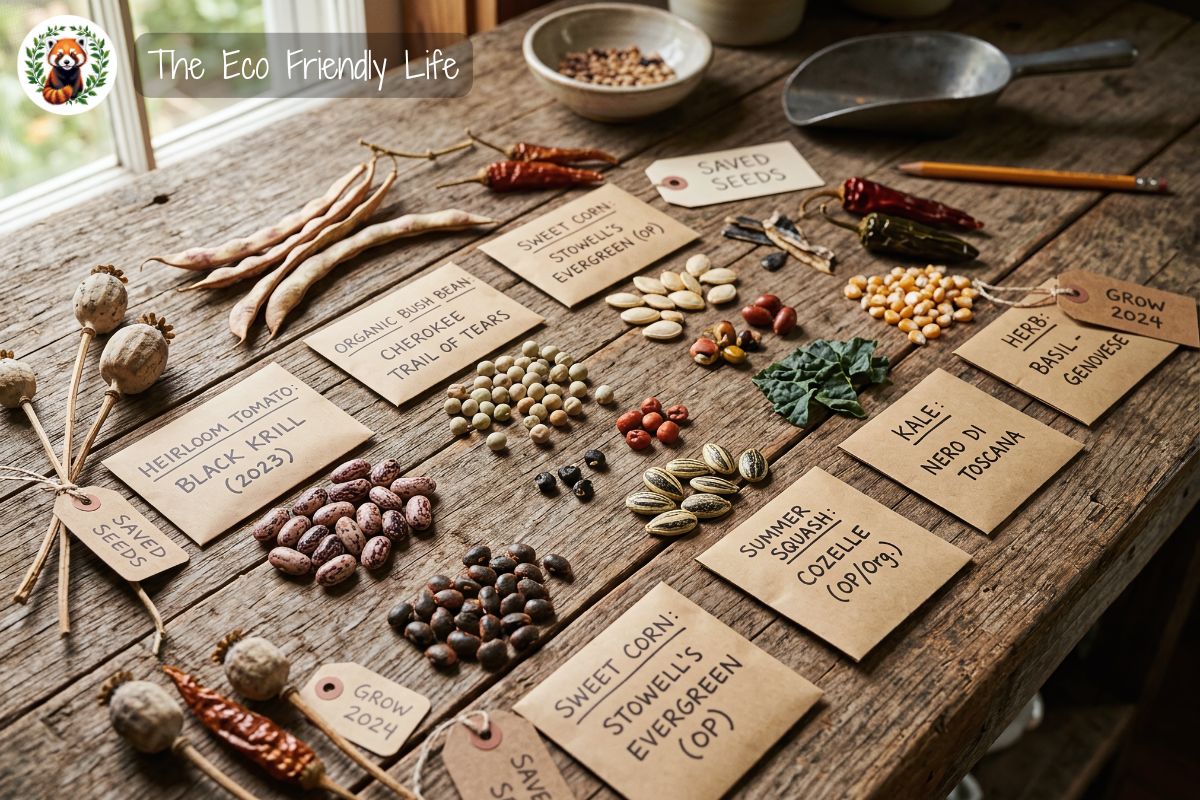
The honest case for hybrid seeds: Open-pollinated seeds aren’t right for every situation, and saying otherwise doesn’t serve gardeners honestly. Modern hybrid varieties — produced by crossing two stable parent lines — offer genuine advantages in specific contexts: better disease resistance, more reliable yields in challenging seasons, and sometimes measurably improved flavor in certain crops. An organic gardener who chooses a well-selected hybrid isn’t compromising any principle; they’re making a considered trade-off. The practical downside is that seeds saved from hybrid plants won’t come true, so you’re buying fresh seed each year. The case for open-pollinated varieties is strongest when seed saving matters to you, when you’re deliberately selecting for local adaptation over multiple seasons, or when you’re growing crops — particularly tomatoes, dry beans, and winter squash — where heirloom flavor distinctiveness is the point.
🌿✨ Recommended: Organic Heirloom Seed Assortment — 10 Pack (True Leaf Market)
For organic gardeners choosing their first seed source, this collection does the verification work for you — every variety is certified organic, open-pollinated, and from the current crop year, which matters more than most beginners realize. It’s a strong starting point; once you know which varieties perform well in your space, you’ll want to order those specifically rather than buying a fixed collection each year.
- ✅ 10 certified organic, heirloom varieties covering vegetables and herbs
- ✅ All non-GMO and open-pollinated — seeds are worth saving season to season
- ✅ Current crop year, sourced from a company operating since 1974
Understanding what to grow, where to source it, and how to read a seed packet gives you a meaningful head start on any growing season. The remaining question is how to translate these principles into consistent daily and seasonal habits.
Practical Daily Tips You Can Action Today
Ten practical actions you can take right now, wherever you are in the organic gardening process:
| Tip | How to Implement | How It Helps |
|---|---|---|
| Start composting immediately | Set up a bin or designated pile with a mix of kitchen scraps and dry leaves. Add to it daily. | Creates a free, high-quality soil amendment and diverts household organic waste from landfill. |
| Test your soil before adding amendments | Use an inexpensive home test kit or send a sample to your local agricultural extension office. | Prevents over-applying nutrients your soil doesn’t need — a mistake that harms soil biology as much as deficiency does. |
| Mulch every bare soil surface | Apply a 3-inch layer of straw, wood chips, or finished compost around plants and between rows. | Retains moisture, suppresses weeds, moderates soil temperature, and feeds soil organisms as it breaks down. |
| Rotate crops each season | Keep a simple garden map or journal noting where each crop family grew each year. | Breaks the pest and disease cycles that build when the same crop grows in the same bed repeatedly. |
| Water at the base, not the foliage | Use a soaker hose or hand-water at soil level in the morning rather than overhead in the evening. | Reduces the humidity that encourages fungal disease and keeps foliage dry through the warmest part of the day. |
| Disturb the soil as little as possible | In established beds, work only the top few inches when transplanting; avoid routine digging. | Preserves mycorrhizal networks and the layered structure that beneficial soil organisms depend on. |
| Plant something that attracts beneficial insects | Add phacelia, dill, sweet alyssum, or fennel alongside vegetables each season. | Provides habitat and food for the hoverflies and parasitic wasps that naturally regulate pest populations. |
| Hand-pick large pests promptly | Inspect plants weekly; remove caterpillars, slugs, and visible egg clusters by hand. | Addresses pest pressure before it reaches the level where any further intervention is needed. |
| Save seeds from your best performers | Allow healthy plants to set seed at season’s end; dry thoroughly and store in labeled paper envelopes. | Builds a seed collection locally adapted to your conditions over time, reducing annual seed costs. |
| Observe before acting | When you spot a problem, watch for 48 hours before taking any action. | Most minor pest pressure is naturally moderated; the presence of a pest doesn’t mean a crisis is developing. |
Frequently Asked Questions
Here are the questions I hear most from people just starting out with organic gardening.
Does my home garden need to be certified to be called organic? No. Certification under the USDA National Organic Program is a commercial designation for farms and food businesses that market products as certified organic. As a home gardener, you can follow every principle of organic growing without any formal certification. Whether you describe your garden as organic is simply a question of whether your practices genuinely align with those principles.
Is organic gardening more expensive than conventional? In the first season or two, it can be — particularly if you’re purchasing compost or amendments to build depleted soil. Over time, a well-managed organic garden becomes considerably less expensive: compost costs nothing if you’re making it at home, healthy soil requires fewer external inputs each season, and diverse planting reduces the need for any pest control products. Most gardeners who’ve maintained organic systems for several years spend less per season than they did when they relied on synthetic fertilizers and sprays.
How do I know if my soil needs improving? The most reliable signal is what grows in it. Plants in depleted soil tend to be smaller, slower-growing, paler, and more susceptible to pest pressure than the same varieties grown in healthy soil. A basic soil test — available from most garden centers or your local agricultural extension office — tells you pH, nitrogen, phosphorus, potassium, and often organic matter content, and comes with specific amendment recommendations based on your results.
Can I garden organically in containers or a small balcony space? Entirely. Container growing makes some aspects of organic management simpler: you’re working with a defined, controllable growing medium, you can choose a high-quality organic potting mix from the start, and pest issues are easier to monitor in a compact space. The main challenge is fertility — containers lack the biological depth of in-ground soil, so supplementing with compost, worm castings, or fish emulsion fertilizer more regularly is important.
Organizations to Support — Our Recommendations
The following organizations work across organic agriculture, seed preservation, and pollinator protection — three areas directly connected to the principles behind organic gardening.
- Rodale Institute has led organic farming research since 1947. Their Farming Systems Trial — the longest-running scientific comparison of organic and conventional agriculture in the United States — has produced decades of peer-reviewed findings freely available to growers and researchers worldwide. Support their ongoing work through their donations page (opens in a new tab).
- Seed Savers Exchange is a nonprofit based in Iowa that preserves heirloom and open-pollinated seed varieties through conservation work, a seed catalog, and a member exchange network. Their Heritage Farm conserves more than 20,000 seed varieties, including many that exist nowhere else in active cultivation. Direct financial support can be made through their donate page (opens in a new tab).
- The Xerces Society for Invertebrate Conservation works globally to protect pollinators, beneficial insects, and aquatic invertebrates — organisms that organic garden practices are designed to support rather than harm. Their practical, evidence-based guidance on pollinator habitat and pesticide reduction is freely available. Support their work through their donate page (opens in a new tab).
These three organizations represent some of the most grounded evidence-based work in the areas that organic gardeners care about most.
Resources and Further Reading
For anyone who wants to go beyond what a single article covers, these three resources offer significant depth.
- The Rodale Institute’s Farming Systems Trial (opens in a new tab) brings together findings from America’s longest-running organic-versus-conventional field study, alongside practical guides on organic pest management, cover cropping, and soil biology. It’s useful as both a reference and an ongoing learning resource at any level of experience.
- The EPA’s Composting at Home guide (opens in a new tab) is a thorough and well-organized introduction to home composting, covering bin setup, troubleshooting, and approaches for different living situations including apartment composting. Direct and practical.
- The USDA National Organic Program’s standards and guidance page (opens in a new tab) explains in plain terms what organic certification actually requires — genuinely useful for understanding what organic labels mean when you’re purchasing seeds, amendments, or products, and for knowing what would be involved if you ever chose to sell produce commercially.
Between them, these three resources cover the scientific, environmental, and regulatory dimensions of organic growing more thoroughly than any one article can.
Our Related Articles
Choosing The Right Compost Bin For Your Space
Composting transforms kitchen scraps and yard waste into nutrient-rich soil, reducing landfill contributions while creating “black gold” for your garden. Whether you’re working with a…
Read More (opens in a new tab)
What Is Composting And How Does It Work?
Every day, millions of people across the globe toss vegetable peels, coffee grounds, and grass clippings into the rubbish bin, never realizing they’re throwing away…
Read More (opens in a new tab)
Exploring Sustainable Gardening And Its Benefits
Sustainable gardening represents one of the most accessible pathways toward environmental stewardship that individuals can embrace in their daily lives. Whether you cultivate a small…
Read More (opens in a new tab)Building an Organic Garden That Works for You
Organic gardening sounds straightforward in principle — work with nature, not against it — and reveals genuine depth the longer you practice it. The core framework in this article is built around four interconnected ideas: that the principles behind organic gardening are about ecosystem health rather than mere chemical avoidance; that soil is a living system worth protecting and feeding; that pest management is most effective when it starts with prevention rather than treatment; and that the seeds and varieties you choose shape outcomes downstream in ways that beginner resources often under-emphasize. These ideas reinforce each other. Well-fed soil grows stronger plants; stronger plants handle pest pressure more readily; diverse planting supports the insect communities that do much of the regulatory work at no cost.
The most consistent thing I hear from gardeners who’ve been at this for a few seasons is that the system becomes easier rather than harder over time — the soil gets better, pest pressure decreases, and the learning shifts from troubleshooting to refinement. That matches my own experience. The first year carries the most uncertainty; each subsequent season builds on what the previous one established.
I’d love to hear how you’re approaching this in your own space: have you made the shift to composting yet, and if so, what surprised you most in the process? There’s almost always something about composting that the guides don’t quite prepare you for — and the answers vary in ways that make me think every garden really does have its own composting personality.
