
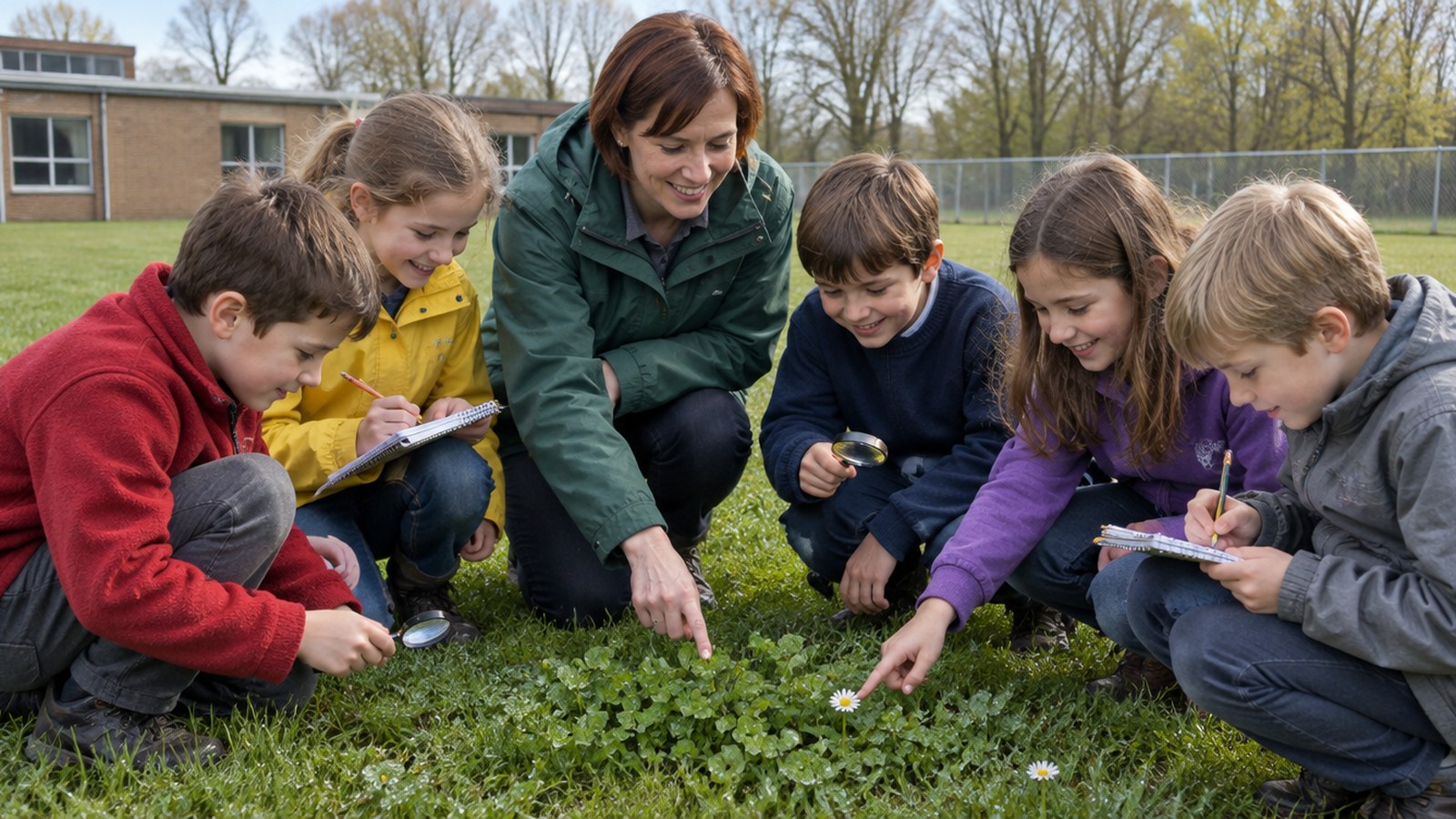

A ten-year-old comes home and announces that the school is banning plastic straws, then asks why, then asks why again when the first answer doesn’t hold. Environmental education in schools is supposed to produce exactly that kind of question. Whether it actually does, and whether it changes anything beyond the classroom wall, is a fair thing for any parent or teacher to want to see proven rather than promised.
I’m Al. I trained and taught high school math and science, and these days I’m home full time with our two boys here in Australia, where we homeschool our eldest. I’m not an education researcher, and I’ve never written a curriculum. What years of teaching science left me with is a reflex: when someone tells me a program works, I want to see the working. So I went looking for it, and what follows is what the evidence says, how far schools around the world really go, and what the good programs have in common. Stay with me, because the answer is more encouraging and more specific than I expected.
🌎🌱🤝 Our Top Pick — Best Guide for Taking Lessons Outdoors
How to Teach Nature Journaling: Curiosity, Wonder, Attention
I picked it over the kits and tools below because it costs the least, ships almost anywhere, and turns what the research favors into lessons a teacher or a parent can run next week with paper and pencils.
It gives teachers and parents ready-made plans for getting children outside, looking closely and recording what they find.
- Written for classroom teachers, outdoor educators and homeschooling parents
- Activities the publisher says support the Next Generation Science Standards
- Delivery included worldwide from Blackwell's
What the Research Says About Environmental Education in Schools
An old idea with new evidence: Environmental education is far from new, and the field's history goes back decades before today's climate debates. What has changed in the last twenty years is the volume of research measuring whether it works. The short version: well-designed programs do, across a wider range of outcomes than most people expect.
The widest review of school programs: Stanford researchers working with the North American Association for Environmental Education analyzed 119 peer-reviewed studies (opens in a new tab) of K–12 environmental education published over 20 years. They found gains in academic knowledge across science, math, reading and writing, in critical thinking and problem solving, in teamwork and leadership, and in civic engagement. More than 80 percent of programs (opens in a new tab) that set out to change students' behavior toward the environment succeeded.
What the conservation research found: A 2020 systematic review in Biological Conservation looked at 105 studies (opens in a new tab) from 1997 to 2016. Of those, 103 reported positive or mixed results, two found no effect, and none found a negative one. That's 98 percent, though the authors' more useful finding is about design, which comes up again in the practical section below.
| Study | What it looked at | What it found |
|---|---|---|
| Stanford review with NAAEE | 119 studies of K–12 environmental education over 20 years | Gains in academic knowledge (opens in a new tab), thinking skills, behavior and civic engagement |
| Ardoin, Bowers and Gaillard (2020) | 105 studies of environmental education for conservation, 1997–2016 | 103 of 105 (opens in a new tab) positive or mixed, none negative |
| Kuo, Barnes and Jordan (2019) | Evidence on learning in and from nature | Nature-based instruction outperforms (opens in a new tab) traditional instruction |
| Williams and Dixon (2013) | 48 studies of garden-based learning, 1990–2010 | About 8 in 10 (opens in a new tab) academic results positive |
| Lawson and colleagues (2019) | A middle school climate curriculum in North Carolina | Parents' climate concern rose more (opens in a new tab) when their children took it |
Learning outdoors is its own result: A 2019 review in Frontiers in Psychology concluded that, in academic settings, nature-based instruction outperforms (opens in a new tab) traditional instruction. The same review found over fifty studies (opens in a new tab) linking time in nature to pro-environmental behavior, mostly through an emotional connection to the natural world.
School gardens help, but not automatically: A synthesis of 48 garden-based learning studies from 1990 to 2010 found that about 8 in 10 (opens in a new tab) academic results were positive, with science gains in 14 of 15 studies. The same synthesis reports one study where fifth graders on the regular curriculum outscored (opens in a new tab) peers in a garden program in math and science. A garden on its own proves nothing; what happens in it matters.
The learning comes home: In a North Carolina study published in Nature Climate Change, children who took a climate change curriculum (opens in a new tab) raised their parents' concern about climate change. On a scale from -8 to +8, parents in the program group rose 3.89 points (opens in a new tab) against 1.37 for the control group, and the biggest shifts came among conservative parents, fathers and parents of daughters. Children turn out to be credible messengers in their own homes.
What the evidence can't tell you: Reviews can only weigh what was studied and published, much of this research comes from the United States, and "programs work" is not the same as "any program works". The honest reading is that the case for environmental education in schools is strong, and that design decides whether a particular program delivers it.
If the evidence is that good, you'd expect most schools to be doing a lot of it. The reality, country by country, is more uneven than that.
Where Environmental Education Stands in Schools Around the World
Present, but thin: UNESCO's 2021 review, Learn for our Planet, studied 78 curriculum and policy documents from 46 countries (opens in a new tab). Climate change appeared in only 47 percent (opens in a new tab) of them and biodiversity in 19 percent, and 45 percent had little or no focus on environmental themes at all. For a subject as central to young people's futures as climate change, that's a lot of silence.
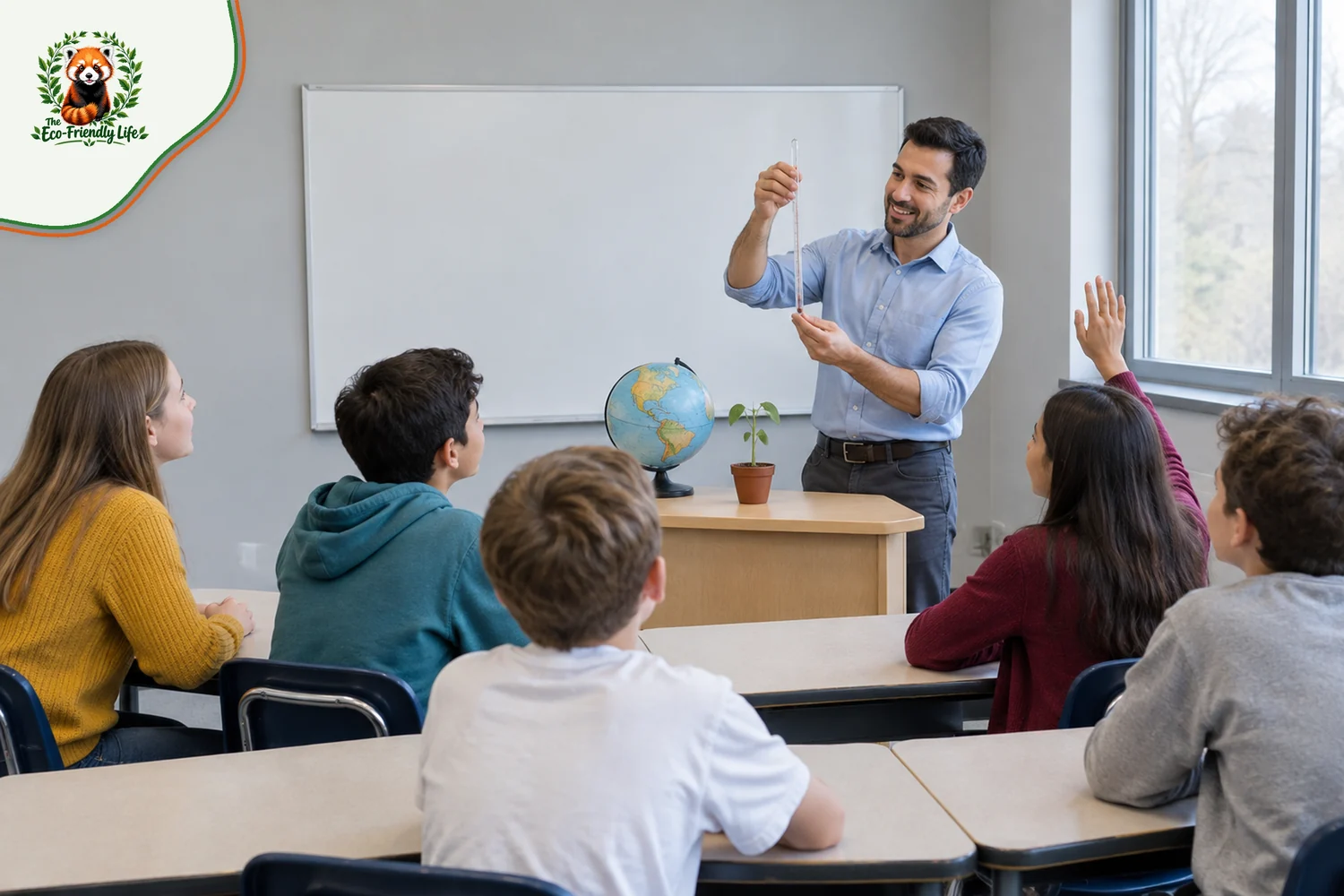
The target for 2030: UNESCO's 2024 Greening Curriculum Guidance sets out what climate and sustainability learning should cover at every age, and it carries the Greening Education Partnership's goal of 90 percent of countries (opens in a new tab) including climate change in their curricula by 2030. It's a target, not a requirement, and every country decides for itself whether to meet it.
The first country to mandate it: In November 2019, Italy's education minister announced that public schools would give 33 hours a year (opens in a new tab) to climate change, almost an hour a week, and called Italy the first country to adopt a climate change curriculum in public schools.
Three systems, three approaches: The picture in the United States, the United Kingdom and Australia looks different again, because each one runs its schools its own way.
United States
No national curriculum: In the US, states set their own standards. Many have adopted the Next Generation Science Standards, which ask middle schoolers to clarify the evidence (opens in a new tab) of the factors that have caused the rise in global temperatures over the past century. How much time a school actually gives that standard varies a great deal from district to district.
New Jersey went further: New Jersey became the first state to bring climate change into its K–12 standards, with the change taking effect (opens in a new tab) at the start of the 2022–2023 school year.
United Kingdom
England's strategy: The Department for Education's 2022 strategy set a goal that all education settings (opens in a new tab) in England would have a sustainability lead and a climate action plan by 2025. It also created a National Education Nature Park, where pupils measure and improve biodiversity (opens in a new tab) on their own school grounds.
The curriculum is catching up: England's Curriculum and Assessment Review, published in November 2025, found minimal explicit inclusion (opens in a new tab) of climate education in the national curriculum and recommended bolstering climate education and sustainability in Science and Geography. Scotland, Wales and Northern Ireland set their own curricula, so check the one where your children go to school.
Australia
A priority across every subject: Sustainability is one of the Australian Curriculum's cross-curriculum priorities, meant to be taught through all eight learning areas (opens in a new tab) rather than as a subject of its own. It aims to raise student awareness (opens in a new tab) about informed action for a more environmentally and socially just world, so the sustainability concepts a child meets in science should turn up in English and math too.
Where we sit: That's the system here in Australia, where we live and homeschool our eldest. A cross-curriculum priority depends on teachers in every subject picking it up, which is both its strength and its weak point: everyone owns it, so it's easy for no one to.
Curriculum documents tell you what a system intends. What a child actually experiences comes down to how the lessons are taught, and that's where the research gets most useful.
Good Environmental Education in Practice
What worked in our house: What's worked with the boys has almost always been the thing they could do rather than read: measuring something, tracking something, or going and looking at it. The written resources land better afterwards, as an explanation for something they've already noticed. What's taken me longer to accept is how differently the two of them respond. The same activity that lands with one leaves the other cold, and it isn't really about age; it's about how each of them prefers to come at a problem. I'd assumed the second time around would be easier, and mostly it meant unlearning what had worked with his brother. Now I start with the child, not the lesson.
Home is not a classroom: Two boys at home aren't a class of 28, and I won't pretend they are. But the research points the same way, which is why I trust the pattern more than my own small sample.
Four things the best programs share: The 2020 conservation review found that programs with direct results had four themes in common (opens in a new tab): a local focus, collaboration with scientists or resource managers, integrated action, and intentional measurement and reporting. That makes a useful checklist for any program your school runs or proposes. Is it about a place the students can walk to? Does anyone outside the school take part? Do the students do something, and do they measure what changed?
Regular time outside: The Frontiers review suggests nature helps learning partly (opens in a new tab) by improving attention, reducing stress and raising interest, and the Children & Nature Network's work with schools centers on greening schoolyards (opens in a new tab) and making learning outside a regular part of the week. Nature journaling is one of the cheapest ways in, because it needs only a notebook, a pencil and a patch of ground.
🌿✨ Recommended
How to Teach Nature Journaling
I'd start here because it gives a teacher or a parent tested plans for exactly this kind of lesson, without buying any equipment.
- Plans for managing groups outdoors and teaching drawing
- Field-tested by over a hundred educators, per the publisher
- Delivery included worldwide from Blackwell's
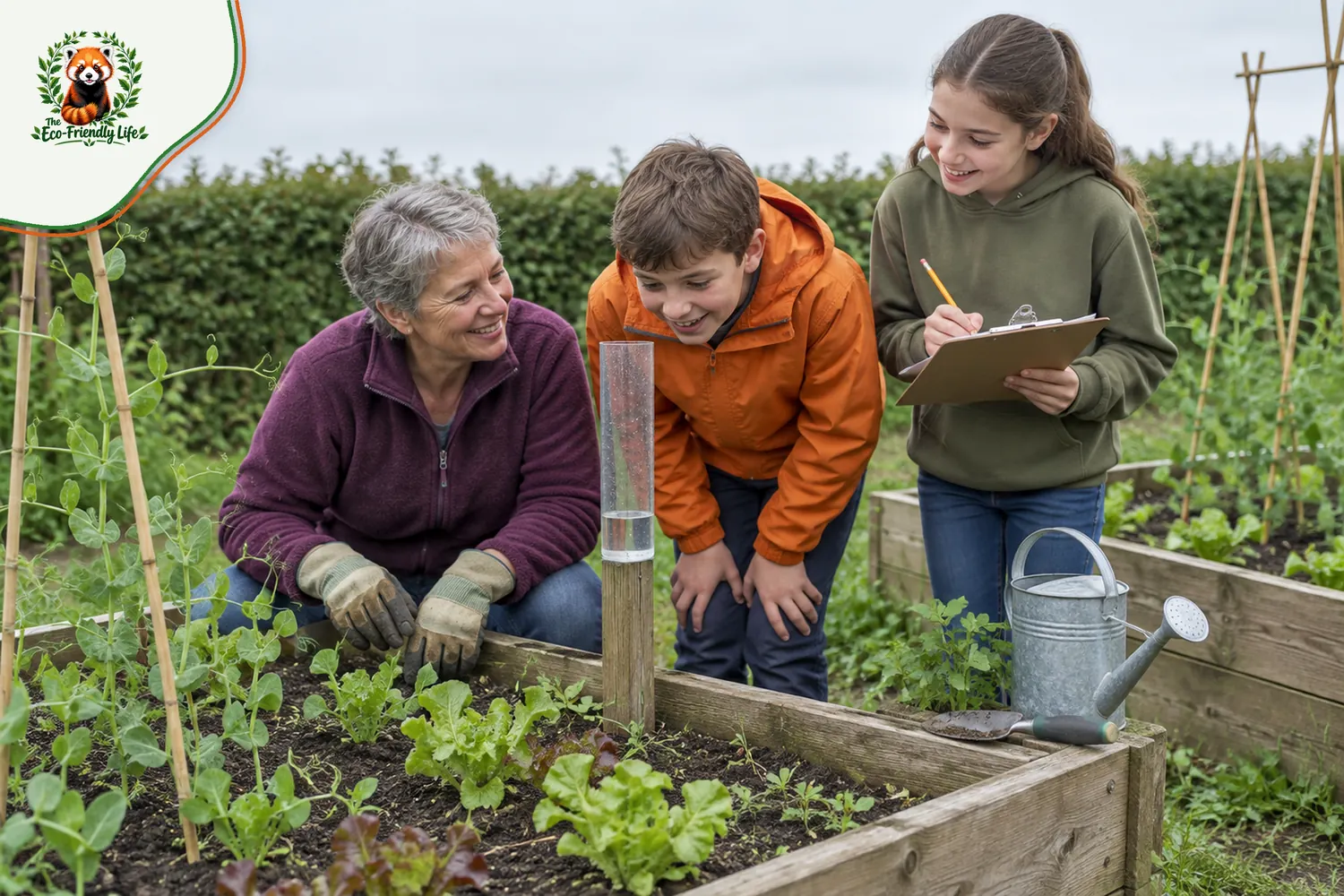
Gardens and compost make cycles visible: A school garden gives students a place to measure growth, rainfall and soil over a whole season, and the garden-learning synthesis found science gains (opens in a new tab) in 14 of 15 studies that looked for them. The practices that make sustainable gardening work at home, from building soil to saving water, scale down to a few raised beds just as well.
A worm bin earns its space: A classroom worm farm turns food scraps into compost that students can check on week by week, which makes a material cycle something they watch rather than read about. It also gives a class a shared job, and a reason to weigh what goes in.
Whole-school programs: Eco-Schools, run by the Foundation for Environmental Education, is the largest of these. It counts 52,552 schools (opens in a new tab) in 101 countries and more than 13.7 million registered students, and it works through a seven-step framework (opens in a new tab). England's Nature Park takes a similar approach with biodiversity: pupils measure and improve (opens in a new tab) what lives on their own grounds.
The common thread is simple: get students outside, keep it local, let them do something, and measure what happens. The tools and books below make that easier, at school or at home.
Brands and Tools That Support the Planet — Our Recommendations
Each product below links straight to the seller's own page. None of them is something our household owns or uses, and we never name our own gear; I chose each one from the publisher's or maker's published details for what it helps a teacher, parent or child do. Prices were checked on November 3, 2026, in the currency each seller shows.
For Teachers and Parents
Blackwell's
About
A UK bookseller with delivery included in the book price to the UK, Europe, the US, Canada and the rest of the world.
Our recommendation
How to Teach Nature Journaling, the teacher's guide (opens in a new tab) by John Muir Laws and Emilie Lygren, is $28.83 USD, with lesson plans for teachers, outdoor educators and homeschooling parents. I chose it because it turns outdoor observation into regular lessons for the price of a book; it covers teaching drawing as well as observation, so it takes some reading before the first lesson.
NHBS
About
A UK specialist in natural history books and wildlife survey and field equipment, with pricing for delivery to a long list of countries.
Our recommendation
The Kite Optics Triplet Loupe Hand Lens (opens in a new tab) gives 10x magnification through a 21 mm three-element lens in a metal case, for £32.08 GBP. I chose it because "go and look" works best when a student can see the hairs on a leaf; it's one lens for one student at a time, and it isn't cheap.
Eartheasy
About
An online store for composting, gardening and sustainable home goods. Ships within the lower 48 US states, and some products to Canada.
Our recommendation
The Urban Worm Bag (opens in a new tab) Version 2 is a continuous-flow worm composter holding up to about 122 L (5.3 cubic feet), for $139.00 USD, with worms bought separately. I chose it for a classroom or kitchen where students can watch scraps become soil; it's a big outlay for a first try, and it needs someone to look after it through school holidays.
For Kids and Families
School Specialty
About
A US supplier of classroom resources and science kits. Ships within the US, with Alaska and Hawaii at higher rates.
Our recommendation
The Thames & Kosmos Weather & Climate Lab (opens in a new tab) is $19.70 USD, listed for ages 8+, with five attachments for weather and climate experiments; in Australia, Questacon's shop lists the same kit (opens in a new tab) for $40.00 AUD. I chose it because tracking the weather for a few weeks is exactly the measuring that sticks; it's a beginner's kit, so expect simple readings rather than a proper weather station.
Blackwell's
About
Blackwell's children's books, sold with the same included delivery worldwide.
Our recommendation
The Nature Anatomy Guided Journal (opens in a new tab) for Kids has 65 prompts for ages 8 to 12, for $13.42 USD. I chose it so a child can carry the same habit of noticing from school into weekends; it's a guided journal, so children who prefer a blank page may outgrow the prompts.
Tools and books help, but children take their lead from the adults around them. The last piece is what parents and teachers can do, including the parts that are harder than buying a book.
How Parents and Teachers Can Support It, Including the Hard Parts
Teachers need support too: In UNESCO's survey of nearly 1,600 educators across 93 countries, 36 percent (opens in a new tab) said environmental content wasn't part of their pre-service or in-service training. UNESCO notes the survey leaned toward a few regions, so read it as a signal rather than a census. If your child's teacher seems unsure, they may simply never have been trained for it.
The worry is real: A 2021 survey of 10,000 people aged 16 to 25 in ten countries, including Australia, the UK and the US, found that 59 percent (opens in a new tab) were very or extremely worried about climate change, and more than 45 percent (opens in a new tab) said their feelings affected their daily life. Environmental education that leaves children frightened and powerless hasn't done its job.
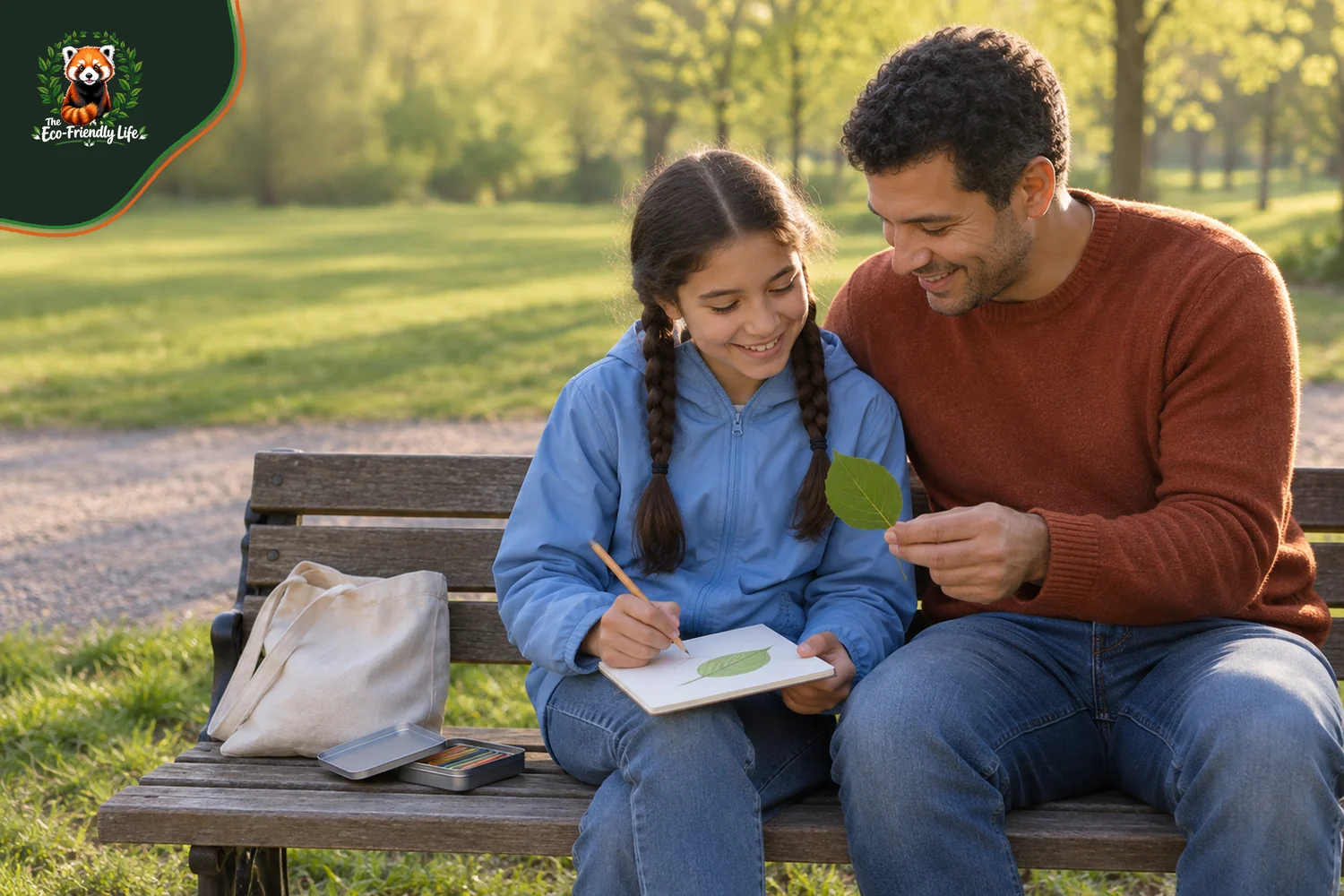
Match the material to the child: Documentaries have been more variable in our house than I expected. The ones that lead with scale and catastrophe produce concern without any sense of what to do about it, which in a younger child is just anxiety. The ones that follow a specific problem to a specific solution work far better at that age. Our eldest handles the heavier material now, and at seventeen the scale of a problem is something to think through rather than something to be frightened by. Our younger one isn't there yet. If you've ever shown a child something and watched it land badly, you're in good company.
Ask the school good questions: You don't need to be an expert to ask who leads sustainability at the school, whether it runs a program such as Eco-Schools (opens in a new tab), how often students learn outside, and what they measure. In England, the 2022 strategy expected every setting to have a sustainability lead (opens in a new tab) and a climate action plan by 2025, so the question has a ready answer there.
Let it travel both ways: The North Carolina study found children shifting their parents' views, and the largest shifts (opens in a new tab) came among the parents who started out least concerned. At home, a child asking "but why?" three times in a row is a decent editorial process, and it has sent me back to the source material more than once. The same habits sit at the heart of eco-friendly parenting: small, regular, explained, and done together.
None of this needs a big project. The tips below are small, specific things a parent or teacher can start this week.
Practical Daily Tips You Can Action Today
Ten ways to back up environmental learning at school, most of them free. With March bringing spring to the northern hemisphere, it's a good month to start the outdoor ones; readers in Australia and New Zealand are heading into autumn, which has its own changes to watch.
What to do
| Tip | How to do it | Why it matters |
|---|---|---|
| Ask what they measured, not what they learned | At pickup or dinner, ask what they counted, tracked or saw outside this week. | It rewards the doing, which is the part that sticks. |
| Take a weekly "go and look" walk | Pick one tree, pond or patch of ground and visit it each week. | Learning in nature outperforms traditional instruction (opens in a new tab) in academic settings. |
| Start a shared nature journal | Draw and date one thing each visit, adults included. | It builds attention and gives children something to explain. |
| Ask who leads sustainability at school | Email the school or ask at a parent meeting. | In England, every setting was expected to have a sustainability lead (opens in a new tab) by 2025. |
| Check your own curriculum | Look up your state's science standards in the US, or the sustainability priority in Australia. | You'll know what the school is expected to cover (opens in a new tab). |
| Volunteer for the garden or compost | Offer an hour a week, or cover school holidays. | Garden programs showed science gains (opens in a new tab) in 14 of 15 studies. |
| Choose solution-led viewing for younger kids | Pick films that follow one problem to one solution. | It leaves a child with something to do, not just something to fear. |
| Let your child teach you | Ask them to explain one thing from class, and ask "why?" twice more. | Children raised their parents' concern (opens in a new tab) in a classroom study. |
| Suggest a whole-school program | Share Eco-Schools with the principal or parent council. | It already runs in 101 countries (opens in a new tab). |
| Track one thing together for a month | Rainfall, the electricity meter or a bin's weight, charted weekly. | Measuring turns a topic into evidence a child gathered. |
Small habits at home make the school's work stick. A few questions come up again and again, so here are short answers.
FAQs
The questions parents and teachers ask most.
What is environmental education in schools?
It's teaching about the natural world and people's effect on it, usually through science, geography and outdoor learning. UNESCO's guidance sets out learning outcomes by age (opens in a new tab), from five-year-olds to adults.
Does environmental education improve academic results?
Often, yes. A review of 119 studies (opens in a new tab) found gains in science, math, reading and writing, and about 8 in 10 (opens in a new tab) results from garden programs were positive.
Is climate change taught in every country's schools?
No. UNESCO found it in only 47 percent (opens in a new tab) of the curriculum and policy documents it reviewed, and the target is 90 percent of countries (opens in a new tab) by 2030.
How do I keep it from making my child anxious?
Lead with specific problems and solutions, and keep it local and practical. With 59 percent (opens in a new tab) of young people very or extremely worried, giving them something to do matters.
If you want to support this work beyond your own school, these organizations do it at scale.
Organizations to Support — Our Recommendations
Three non-profits working to get more children learning about and in the natural world.
- The North American Association for Environmental Education (NAAEE) supports environmental educators across North America and beyond, and it's behind the eeWORKS research summaries and the Guidelines for Excellence cited here. You can donate to NAAEE (opens in a new tab) to fund its research library, free resources and network of affiliates.
- The Children & Nature Network works with educators, parents and community leaders to green schoolyards and make learning outside a regular part of school. You can support the network (opens in a new tab) with a donation.
- EarthEcho International runs leadership, environmental education and advocacy programs for young people aged 13 to 25 around the world. You can give to EarthEcho (opens in a new tab) once or monthly.
Each one turns the evidence above into programs for real students.
Resources and Further Reading
Three places to go deeper, all free.
- UNESCO's Greening Curriculum Guidance (opens in a new tab) sets out what climate and sustainability learning should cover at each age, from 5 to 18 and beyond.
- NAAEE's Guidelines for Excellence (opens in a new tab) are the standards series for high-quality environmental education, including learning guidelines for K–12.
- Kuo, Barnes and Jordan's open-access review (opens in a new tab), Do Experiences With Nature Promote Learning?, is the clearest summary of the research on learning outdoors.
Any of the three will help you judge a program on its design, not its brochure.
Our Related Articles
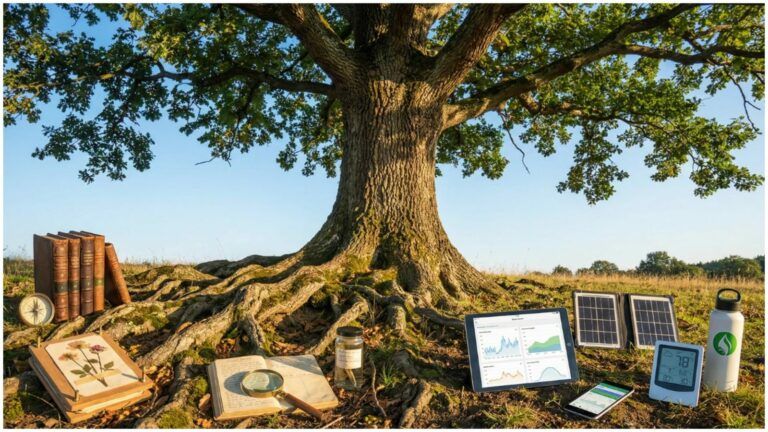
History And Evolution Of Environmental Education
Environmental education didn’t appear overnight—it evolved through decades of growing awareness, global collaboration, and shifting priorities about our relationship with the natural world. From
Read article
Educating On Sustainability: Key Concepts And Practices
The word sustainability gets thrown around constantly — in news headlines, on product packaging, in government policy, and at school pickup. Yet for most
Read article
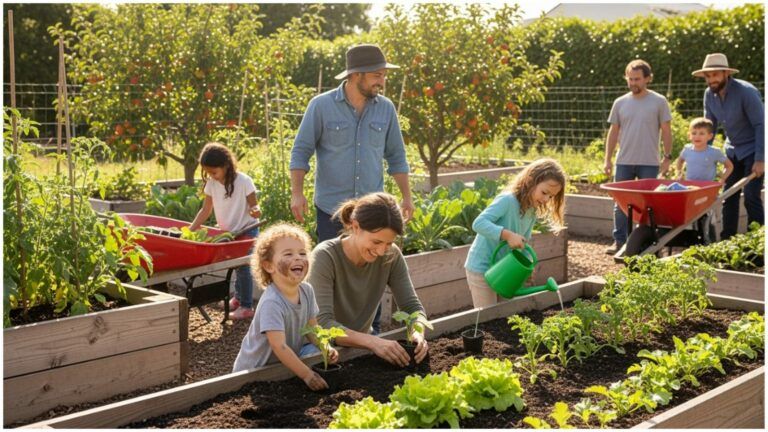
Eco-Friendly Parenting Explained
Bringing a child into the world changes not just your daily routines but your entire perspective on the future. As parents and caregivers, we
Read article
Conclusion
Environmental education in schools has a stronger evidence base than most people realize, reaching academic results, thinking skills, behavior and even parents' views. Yet many national curricula still give it little room, and many teachers were never trained for it. The programs that work share a recognizable shape: local, hands-on, outdoors and measured, repeated over time rather than squeezed into a single assembly. Parents and teachers can back that up at home with small habits, and by choosing material that leaves children with something to do rather than something to fear.
What's one thing your child has measured, tracked or gone and looked at through school this year, and did it change how they talk about the world at home?
