
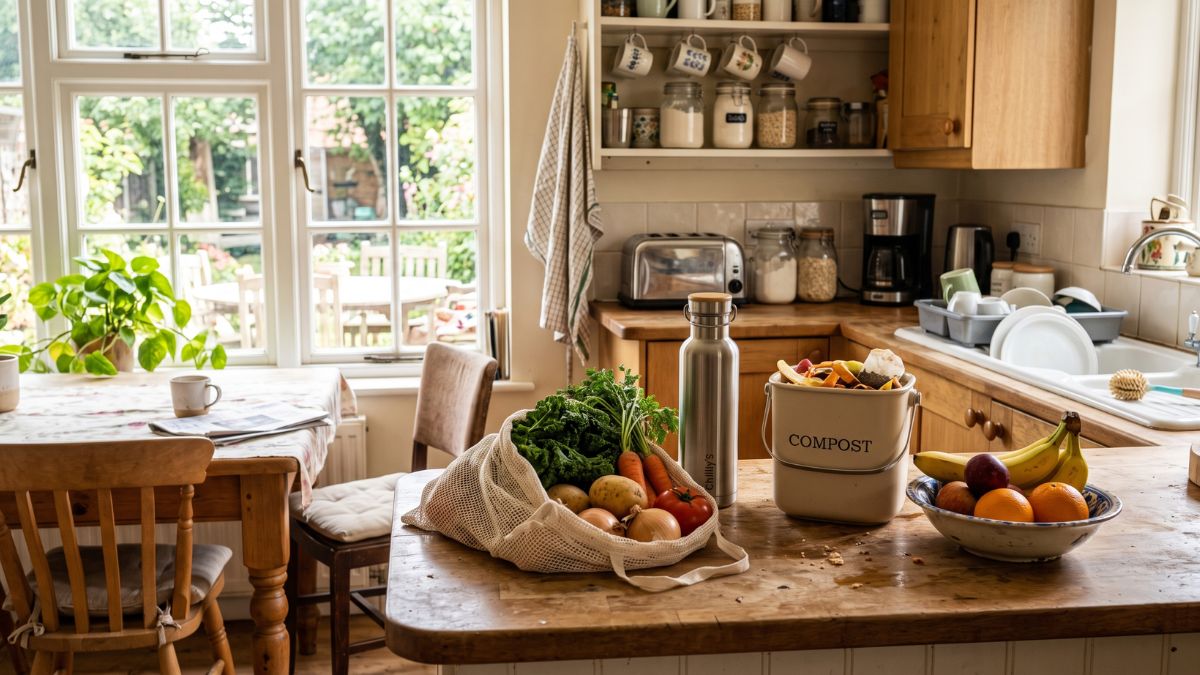

“Green lifestyle” gets used constantly and defined almost never. It shows up on packaging, in headlines, in the caption under someone’s kitchen renovation photos — and it can mean almost anything the person using it wants it to mean. That vagueness is not an accident. It is a lot easier to sell something as green than to explain what green actually requires, and most of us have absorbed the phrase without ever being handed a straight answer.
I’m Katrina, and a couple of years ago I realized I couldn’t actually say whether any of the changes my household had made were doing anything. We had reusable bags, a compost bin, a few solid swaps — and I had no idea if we were addressing the parts of our footprint that mattered or just the parts that felt good to change. So I started checking instead of assuming, and what I found rearranged how I think about a green lifestyle entirely. If you have ever had that same nagging doubt, this one’s for you — keep reading.
🌎🌱🤝 Our Top Pick — Best Plastic-Free Water Bottle
Klean Kanteen Reflect 27 oz
I picked this one over the more popular insulated models specifically because it makes the article’s whole argument without needing a paragraph to explain it.
It is genuinely plastic-free from the body to the cap and built to outlast its owner rather than get replaced.
- ✅ Plastic-free cap
- ✅ 90% recycled steel
- ✅ Lifetime warranty
| ~$32.95 | Mid-range
👉 Shop Klean Kanteen ReflectWhat a Green Lifestyle Actually Means
A green lifestyle is a practice, not a purchase: It is the ongoing habit of reducing the environmental cost of meeting ordinary needs — heat, food, transport, clothing, cleaning — rather than a fixed set of products or a label you qualify for once and keep forever. There is no finish line where a household becomes officially green. It is a direction you keep walking in, not a destination you arrive at.
The household is the right place to look because the numbers say so: A 2016 analysis by Ivanova and colleagues, published in the Journal of Industrial Ecology, found that household consumption drives more than 60 percent of global greenhouse gas emissions and between 50 and 80 percent of total land, material, and water use. That is the evidence that domestic choices are not a rounding error next to industrial policy — they are a huge share of the total.
There is real room to move, and it is bigger than most people assume: The Intergovernmental Panel on Climate Change’s Sixth Assessment Report, in its Working Group III chapter on demand-side mitigation, concluded that changes across buildings, land transport, and food could cut emissions in those sectors by 40 to 70 percent globally by 2050, with high confidence. Treat that as the ceiling of what is possible under close to ideal conditions, not a number any single household should expect to hit on its own.
Here is the part most articles on this topic leave out: The same IPCC chapter states plainly that individual behavior change is not sufficient on its own — it only works if it is embedded in structural and cultural change alongside it. That is not a reason to skip the personal changes. It is a reason to be honest about what they can and cannot do by themselves, which is exactly the kind of honesty that makes the rest of this article worth trusting.
Personal change still matters because of how norms actually shift: The IPCC’s own assessment notes that somewhere between 10 and 30 percent of a population needs to be visibly committed to a behavior before it tips into becoming a new social norm. Your household is not going to rescue the climate on its own, and it was never going to. What it can do is be one of the committed households that moves the threshold — which is a genuinely different, and more honest, reason to bother.
A quick word on the neighboring terms: Green living overlaps with zero waste, minimalism, and ethical consumerism, and people use them interchangeably, but they are not the same thing. Zero waste is specifically about eliminating what goes to landfill; minimalism is about owning less full stop; ethical consumerism is about how and where you spend. A green lifestyle can borrow from all three, but it is broader than any one of them — it is about the environmental footprint of daily life, not any single lens on it. If you want the practical “what should I actually do” version of that broader question, help the environment is where we’ve laid out the ranked list — this piece is about understanding the shape of the problem first.
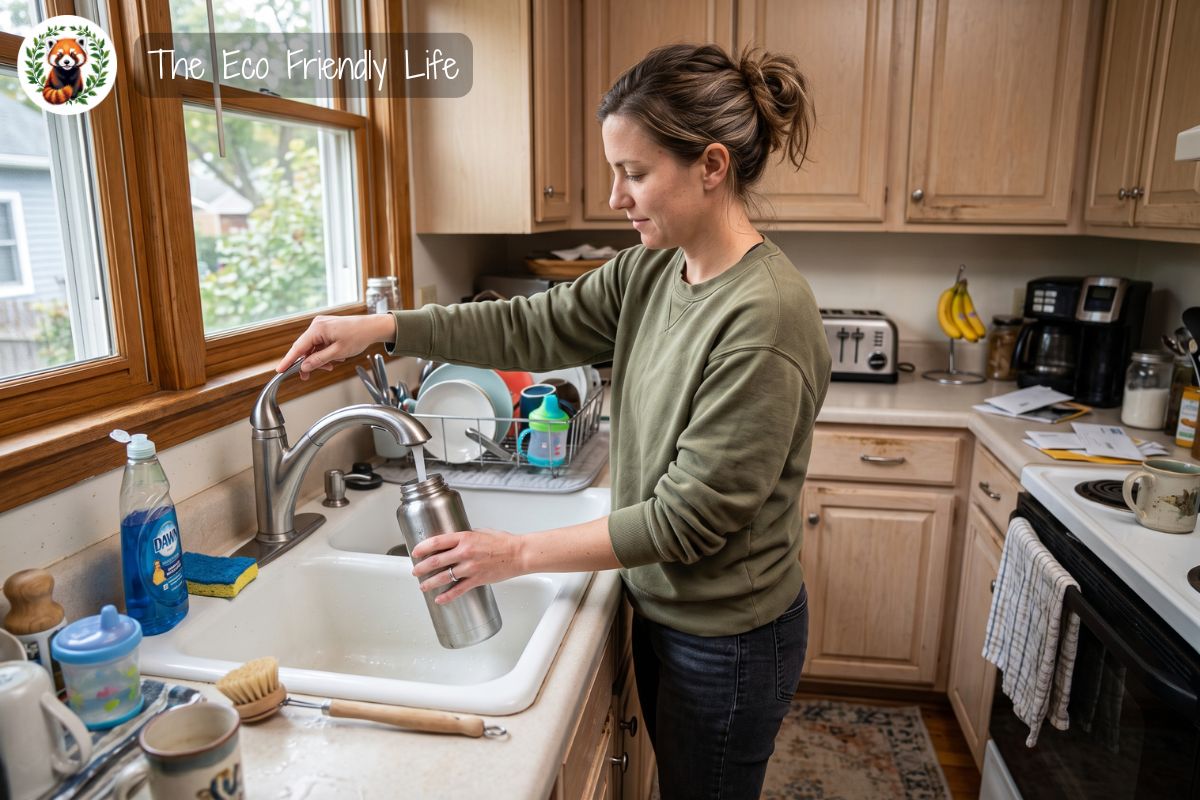
Once you accept that a green lifestyle is a pattern rather than a purchase, the next honest question is where your own footprint is actually concentrated — because most people’s guess is wrong.
Where Your Household Footprint Actually Comes From
Most people’s mental picture of their footprint is upside down: It tends to be weighted toward whatever is most visible — plastic packaging, a bag at the checkout — rather than whatever is actually largest. Visibility and impact are not the same axis, and confusing them is the single most common reason people spend their effort in the wrong place.
Home energy is a quiet giant: According to UNEP’s Global Buildings Status Report, the buildings sector accounts for 32 percent of global energy use and 34 percent of global CO2 emissions. Heating, cooling, and hot water rarely feel dramatic day to day, which is exactly why they are so easy to underestimate.
Food is the biggest single category, and it is not just about farming: The FAO calculated that food systems account for 34 percent of global anthropogenic greenhouse gas emissions — roughly 18 gigatonnes of CO2 equivalent a year, according to its own reporting. That figure covers the entire chain: production, land use change, processing, transport, retail, and disposal, not farming alone. If you want the full picture of how a plate of food adds up before it reaches your table, sustainable food is worth a closer look.
Carbon is only one axis — land and water tell a different story: Ivanova’s household analysis found that food alone accounts for 48 percent of household land impact and 70 percent of household water impact. That is the point where carbon-only thinking stops being enough, because a food choice can be carbon-neutral-ish and still be a heavy water user, or vice versa.
Transport is the most unequal category of the three: The IPCC’s demand-side assessment identifies individual mobility choices as carrying the largest potential to cut a personal carbon footprint of any everyday category, with car-free and electric mobility together capable of avoiding around 2 tonnes of CO2 equivalent per person per year. Unlike food or home energy, transport is also the category where your options depend most heavily on where you happen to live. For a deeper look at tightening up the biggest of these three at home, energy-efficient home walks through it room by room.
These are global averages, and yours will not match them exactly: Your personal split between energy, food, and transport depends heavily on where you live, how your local electricity is generated, and your income. That is not a reason to shrug. It is a reason to measure your own household rather than assume it looks like the global average — a point we will come back to before this article ends.
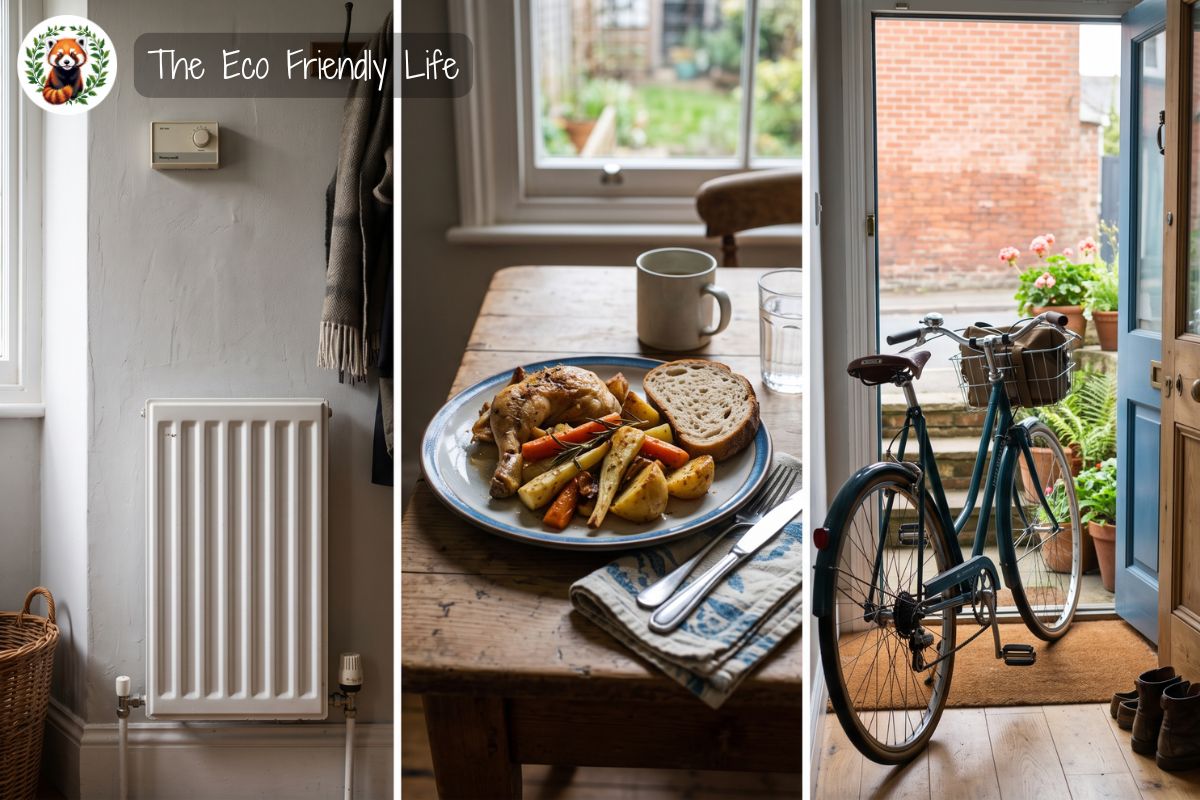
Knowing where the footprint sits is only half the job. The harder half is telling which changes are actually worth making — and that is where a lot of well-meaning effort quietly goes to waste.
Telling High-Impact Changes From Feel-Good Ones
The real service this section owes you is a method, not another list: Anyone can hand you ten things to buy. What is more useful is a way to judge any green claim or swap you encounter after this article ends, so you are not dependent on someone else’s list forever.
Start with the clearest example of an action that underperforms its reputation: Global plastics production doubled between 2000 and 2019, reaching 460 million tonnes, and only 9 percent of plastic waste actually gets recycled, according to the OECD’s Global Plastics Outlook. Recycling is worth doing. It is not a solution, and treating it like one lets the bigger, less visible categories go unaddressed.
Food waste is the underrated giant that costs nothing to fix: UNEP’s Food Waste Index Report 2024 found that households threw away the equivalent of more than one billion meals every single day in 2022, with households responsible for 60 percent of the 1.05 billion tonnes wasted globally, as reported in the UNEP press release. Food loss and waste together account for roughly 8 to 10 percent of global emissions. Unlike almost every other change in this article, cutting food waste does not require buying anything — it belongs at the top of the list precisely because it is free.
A practical test you can reuse on anything: Ask whether the change reduces consumption or just substitutes one purchase for another. Substitutions can be genuinely good. But buying a new “sustainable” version of something that already works and still has years of life left in it is usually the weaker move — the greenest bottle is very often the one already sitting in your cupboard.
Greenwashing, kept brief: A meaningful certification comes from an independent third party with published standards you can go look up. A vague claim — “eco-friendly,” “conscious,” “responsibly made” — with no certification behind it is marketing language, not a fact. We’ve covered this in more depth elsewhere on the site, but that one distinction covers most of what you need day to day. It is also the exact reasoning behind swaps like sulfate-free shampoos, where the ingredient claims are specific and checkable rather than vague.
One honest limitation worth stating plainly: High-impact does not mean universally accessible. Car-free living is a reasonable ask in Amsterdam and close to unrealistic in rural Montana. The right sequence of changes is personal, shaped by where you live and what you can actually control — not a fixed ranking everyone is supposed to follow in the same order. This is also where green living genuinely diverges from the stricter zero waste movement, which asks for a level of commitment that will not fit every household or every budget.
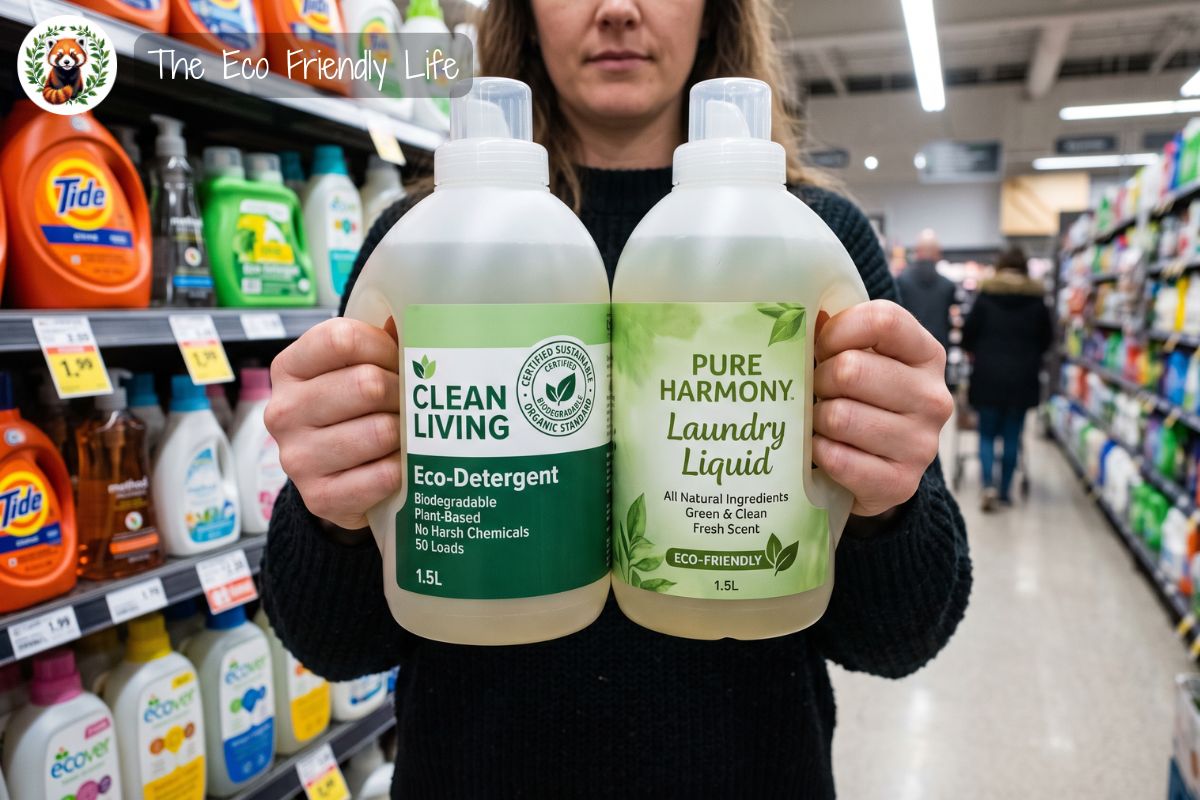
Once you can tell a high-impact change from a feel-good one, the next question is simply where to find the things actually worth buying — starting with the swap I’d put ahead of almost anything else in this article.
Brands and Tools That Support the Planet — Our Recommendations
We do not get anything out of recommending a product that does not hold up, so everything below is something we would put in our own kitchen or hand to our own kids. A quick note before the table: reusable alternatives to single-use plastic are one of the clearest examples of substitution done right, because they remove a recurring purchase rather than just swapping its packaging.
Our Retailer Recommendations for Adults
Klean Kanteen
About
A drinkware specialist and Certified B Corporation built around doing one category — stainless steel bottles and containers — extremely well, with a strong sustainability track record including 1% for the Planet membership. It is a natural fit here since a durable, plastic-free bottle is one of the most universally applicable swaps in this whole article.

Our Recommendation
The Reflect 27 oz is genuinely plastic-free from the body to the cap, made from 90 percent post-consumer recycled steel, and it is the bottle I would put ahead of anything else in this article — built to outlast its owner rather than get replaced.
Who Gives A Crap
About
A B Corp and FSC-certified toilet paper company that donates 50 percent of profits to sanitation projects, selling one of the highest-frequency household consumables there is — which makes it a good illustration of the article’s point that the biggest swaps are often consumables, not gadgets. Ships within the United States.
Our Recommendation
Their Recycled Toilet Paper is plastic-free in its packaging and made without cutting down a single tree, and it is the kind of swap you make once and then never think about again.
Ethique
About
A New Zealand-based B Corp built entirely around solid personal care bars, which is one of the few product categories that genuinely cuts both packaging and shipping weight at the same time rather than just swapping one plastic bottle for another.
Our Recommendation
The Shampoo and Conditioner duo is a simple, no-fuss way to try bar shampoo without committing to a huge range, and it pairs naturally with the reasoning behind sulfate-free formulations generally.
Our Retailer Recommendations for Kids/Families
ECOlunchbox
About
A family-focused brand built around 100 percent food-grade stainless steel lunchware, with no plastic, BPA, or phthalates anywhere in the product. It is a strong fit for the durability argument this article keeps returning to.
Our Recommendation
The Three-in-One Classic lunchbox is dishwasher safe and tough enough that it can genuinely move from an older child down to a younger one — which is exactly the buy-once thinking this article is making the case for.
Klean Kanteen (Kids)
About
The same brand as the adult table, but a genuinely separate kids’ product range built for school use — insulated, sport-capped, and sized for smaller hands.
Our Recommendation
The Kid’s Classic Insulated 12 oz addresses the single most common daily single-use item in a child’s routine: the drink they’d otherwise buy in a disposable bottle or carton.
Between a genuinely durable bottle, toilet paper made without cutting down a forest, and a lunchbox that can survive two kids five years apart, the table above covers a surprising amount of a household’s everyday plastic and packaging footprint in one sitting.
Making a Green Lifestyle Stick
The failure mode this section exists to prevent: People start with an ambitious overhaul — replace everything, cut everything, all at once — find it exhausting within a few weeks, and abandon the whole project, including the parts that were actually working. Consistency beats intensity almost every time.
Here is where the real leverage sits, ranked: Wynes and Nicholas, in a 2017 study published in Environmental Research Letters, ranked personal actions by their effect and found that living car-free saves about 2.4 tonnes of CO2 equivalent a year, skipping one transatlantic flight saves about 1.6 tonnes, and shifting to a plant-based diet saves about 0.8 tonnes. Their headline finding is the single most useful number in this whole article: a plant-based diet is roughly four times more effective than comprehensive recycling, and about eight times more effective than switching lightbulbs.
Sequence by what will actually stick, not by what ranks highest globally: Start with the change that is cheapest and least disruptive for your specific household, not the one at the top of somebody else’s chart. A change you sustain for ten years does more good than a change you abandon after three weeks, even if the second one scored higher on paper.
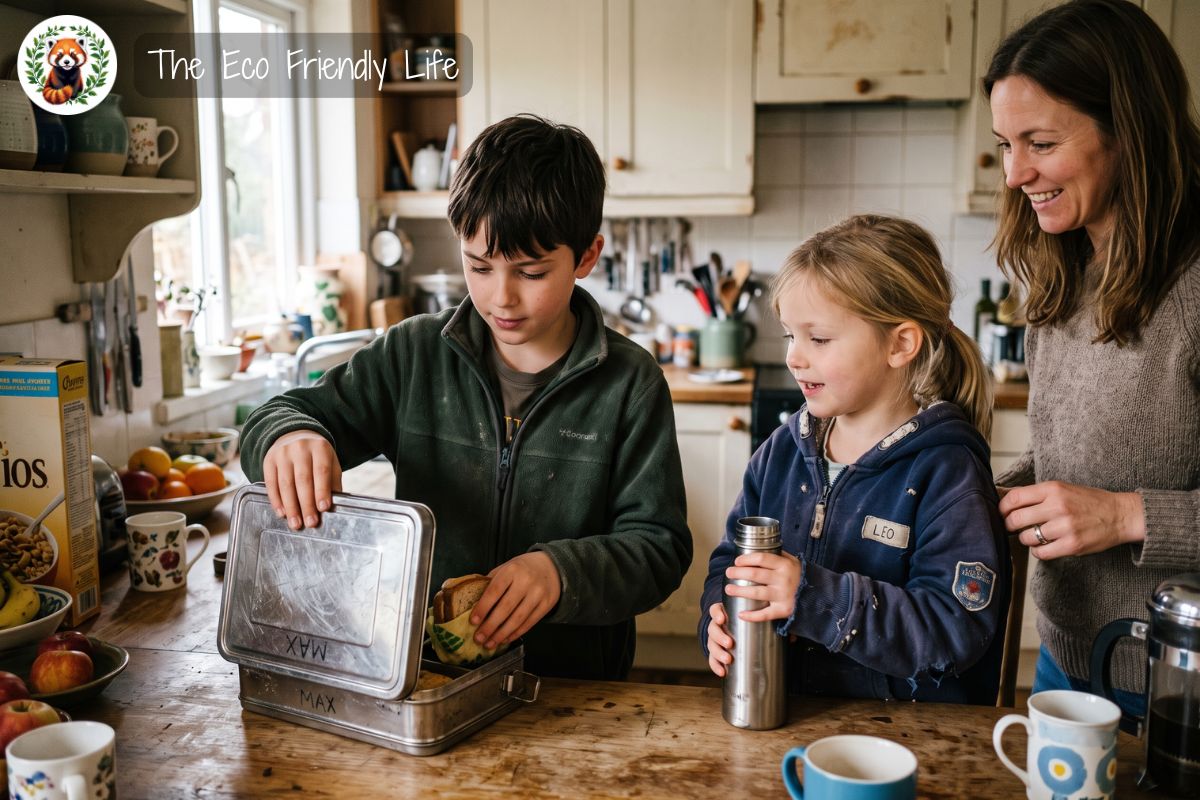
A small, specific example from our own house: With two boys five years apart, hand-me-downs and shared gear are not an abstract idea for us — they are how half our kids’ kit gets used twice before it wears out. A lunchbox, a rain jacket, a bike that gets resized rather than replaced: none of it is glamorous, but it is the buy-less-buy-better argument playing out in real time in our hallway.
This circles back to where the section started: This is the point at which a private habit becomes a public norm. What your household does, what you talk about with other parents, and where your money goes are all part of the same lever the IPCC pointed to earlier — nobody moves a social norm by keeping their choices to themselves.
End on progress over purity: This is not an all-or-nothing project, and treating it like one is the fastest route to quitting entirely. The same buy-once thinking behind a sustainable wardrobe applies everywhere else in the house — a green lifestyle built from changes that actually last will always outperform one built from changes that look impressive for a month and then quietly disappear.
With the bigger picture in place, here are ten specific things you can act on today without waiting for the next purchase.
Practical Daily Tips You Can Action Today
None of these require buying anything new, and most of them save money rather than cost it.
| Tip | How to implement | How it helps |
|---|---|---|
| Measure before you change anything | Spend ten minutes with a free footprint calculator before making any swaps. Note which category comes out largest. | Stops you optimizing the smallest category first. Most people guess wrong about where their impact sits. |
| Drop your heating by one degree | Lower the thermostat a single degree and leave it. Add a layer rather than turning it back up. | Heating is part of the largest single category of household energy use, and one degree is rarely noticed. |
| Wash cold, dry on air | Switch the machine default to a cold cycle. Line dry or rack dry whenever weather allows. | Most of a wash cycle’s energy heats water, and tumble dryers are among the most demanding appliances in a home. |
| Plan meals around what you already have | Check the fridge before shopping and build the week’s meals from what needs using first. | Households throw away the equivalent of more than a billion meals a day globally. This costs nothing to fix. |
| Shift a few meals a week, not every meal | Replace two or three meat-centered meals a week with plant-based ones you actually enjoy. | Diet change ranks well above recycling for emissions saved, and partial change is far more durable than a total switch. |
| Combine or cut one car trip a week | Batch errands into a single journey, or replace one short regular drive with walking, cycling, or transit. | Individual mobility choices carry the largest personal footprint reduction potential of any everyday category. |
| Fix and maintain before replacing | Repair the appliance, patch the jacket, resole the boots. Look up a repair café before buying new. | The lowest-impact product is almost always the one already in your house. |
| Buy once for things that get hard use | For items used daily, choose durable materials and a real warranty over the cheapest option. | Cuts replacement cycles and total material use, and usually costs less across a decade. |
| Refuse at the point of purchase | Keep a bottle and a bag in your bag or car so declining single-use items is effortless. | Only about 9 percent of plastic waste is recycled, so not acquiring it is far more reliable than disposing of it well. |
| Pick one change a month, not ten today | Choose a single change, run it for four weeks until it stops requiring thought, then add the next. | Habits that embed quietly survive. Ambitious overhauls are the most common reason people quit entirely. |
Ten tips is a lot to hold at once, so if you only remember one thing from this table, make it the last row — pace beats ambition every time.
FAQs
A few questions we hear constantly on this topic, answered as straight as we can manage.
Does living green actually make a difference, or is it all on big companies?
Both are true at once. Household consumption drives more than 60 percent of global emissions, so domestic choices are genuinely material — but the IPCC is equally clear that individual change is not sufficient on its own without structural change alongside it. The honest answer is that personal action is necessary and insufficient, which is a reason to do it and also to vote and talk about it.
Is living green more expensive?
The highest-impact changes are mostly free or cheaper — using less energy, wasting less food, driving less, replacing things less often. The expensive part is buying new sustainable products, which is also the least effective part.
Where should I start if I can only do one thing?
Whichever of home energy, food, or transport is largest for your household, chosen from the one you can realistically sustain. For most people, cutting food waste is the fastest win because it requires no purchase and saves money immediately.
Is recycling still worth doing?
Yes, but keep it in proportion. Only around 9 percent of plastic waste is recycled globally, so recycling is the last and weakest step. Using less in the first place does far more.
Organizations to Support — Our Recommendations
If you would rather put your energy into supporting an organization directly, these two do genuinely global work that lines up with what this article covers.
- The Nature Conservancy works across more than 80 countries with over 1,000 scientists on staff, and its focus on land and water protection maps directly onto the point that a household footprint is measured in land and water as well as carbon. You can support its work through its donate to mission page.
- Rainforest Alliance is directly relevant to the greenwashing and certification thread above — the organization both certifies products and publishes a tool for finding certified ones, so supporting it and using it are close to the same action. Their get involved page covers one-time and monthly giving.
Either one is a solid way to put money behind the same priorities this article has been making the case for.
Resources and Further Reading
For anyone who wants to go deeper than a single article can take you.
- The Global Footprint Network’s footprint calculator is a free tool that returns a personal footprint estimate and your own Earth Overshoot Day, available in eight languages. It is the natural next step after this article’s repeated advice to measure before you change anything.
- The Global Footprint Network’s Earth Overshoot Day report explains the annual finding that humanity uses natural resources roughly 1.7 times faster than ecosystems can regenerate them, along with the methodology behind the date.
- The IPCC’s Sixth Assessment Report, Working Group III, Chapter 5, is the most authoritative assessment available of what demand-side and lifestyle change can and cannot achieve — including the ranking of 60 individual consumption actions and the honest treatment of where individual action stops being enough on its own. It is linked earlier in this article under the discussion of what a green lifestyle actually means.
Any one of these three will give you a more detailed answer than a single blog post ever could.
Our Related Articles

How To Transition To A Zero Waste Lifestyle
Every day, the average person generates waste that adds up to a staggering problem for our planet. With 353 million tonnes of plastic waste created…
Read More
How To Make Your Home Energy-Efficient
Rising energy costs and growing environmental concerns are driving more people than ever to rethink how they power their homes. The good news? Making your…
Read More
How We Can Help The Environment
Most advice on how we can help the environment reads like a checklist where every item weighs the same — swap the bulbs, carry a…
Read MoreConclusion
A green lifestyle is not a purchase, a label, or a finish line — it is the ongoing practice of reducing the environmental cost of ordinary life, concentrated mostly in home energy, food, and transport, and built from changes you can actually keep doing. Individual action will not solve this by itself, and the honest sources are clear about that. But it is one of the levers that shifts what becomes normal, and the changes that last matter more than the ones that look impressive for a month.
Have you made a green change that actually stuck for years — and is there one you quietly gave up on? We would genuinely like to know which was which.
