
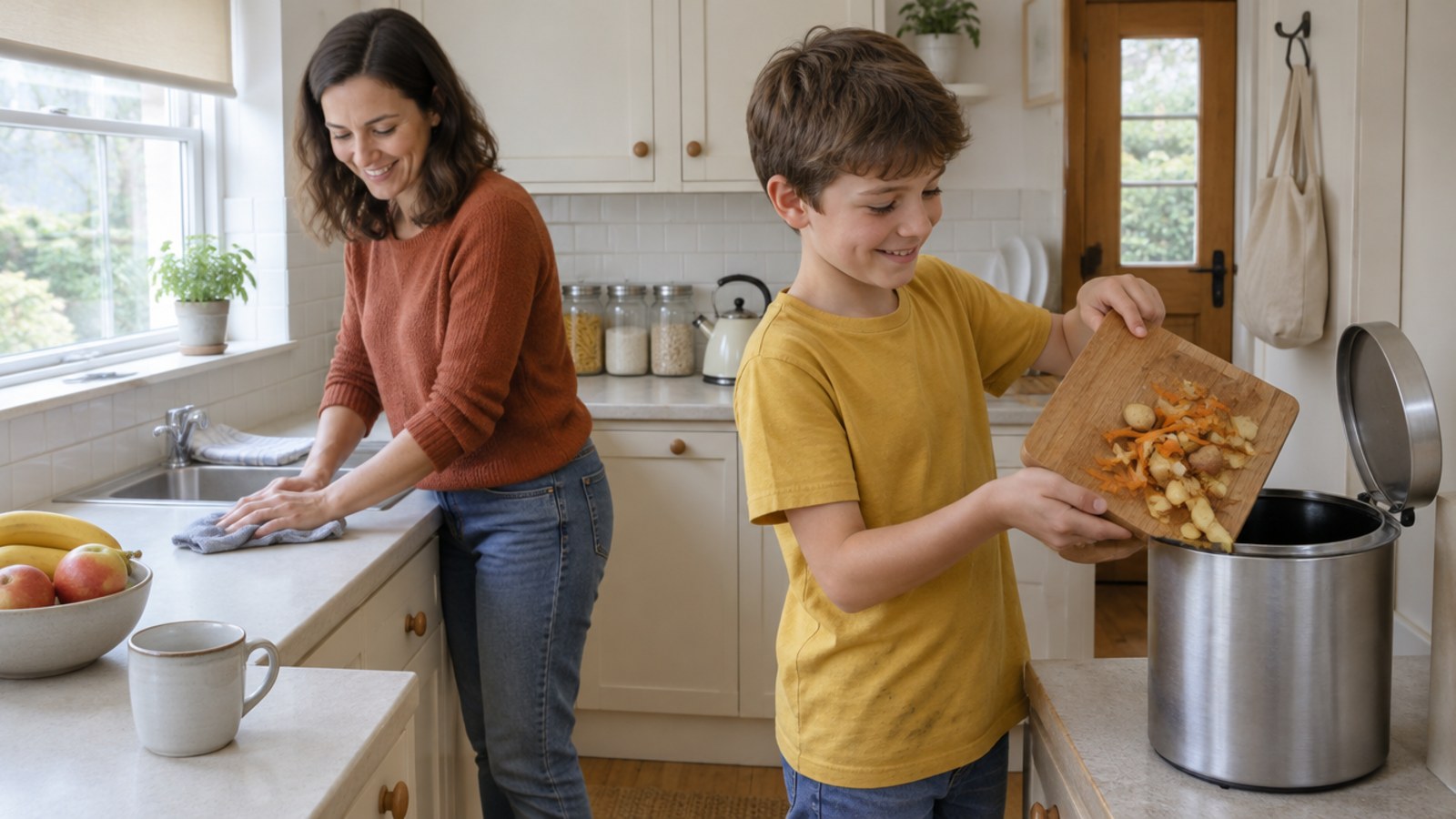

A sustainable home isn’t a special kind of house. It’s an ordinary one, rented or owned, old or new, where the people living in it have gradually worked out how to use less energy, less water and less stuff without making daily life harder. That’s the version this guide is built around, because it’s the only version most of us will ever live in.
I’m Katrina. I teach primary school, I’m raising two boys, and our household has worked through most of what’s on this page the slow way: supermarket products first, then a long stretch of making things ourselves, and now eco alternatives we only buy once we’ve checked the claims behind them. I’m not a sustainability consultant or a building scientist, and I won’t pretend to be. What I bring instead is a teacher’s habit of reading the source before repeating it, and a family home where every idea either survives a busy week or doesn’t.
This page is the front door to everything we’ve written about sustainable living at home. It starts with the essentials, the handful of things that matter most in almost any home, then works through each topic in order: what makes a home sustainable, what a green lifestyle really means, minimalism, ethical shopping, non-toxic home products, zero waste, saving water, traveling lighter, making your home energy-efficient, and finally insulation and windows.
You don’t need to read it all at once, and you certainly don’t need to do it all at once. By the end you should know where your own home’s biggest wins sit, which changes cost money and which cost nothing, and which of our guides to open next.
What This Guide Covers
- What makes a home sustainable
- Living a green lifestyle
- Minimalism and owning less
- Ethical consumerism and conscious buying
- Eco-friendly and non-toxic home products
- Zero waste living
- Saving water at home
- Sustainable travel
- Energy efficiency at home
- Insulation, windows and home improvements
The Essentials: Where a Sustainable Home Really Starts
Homes carry more weight than they seem to: According to the UN Environment Programme (opens in a new tab), the buildings sector, which covers our homes as well as offices, shops and schools, uses 32 percent of the world’s energy and produces 34 percent of its CO2 emissions. What happens inside them is far from trivial. The IPCC’s assessment of demand-side changes across buildings, transport and food found they could cut emissions by 40 to 70 percent (opens in a new tab) globally by 2050, and the same chapter is honest that individual behavior change (opens in a new tab) is insufficient unless structural and cultural change comes with it. Your household can’t do it alone, and it still counts.
Energy comes first, and heating and cooling come first within it: In the US, space heating and air conditioning made up 52 percent of household energy use (opens in a new tab) in 2020, according to the Energy Information Administration. Here in Australia, the government’s Energy Made Easy service puts heating and cooling at about 40 percent (opens in a new tab) of an average household’s energy, with water heating at about 20 percent. The order that works in almost any climate is to stop drafts, then insulate, then think about equipment. Lighting is the easy early win: residential LEDs use at least 75 percent less (opens in a new tab) energy than incandescent bulbs and last up to 25 times longer, according to the US Department of Energy.
Water is the quiet second lever, and leaks are the cheapest fix: The US EPA estimates the average household’s leaks waste more than 9,300 gallons (opens in a new tab) a year. When a fixture does need replacing, products carrying the EPA’s WaterSense label are certified to use at least 20 percent less (opens in a new tab) water than standard models. Hot water is an energy cost as well, so a shorter shower helps on two fronts, and in Australian homes water heating alone accounts for about 20 percent (opens in a new tab) of household energy.
What comes through the front door matters as much as what runs the house: Only 9 percent of plastic waste is recycled worldwide (opens in a new tab), according to the OECD, which is why buying less does more than sorting better. Food is the other big stream: households produced 60 percent of the 1.05 billion metric tons (opens in a new tab) of food waste recorded in 2022, according to UNEP. And the air inside counts too. The EPA notes that Americans spend about 90 percent (opens in a new tab) of their time indoors, where some pollutants run 2 to 5 times higher than typical outdoor levels, which is why cleaning products, paints and furnishings earn a place on this list.
Renting changes the list, and it doesn’t empty it: We did a lot of this while renting here in Australia, and you can’t insulate a house you don’t own, touch the hot water system, or install anything that doesn’t come off the wall when you leave. What we could do was choose. When we were house hunting, we treated rooftop solar, reverse cycle air conditioning and decent insulation as requirements rather than nice-to-haves, and we had to ask, because listings rarely say. Beyond that it was LED bulbs we took with us, draft-proofing that peeled off, and how we ran the heating and cooling. We’re still working on that last one.
Use what you have, and let the simple things do the simple jobs: During our DIY phase, vinegar, baking soda and castile soap handled general surfaces and glass well, but grease and anything that needed disinfecting were beyond them, and we spent longer than we should have assuming we were doing it wrong. Now we buy formulated eco products for the jobs that need them and keep the homemade mixes for the jobs they’re good at. The same goes for furniture and appliances: throwing out something that still works to buy a greener version of it is one of the easiest mistakes to make, and we’ve made it. If you’ve done the same, you’re in good company.
Start Here: What Makes a Home Sustainable
This is the starting point for the whole cluster. It explains the five areas that make a home sustainable, energy, water, materials, waste and indoor air, and why energy is usually the first place to look, whether you rent or own.
Living a Green Lifestyle
“Green lifestyle” turns up on packaging constantly and gets defined almost never. This guide pins down what it actually means, shows where a household’s footprint really comes from, and gives you a test for telling high-impact changes from feel-good ones.
What Does It Mean To Live A Green Lifestyle?
Minimalism and Owning Less
The greenest product is often the one you didn’t buy, which makes owning less one of the most underrated choices on this page. This guide covers where modern minimalism comes from, its environmental case, and what a less cluttered home does for a cluttered head.
Minimalism 101: Why Less Is More
Ethical Consumerism and Conscious Buying
When you do buy, this is how to buy well. It explains what ethical consumerism covers, which certifications are worth trusting, and how to spot greenwashing before it reaches your cart.
Eco-Friendly and Non-Toxic Home Products
Cleaning is where most households start swapping, and where labels mislead the most. This guide decodes the certifications, names the ingredients worth avoiding, and is straight about what plant-based products can and can’t do, disinfecting included.
Choosing Eco-Friendly And Non-Toxic Cleaning Products
Zero Waste Living
Zero waste doesn’t literally mean zero. It means rethinking how things come into your home and how they leave it. This guide works room by room, from the kitchen and bathroom out to shopping, clothing and travel, using the refuse, reduce, reuse, recycle and rot hierarchy.
How To Transition To A Zero Waste Lifestyle
Saving Water at Home
Most of us have no idea where our water actually goes until we look. This guide starts there, then moves through efficient fixtures and appliances, rainwater and greywater, water-wise gardens and the hidden leaks that quietly undo everything else.
How To Reduce Water Usage At Home
Sustainable Travel
Sustainable living doesn’t stop at the front door. This guide starts with the biggest lever, how you get there, then covers where you sleep, what you eat and what you pack.
Eco-Friendly Travel: Tips For Reducing Your Carbon Footprint
Energy Efficiency at Home
This is the practical companion to the essentials above. It walks through sealing air leaks, insulating, switching to LEDs and using smart climate control, with options for renters as well as owners.
How To Make Your Home Energy-Efficient
Insulation, Windows and Home Improvements
This is the most involved step on the page and the one most worth planning. It compares natural and recycled insulation materials, explains double and triple glazing, coatings and frames, and shows how to stage upgrades to suit your budget and climate.
Eco-Friendly Insulation And Window Options
Our Top Picks for a Sustainable Home
Blueland Laundry Detergent Tablets (Free & Clear)
It suits plastic-free households with sensitive skin that mostly wash everyday loads in cold water, and our full write-up covers where it falls short.
Blueland’s laundry starter set (opens in a new tab)
Related Topics Across the Site
- Sustainable Food and Recipes: food waste and plant-forward cooking start in the same kitchen as this guide.
- Green Energy and Technology: solar, electric vehicles and efficient appliances pick up where home energy efficiency leaves off.
- Gardening and Composting: composting is the “rot” end of zero waste, and a water-wise garden finishes what the water guide starts.
- Eco-Friendly Parenting: the same household decisions, made with kids in the picture.
- Sustainable Fashion: minimalism and ethical shopping, applied to the wardrobe.
Frequently Asked Questions
What makes a home sustainable?
A home is sustainable when it’s run to use less energy, water and materials and to create less waste, while staying comfortable and affordable to live in. It’s a direction rather than a certificate, and an ordinary rented apartment can be well along it.
What’s the most effective first step?
For most households, it’s heating and cooling. Space heating and air conditioning made up 52 percent of US household energy (opens in a new tab) use in 2020, and Australia’s Energy Made Easy puts heating and cooling at about 40 percent (opens in a new tab) of an average home’s energy. Stopping drafts and adjusting the thermostat cost little, so they come first.
Can renters make their home more sustainable?
Yes, though the list is shorter. Removable draft-proofing, LED bulbs, showerheads you can swap back and the way you run heating and cooling all go with you or come off when you leave. In Great Britain, the Energy Saving Trust estimates draft-proofing windows, doors and floors saves around £85 a year (opens in a new tab). The biggest lever is choosing a rental that already has good insulation and efficient heating, and since listings rarely mention either, it’s worth asking.
How much water does a household use?
In the US, the EPA says the average family uses more than 300 gallons (opens in a new tab) of water a day at home, with outdoor use making up about 30 percent nationally. Figures vary widely by country and climate, so your own bill or meter is the best baseline. Leaks are worth checking first, because the EPA estimates they waste more than 9,300 gallons (opens in a new tab) a year in the average household.
Does living sustainably at home actually make a difference?
Yes, with an honest caveat. The IPCC found that demand-side changes across buildings, transport and food could cut emissions 40 to 70 percent (opens in a new tab) globally by 2050, but it is equally clear that individual behavior change is insufficient on its own without structural and cultural change. Household choices count, and they count most when they help shift what’s normal around you.
Should I replace things with eco-friendly versions now?
Usually not. Using what you already own until it’s finished avoids the cost of making a replacement, and swapping out something that still works for a “sustainable” version of it is an easy mistake to make. Replace things when they fail, and choose carefully when you do.
How can I tell whether a product’s green claim is genuine?
Look for a certification you can check on the certifier’s own register, rather than words such as “eco-friendly” or “natural.” The US Federal Trade Commission’s Green Guides (opens in a new tab) exist because, in the FTC’s words, “sometimes what companies think their green claims mean and what consumers really understand are two different things.” Public registers such as the B Corp directory (opens in a new tab) and the EPA’s Safer Choice search (opens in a new tab) let anyone check a claim in a minute or two.
Conclusion
A sustainable home gets built one decision at a time: heating and cooling first, then leaks and fixtures, then what comes through the front door, and the air everyone breathes. None of it needs a renovation to start, and plenty of the first steps cost nothing at all. We’re still partway through our own list, and that’s the normal state of things rather than a failure.
If you’re starting from scratch, open What Is A Sustainable Home? next. It sets out the five areas this whole guide is built on, and every other article here picks up one of them in more depth.
