
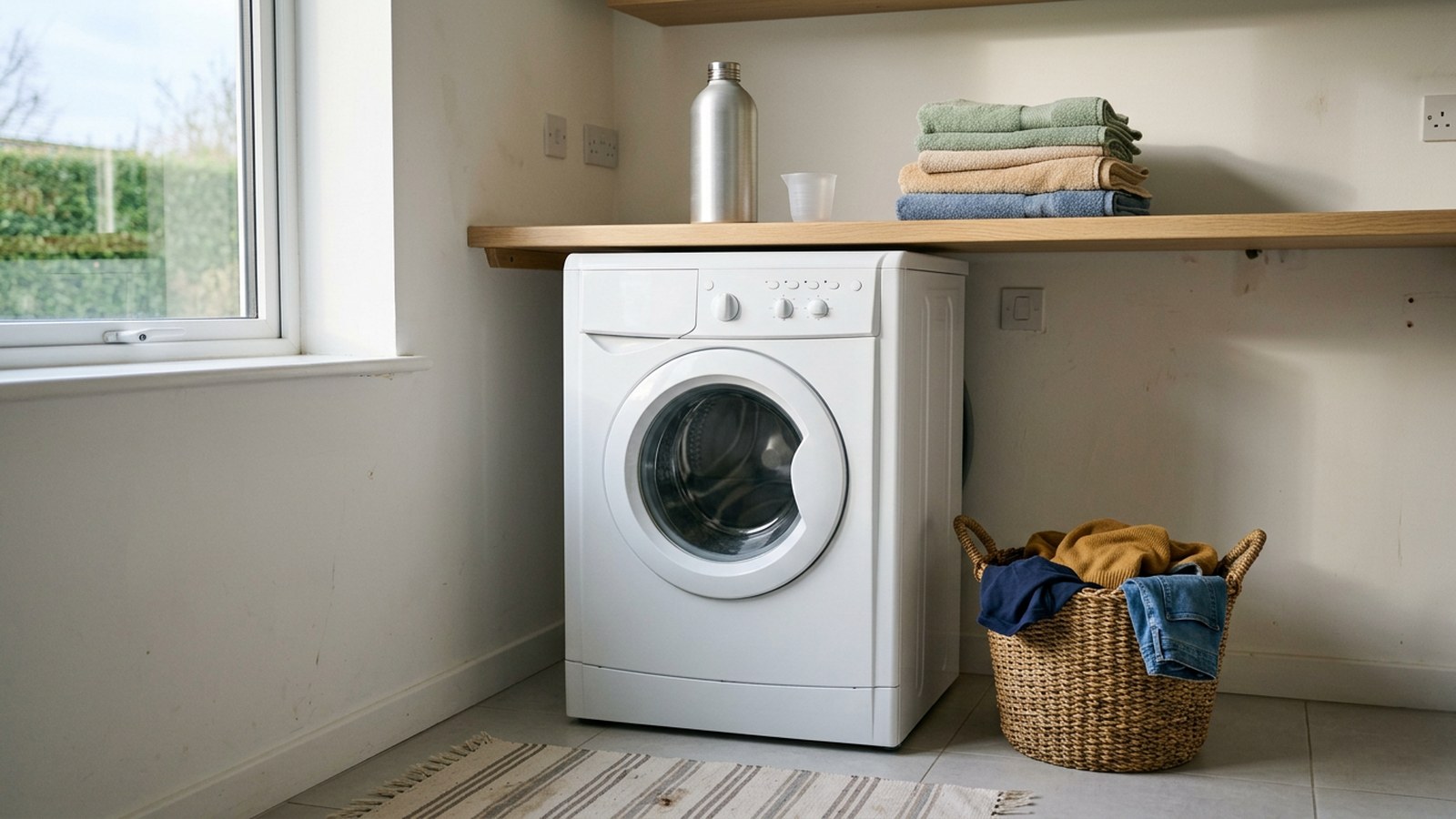

Premium laundry detergent is a hard thing to judge from the shelf. The bottle costs more, the label lists more certifications, and the marketing talks about enzymes and green chemistry, but you can’t see any of that in a clean shirt. Dirty Labs Free & Clear Bio Laundry Detergent is the name that comes up most when people ask about a premium eco-friendly laundry detergent, so this review puts each of its claims next to the evidence and asks whether the extra money buys anything you’d notice.
I’m Al. I trained as a high school math and science teacher, and these days I’m at home full time with our two boys here in Australia. I’m not a chemist, and I don’t run a laundry lab. What I bring is a science teacher’s habit of checking who verified a claim before I repeat it. I’ll also say up front that our family hasn’t used this detergent, because Dirty Labs doesn’t ship to Australia. Everything below comes from the certifiers’ own registers, the label and published test results, and I’ll show the working as we go.
🧪🫧 Quick Verdict
Dirty Labs Free & Clear Bio Laundry Detergent
★★★★☆ | ~$28 USD | Premium
Best for: US households with sensitive skin, soft-to-moderate water and a habit of pretreating stains
The most thoroughly certified fragrance-free enzyme liquid I could verify, in a plastic-free bottle, but one major lab ranked its cleaning last, so it suits some homes far better than others.
- Five stain enzymes in a fragrance-free formula, listed on the EPA's Safer Choice register (opens in a new tab)
- Certified 97 percent (opens in a new tab) biobased by the USDA, and EWG Verified (opens in a new tab)
- An aluminum bottle and a dose of about 8 ml a load (opens in a new tab)
- Worth knowing: Consumer Reports ranked it the least effective liquid (opens in a new tab) it tested
👉 Shop Dirty Labs (opens in a new tab)
Photo 14
What You're Getting
Dirty Labs is a young company. It was set up by Dr. Pete He (opens in a new tab), a chemist who serves as chief scientist, and David Watkins, a product designer who runs the business as CEO. CB Insights lists it as founded in 2019 (opens in a new tab) and based in Portland, Oregon. Its enzyme system, sold under the trademarked name Phytolase, was developed with the enzyme maker Novozymes (opens in a new tab), and the detergent reached its first national retailer when Whole Foods Market began stocking it in 2022 (opens in a new tab). The EPA's register shows Dirty Labs has been a Safer Choice partner (opens in a new tab) since 2020.
The Free & Clear version reviewed here comes in two sizes. The 80-load refill bottle holds 21.6 fl oz and cost $28.00 USD (opens in a new tab) on Dirty Labs' own store when I checked on November 20, 2026, and the 32-load bottle holds 8.6 fl oz for $16.00. Both bottles and caps are aluminum, and a small silicone measuring beaker comes with your first order. Standard shipping is free from $40 (opens in a new tab), and Dirty Labs offers a refund or exchange within 30 days on a first order.
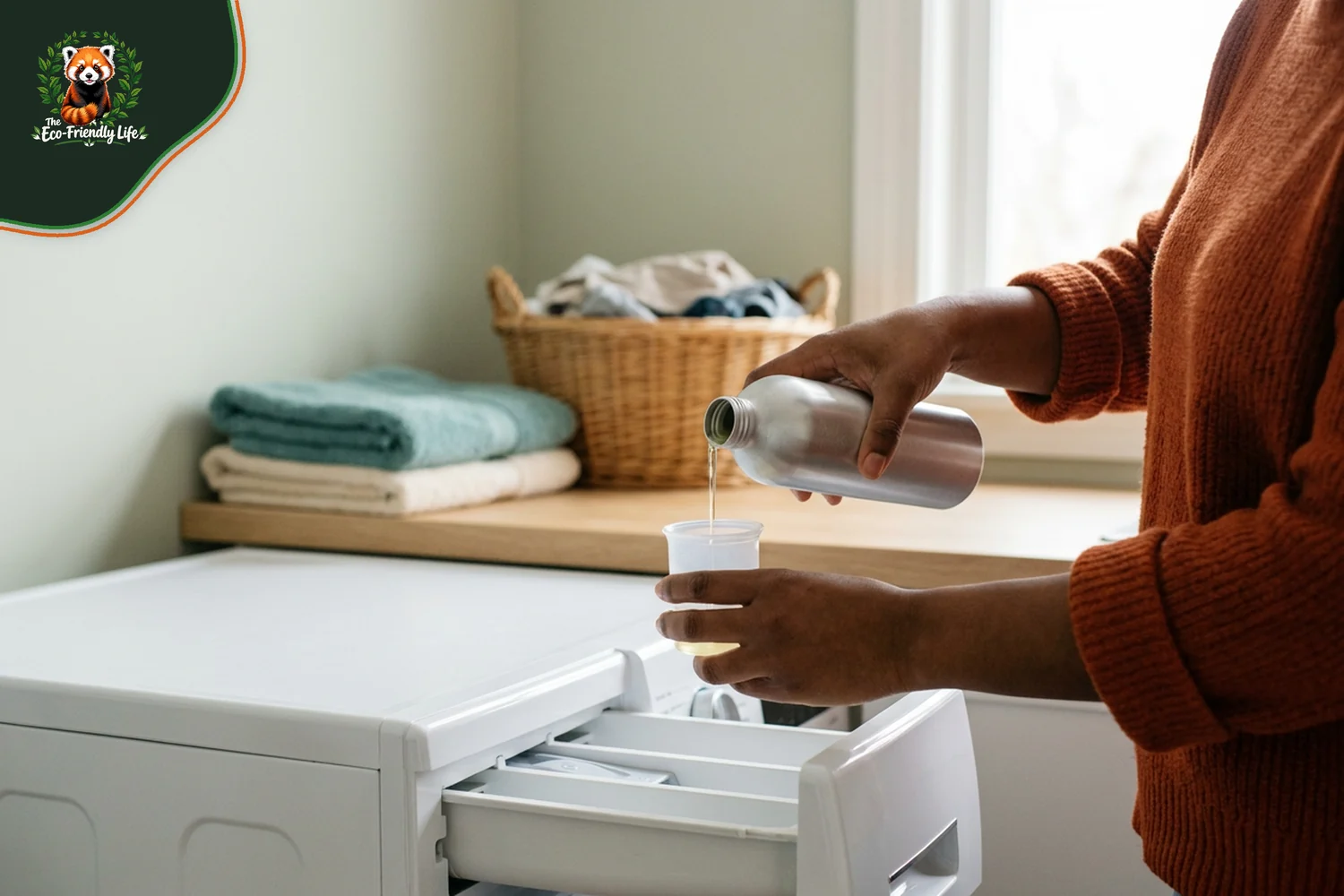
The standard dose is 8 ml for a medium load, rising to 12 ml (opens in a new tab) for a large or heavily soiled load and 16 ml for an extra-large or very dirty one. That's about a quarter of a fluid ounce for an ordinary wash, and the 80-load count assumes that smallest dose.
The ingredient list is short and readable. Dirty Labs lists plant-derived glucoside cleaners (opens in a new tab) (lauryl glucoside and caprylyl/capryl glucoside), a glucamide cleaner, glycerine, coconut fatty acid, sodium citrate, potassium and sodium hydroxide, propanediol, propylene glycol and five enzymes: protease, alpha-amylase, cellulase, mannanase and pectate lyase. There's no added fragrance, and the company says the formula is free of dyes, sulfates, parabens, optical brighteners, chlorine bleach and 1,4-dioxane. It's made in the USA (opens in a new tab) from globally sourced ingredients.
Where you can buy it matters for a global audience. Dirty Labs says it ships only within the US (opens in a new tab), including Alaska, Hawaii, Puerto Rico and the US Virgin Islands, and points customers elsewhere to Mayple, a cross-border shipping service; I couldn't confirm which countries or prices that covers. In the UK, the retailer Healf lists the Free & Clear at £27.99 GBP (opens in a new tab) on pre-order. I couldn't find it on sale in Canada, Europe, Australia or New Zealand, so readers there will want the alternatives further down. With the bottle and label laid out, the next step is to check which features hold up.
Key Features
Five enzymes cover more stain types than most liquids: Enzymes are where a modern detergent does much of its work, and this one carries five. The American Cleaning Institute's fact sheet explains what each targets: protease breaks down protein stains (opens in a new tab) such as grass, blood and egg; amylase handles starches; mannanase goes after barbecue sauce, chocolate, ice cream and toothpaste; pectate lyase acts on fruit, vegetable and jam stains; and cellulase helps stop soot, clay and rust settling back onto cotton. Our budget pick, ECOS, lists three. The one gap is lipase, the enzyme aimed at fats and body oils, which the USDA listing (opens in a new tab) confirms isn't among the five.
The certifications check out on the registers: Laundry bottles carry a lot of logos, so I went to each certifier's own list instead of the label. The EPA's Safer Choice search (opens in a new tab) lists "Bio Laundry Detergent Free & Clear" from Dirty Labs, with the same barcodes as the bottles on sale, and flags it as meeting the separate fragrance-free criteria (opens in a new tab). The EPA says it reviews every ingredient (opens in a new tab) whatever its percentage, sets performance standards and audits certified products. The USDA's BioPreferred catalog lists the detergent as Certified 97 percent (opens in a new tab) biobased, well above the 34 percent minimum for its category, EWG's database shows it carries the EWG Verified mark (opens in a new tab), and it appears in the National Eczema Association's product directory (opens in a new tab). If you're working out which non-toxic cleaning products to switch first, that's about as deep a stack as a detergent gets.

🧴🌱 Ready to try it?
Dirty Labs Free & Clear Bio Laundry Detergent
If you want a fragrance-free detergent whose certifications you can check on the certifiers' own registers, this is the deepest stack I found.
- Safer Choice, fragrance-free
- USDA Certified 97 percent biobased
👉 Shop Dirty Labs (opens in a new tab)
Photo 15
Two of the label claims don't match the registers: The Dirty Labs product page lists a Green Seal certification (opens in a new tab) and calls the formula 100 percent USDA biobased. When I searched Green Seal's certified product directory (opens in a new tab) for Dirty Labs on November 20, 2026, nothing came up, and the USDA's own catalog gives the figure as 97 percent (opens in a new tab). The concentration claim wobbles too: the FAQ calls the formula 11x concentrated (opens in a new tab), while the USDA listing describes the dose as about five times concentrated against a conventional 1.5 oz pour. None of these gaps changes what's in the bottle, but they're a reminder of why checking green claims against the certifier beats trusting the badge.
The aluminum bottle is the packaging win: A small dose means a small bottle. The 80-load refill holds 21.6 fl oz (opens in a new tab) in an aluminum bottle with an aluminum cap, where many conventional liquids ship the same number of loads in a large plastic jug. Aluminum also recycles better in practice: the EPA's latest figures put the US recycling rate for aluminum containers and packaging (opens in a new tab) at 34.9 percent and for beverage cans at 50.4 percent, against 29.3 percent (opens in a new tab) for HDPE milk and water bottles. The catch is that Dirty Labs doesn't offer refills (opens in a new tab) you pour into the same bottle or take bottles back, so each one goes into your recycling. If cutting household packaging is your main goal, that's worth weighing before you choose a format.
Packaging is a tell we've learned to watch: In our house, packaging has become one of the things we notice, because it's where a company's stated values meet its actual operation. Most eco products we've ordered here in Australia arrive sensibly packed, but every so often something eco-branded turns up wrapped in three layers of plastic. Dirty Labs says it's committed to eliminating (opens in a new tab) single-use plastic in its packaging, so if you order online, how the box arrives is a fair test of that promise before you reorder. If you'd rather skip bottles altogether, Blueland's laundry tablets come in a reusable tin with paper refills.
It's built for cold washing, where the real energy saving sits: Dirty Labs says the detergent is designed and optimized (opens in a new tab) for cold water. That matters more than any bottle, because ENERGY STAR says heating the water (opens in a new tab) accounts for about 90 percent of the energy a clothes washer uses. Enzymes are a big part of why cold washing works at all. The ACI calls them important ingredients (opens in a new tab) in low-temperature washing, because they keep working when the water is cool. What the sustainability page doesn't offer is numbers: there's a heading about reducing its carbon footprint (opens in a new tab) but no figures, targets or named verifier behind it, so I'd treat the climate side as an intention rather than a result.
So the formula and the certifications hold up where they can be checked, with a few label claims that run ahead of the registers. The harder question is whether it actually gets clothes clean.
How It Performs in Real Life
Consumer Reports ranked it last: Consumer Reports tests detergents in cool water and in hard water, and its 2026 roundup names Dirty Labs Free & Clear "the least effective liquid detergent we tested, by far." In CR's write-up it handled body oil stains (opens in a new tab) adequately but did poorly on the rest, including everyday dirt and grass, and at 38 cents a load it was among the most expensive liquids CR looked at. Hunker's summary of the results puts it last of 49 (opens in a new tab) liquid detergents.
Wirecutter rated it close to the big brands: The New York Times' Wirecutter came to the opposite view. It lists the detergent as an "Also great" pick, and Hunker reports that Wirecutter found it rivaled larger name brands (opens in a new tab), praising its lack of dyes and fragrance and its aluminum packaging. Wirecutter's own page wouldn't open for me, so I'm relying on Hunker's account of it. Hunker also notes a key difference in method: Wirecutter stains a shirt with two sets of 12 stains and pretreats one set (opens in a new tab) before washing.
Two respected testers, two opposite answers: Teaching science left me with one habit above all others: I want to see the working, because a hand-wave doesn't survive the follow-up question. That habit is what moved our household here in Australia from making our own cleaners to buying researched products, and it's taught us that plenty of claims don't hold, in both directions. Plenty of conventional products are worse than claimed. Plenty of eco-branded ones are too. When two careful testers land at opposite ends, the useful move isn't picking a side. It's asking what each test measured.
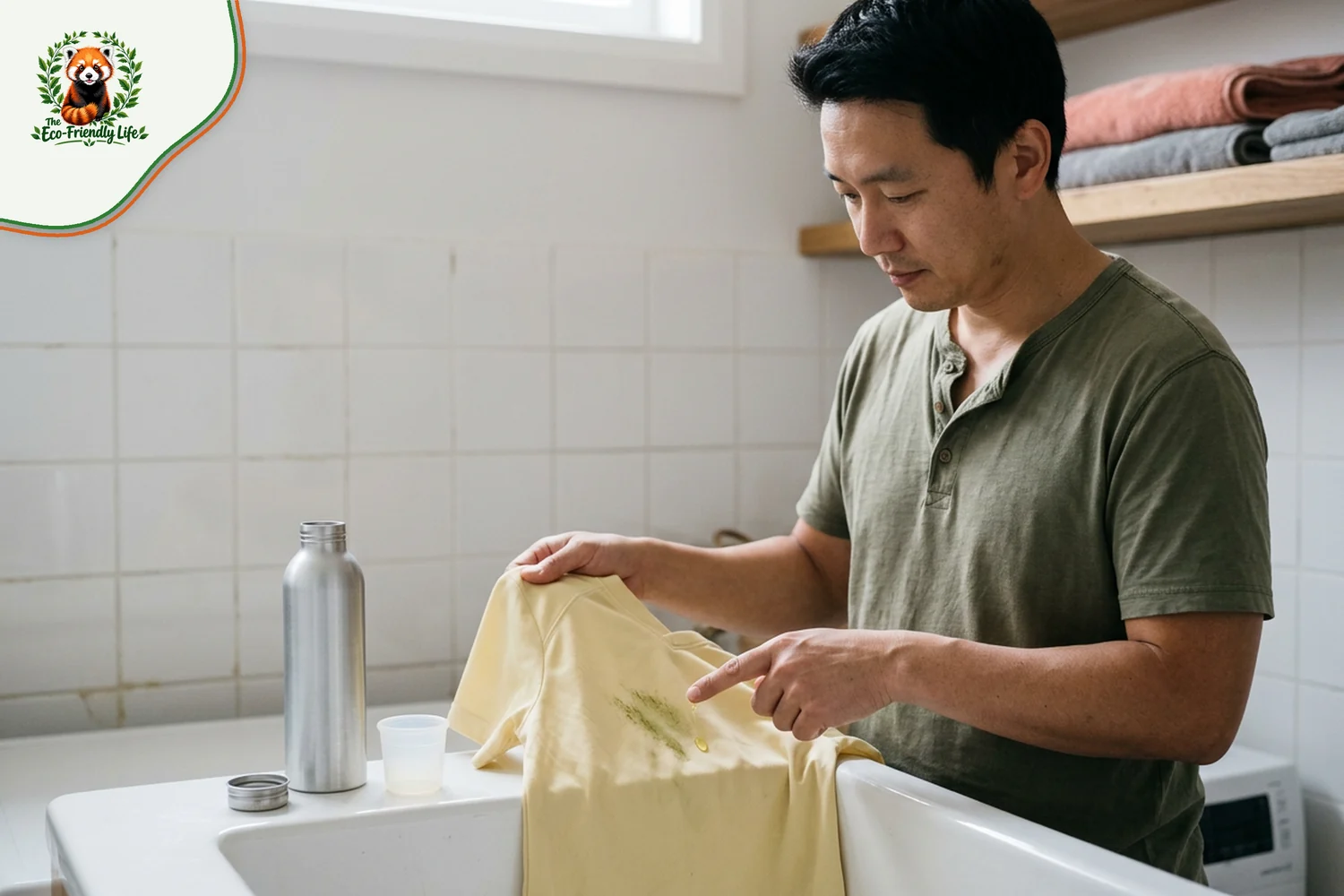
Hard water and pretreating explain much of the gap: Hard water carries calcium that the US Geological Survey says causes poor performance of soaps (opens in a new tab) and detergents, so more product is needed to get things clean. CR deliberately tests in hard water, and Wirecutter pretreats half its stains. Dirty Labs itself suggests a higher dose or booster (opens in a new tab) in very hard water, and recommends pretreating tough stains for 10 to 15 minutes before washing. Put together, the evidence points to a detergent that does well when it's given help and struggles when it isn't. If you don't know your water's hardness, your water utility can tell you; the USGS rates anything over 120 mg/L (opens in a new tab) as hard.
The brightener question is unresolved: CR's write-up says the detergent contains brighteners (opens in a new tab), which can bother sensitive skin. Dirty Labs' ingredient list shows none, the product page says it's free of optical brighteners (opens in a new tab), and the USDA listing says the formula doesn't use them (opens in a new tab). I couldn't reconcile the two. If brighteners are the reason you're shopping, the published ingredient list is the strongest evidence available, and it says no.
The real cost per load depends on your loads: At $28 for 80 loads, the refill works out at about $0.35 USD a load, and the 32-load bottle at $16 comes to $0.50. Those figures assume the 8 ml dose (opens in a new tab). At the 12 ml large-load dose, the refill gives about 53 washes and the cost rises to roughly $0.53; at 16 ml it's about $0.70. That's three to seven times what our ECOS review found for a Safer Choice enzyme liquid in a plastic jug, at about a dime a load in a high-efficiency washer. In hard water, where Dirty Labs advises a higher dose, the gap widens.
Sensitive-skin claims, checked: Dirty Labs calls the Free & Clear hypoallergenic and dermatologist tested. The US FDA says there are no federal standards (opens in a new tab) or definitions for "hypoallergenic" on cosmetics, so I'd lean on the parts someone else checked: the EPA's fragrance-free flag (opens in a new tab) and the NEA directory listing (opens in a new tab). Enzymes can sensitize lungs in concentrated dust form, which is why makers supply them as liquids or coated granules (opens in a new tab), and the ACI rates the consumer risk as extremely low.
Owner ratings are high, with a caveat: Dirty Labs' own store shows 4.73 out of 5 (opens in a new tab) from more than 1,600 reviews, and Grove Collaborative's listing shows 4.6 from 177 (opens in a new tab). Reviews hosted by the seller are weaker evidence than a lab, but they suggest most buyers are happy with what they get at home, where few people wash in deliberately hard water without pretreating.
Cold washes help your clothes as well as the bill: ENERGY STAR says cold water does a good job (opens in a new tab) on most loads except oily stains, which is worth knowing with a detergent that has no fat-targeting enzyme: pretreat greasy marks and wash the rest cold. Washing cooler, fuller and less often is also how clothes last longer, which saves more than any detergent can.
Put together, the evidence describes a well-made, well-certified detergent whose cleaning depends heavily on how you use it, and on the water coming out of your tap.
Pros and Cons
Pros
- Five enzymes covering protein, starch, mannan, pectin and soil redeposition (opens in a new tab)
- On the EPA's Safer Choice register (opens in a new tab) with the fragrance-free flag, and in the NEA's product directory (opens in a new tab)
- USDA Certified 97 percent (opens in a new tab) biobased and EWG Verified (opens in a new tab)
- Aluminum bottle and cap, a material recycled at higher rates than plastic jugs (opens in a new tab)
- Rated close to name brands by Wirecutter, in a test that pretreats stains (opens in a new tab)
Cons
- Consumer Reports ranked it the least effective liquid (opens in a new tab) it tested, in cool, hard water
- About $0.35 to $0.50 USD a load at the standard dose, and more for large loads or hard water
- Ships only within the US (opens in a new tab), with no refill or take-back for the bottles
- A Green Seal claim that doesn't appear in Green Seal's directory (opens in a new tab), and no figures behind its climate claims
The balance favors households that can give it soft water and a quick pretreat, and tips the other way for everyone else.
Photo 16
Our Verdict
Dirty Labs Free & Clear has the strongest verified credentials of any premium eco-friendly laundry detergent I looked at. Its certifications sit on the certifiers' own registers, its ingredient list is short and plant-derived, its five enzymes cover a wide range of stains, and it comes in an aluminum bottle instead of a plastic jug. On paper, it's what a premium detergent should be.
The trouble is the one thing a detergent is for. Consumer Reports' last-place finish is a real mark against it, even with Wirecutter's more positive result on the other side. The most likely explanation is that it needs help in hard water and with set-in stains, and that help costs money: a bigger dose, a booster or a few minutes of pretreating. Add a price of three or more times a certified budget liquid and US-only availability, and it's a pick for a particular household rather than an upgrade for everyone.
So who should buy it? A US household with sensitive skin and soft-to-moderate water, happy to pretreat the occasional stain, that wants a fragrance-free enzyme detergent without a plastic jug and is willing to pay for it. If your water is hard or you want the most cleaning per dollar, one of the alternatives below will serve you better.

🏷️🌿 The Bottom Line
Dirty Labs Free & Clear Bio Laundry Detergent
★★★★☆ | ~$28 USD | Premium
Best for: US households with sensitive skin, soft-to-moderate water and a habit of pretreating stains
The best-credentialed premium liquid I found, as long as your water and your laundry habits play to its strengths.
👉 Shop Dirty Labs (opens in a new tab)
Photo 17
How It Compares
Dirty Labs isn't the right detergent for every reader. These two cover the most common reasons to look elsewhere: price and where you live.
🔁💰 Alternative
ECOS Hypoallergenic Laundry Detergent with Enzymes, Free & Clear
Price tier: Budget
A fragrance-free enzyme liquid on the EPA's Safer Choice register, at about $0.10 USD a load (opens in a new tab) in a high-efficiency washer. It has three enzymes instead of five and comes in a plastic jug, but it costs a fraction as much per load. Choose it if you live in the US or Canada and want a certified fragrance-free detergent for the lowest cost per wash.
👉 Shop ECOS Detergent (opens in a new tab)
Photo 18
🌍📦 Alternative
Blueland Laundry Tablets, Free & Clear
Price tier: Mid-range
Pressed tablets in a reusable tin with compostable paper refills, at about $0.32 to $0.35 USD (opens in a new tab) a load from a Certified B Corp. It costs about the same per load as Dirty Labs' refill, ships to five countries (opens in a new tab), and avoids bottles altogether, though tablets give you no control over the dose beyond using two for a large load. Choose it if you live in Canada, the UK, Australia or New Zealand, or prefer a no-measure format.
👉 Shop Blueland Tablets (opens in a new tab)
Photo 19
For US readers with soft water and sensitive skin who want the most thoroughly certified fragrance-free liquid in a plastic-free bottle, Dirty Labs is still the one to look at first.
FAQs
These are the questions that come up most often about Dirty Labs and premium eco detergents.
Is Dirty Labs worth the price?
It depends on your water and your habits. At about $0.35 to $0.50 USD (opens in a new tab) a load, you're paying for the certifications, the ingredient list and the aluminum bottle. If cleaning power per dollar matters most, a certified budget liquid will go further.
Does Dirty Labs work in hard water?
Dirty Labs says it's suitable for hard water but advises a higher dose or booster (opens in a new tab) when water is very hard. Consumer Reports, which tests in hard water, ranked it last among liquids (opens in a new tab), so hard-water households should expect to use more.
Is it safe for sensitive skin or eczema?
It has no added fragrance, it meets the EPA's fragrance-free criteria (opens in a new tab), and it's listed in the National Eczema Association's product directory (opens in a new tab). No detergent suits everyone, so if eczema is the concern, ask your doctor and change one product at a time.
Can I buy Dirty Labs outside the US?
Dirty Labs ships only within the US (opens in a new tab), though its FAQ says customers elsewhere can order through Mayple, a cross-border shipping service. In the UK, Healf lists the Free & Clear on pre-order (opens in a new tab). Elsewhere, Blueland ships to Canada (opens in a new tab), the UK, Australia and New Zealand.
Can you refill or recycle the bottle?
The aluminum bottles and caps can be recycled (opens in a new tab) wherever your local program takes aluminum, but Dirty Labs doesn't offer a refill you pour into the same bottle or a take-back scheme.
Our Related Articles
Laundry detergent is one of the few things a household buys over and over for decades, so the price per load matters more than
Read article
Laundry runs quietly underneath family life, a load or two most days, which makes detergent one of the few products a household buys over
Read article
Every time you reach under the sink for a spray bottle or scoop of laundry powder, you’re making a choice — and its effects
Read article
Conclusion
Dirty Labs Free & Clear is a carefully made premium detergent with credentials you can check yourself: a fragrance-free Safer Choice listing, a high biobased rating, five enzymes and an aluminum bottle. Its weak points are just as real: one major lab ranked its cleaning last, it costs several times as much as a certified budget liquid, and it's sold only in the US.
If you live in the US, have soft-to-moderate water and sensitive skin, and don't mind a quick pretreat on tough stains, it's the premium detergent I'd look at first.
Have you tried Dirty Labs, and did it clean as well in your water as the label promised?
